
Kenya safaris combine chilly mornings, scorching afternoons, and rugged terrain, making smart packing essential. Here’s a quick guide:
- Clothing: Stick to neutral earth tones (khaki, tan, olive) to avoid attracting insects and disturbing wildlife. Pack layers for temperature swings (41°F mornings to 86°F afternoons). Avoid black, navy, and bright colors.
- Footwear: Sturdy hiking boots for bush walks and closed-toe shoes for game drives. Lightweight sandals work well at lodges.
- Gear: Bring SPF 30–50 sunscreen, insect repellent (30% DEET), quality binoculars, and a wide-brimmed hat. A lightweight rain jacket is crucial for wet seasons.
- Luggage: Use soft-sided duffel bags (15 kg limit for bush flights). Pack light and rely on lodge laundry services.
Focus on practicality and comfort to fully enjoy Kenya’s wildlife and landscapes.
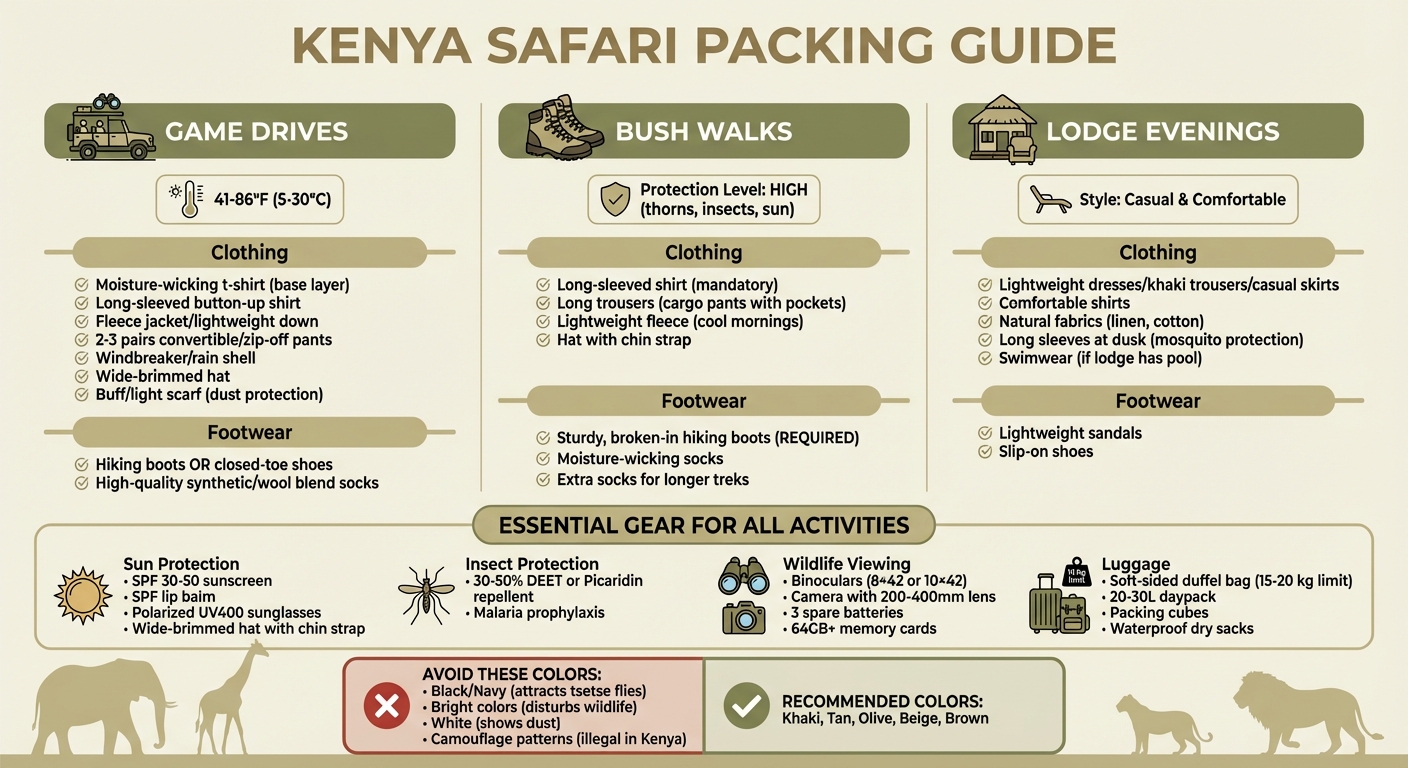
Kenya Safari Packing List by Safari Specialist
Safari Clothing Checklist
Packing for a safari isn’t just about style – it’s about practicality and comfort. Each activity, whether it’s a game drive, bush walk, or an evening at the lodge, comes with its own clothing needs. The trick is to choose versatile pieces in neutral earth tones like khaki, tan, olive, beige, and brown. These colors help you blend into the environment and avoid attracting insects. Stay away from black and dark blue, which tsetse flies love, and skip bright colors that might disturb wildlife or white that shows dust too easily.
Here’s how to gear up for each safari activity, starting with game drives.
What to Wear on Game Drives
Layering is your best friend during game drives. Early mornings can be chilly, with temperatures dipping to 41–50°F (5–10°C), but by midday, they can soar to 80–86°F (27–30°C). Start with a moisture-wicking t-shirt – either cotton or a quick-dry synthetic – as your base. Add a long-sleeved button-up shirt for sun and insect protection, and top it off with a fleece jacket or lightweight down layer for those brisk dawn drives.
Convertible or zip-off pants are perfect for adapting to the changing temperatures. Pack 2–3 pairs of long trousers in neutral shades, and during the wet season (March–May and November–December), opt for quick-dry synthetic fabrics instead of cotton. A windbreaker or rain shell will come in handy for both chilly mornings and sudden rain showers.
Don’t forget to protect yourself from the sun and dust. A wide-brimmed hat is a must for shade, and a buff or light scarf can shield your face from the dust kicked up on dirt roads. These items will keep you comfortable and prepared for Kenya’s unpredictable climate.
What to Wear on Bush Walks
Bush walks require a bit more protection than game drives. Long trousers, especially cargo pants with multiple pockets, are essential to guard your legs against thorns, insects, and the intense sun. Pair these with sturdy, broken-in hiking boots and moisture-wicking socks, and pack extra socks to stay fresh during longer treks.
For your upper body, a long-sleeved shirt is a must for protection. Consider a hat with a chin strap to keep it secure on windy days, and bring a lightweight fleece for cooler mornings. These layers will keep you safe and comfortable as you navigate rugged terrain and deal with Kenya’s intense sunlight.
What to Wear at Safari Lodges
Evenings at the lodge are more relaxed but still call for practical choices. Lightweight dresses, khaki trousers, or casual skirts paired with comfortable shirts are great options. Natural fabrics like linen and cotton work well since they allow your skin to breathe in the evening heat. Be sure to wear long sleeves at dusk to protect yourself from mosquitoes, which become active after sunset.
Many mid-to-luxury lodges offer laundry services, so you can pack fewer items and reuse your neutral-colored layers. For lounging around the lodge, lightweight sandals or slip-on shoes are perfect. And if your lodge has a pool, don’t forget to pack swimwear for a refreshing dip between game drives.
Footwear: Choosing Shoes for Each Activity
When planning your safari wardrobe, your choice of footwear is just as important as your clothing. The right shoes can make all the difference in ensuring your safety and comfort. For a successful trip, you’ll need at least two types of shoes: sturdy hiking boots for active adventures and lightweight sandals for relaxing at the lodge.
Hiking boots are a must for bush walks and highly recommended for game drives. Look for mid-height boots with solid ankle support to prevent injuries like twisted ankles on uneven ground. These boots not only protect your feet from thorns and insect bites but also shield them from the intense equatorial sun. To avoid blisters, make sure to break in your boots several weeks before your trip.
Pair your boots with high-quality socks made from synthetic materials or wool blends. These fabrics wick moisture away and reduce friction, keeping your feet dry and comfortable all day. Avoid cotton socks, as they tend to hold moisture, which can lead to discomfort. Pack enough pairs to ensure you have a fresh set for every day of your safari.
While hiking boots are essential for active outings, you’ll want something more relaxed for your downtime. Bring comfortable sandals or slip-on shoes for use around the lodge. These lightweight options are perfect for casual evenings, lounging by the pool, or transfer days. Keep these reserved for lodge use to give your feet a break from heavier footwear.
Finally, don’t overlook the importance of closed-toe shoes during early morning game drives. Kenya’s temperatures can be chilly in the mornings, so closed-toe footwear adds an extra layer of warmth and protection during brief stops outside the vehicle.
Now that your footwear is sorted, it’s time to dive into the gear and accessories you’ll need for your safari adventures.
Packing for Different Seasons
Kenya’s location near the equator means its seasons call for thoughtful packing to ensure a comfortable and enjoyable safari experience. As mentioned earlier in your safari clothing checklist, tailoring your wardrobe to the season is key.
Dry Season Packing (June-October, January-February)
The dry season presents two main challenges: dust and temperature swings. Early mornings on game drives can start as low as 50°F (10°C), but temperatures can climb to 86°F (30°C) by midday. To handle this, layering is essential.
Bring a fleece jacket or warm outerwear for the chilly mornings, and don’t forget gloves and a beanie if you’re planning a hot air balloon ride over the Masai Mara. A scarf or buff is a must-have to shield your face and camera gear from the fine dust stirred up during game drives. Dust-proof covers and lens cleaning kits are invaluable for protecting your electronics.
Your clothing should feature breathable, earth-toned fabrics to keep you cool and blend into the surroundings. A wide-brimmed hat with a chin strap and SPF 30-50 sunscreen are necessary to combat the intense equatorial sun. Even in the heat, long sleeves are recommended for sun protection and to ward off insect bites.
As the seasons shift, so do the challenges. Rainy months demand a completely different approach to packing.
Wet Season Packing (March-May, November-December)
Rainy conditions require a focus on staying dry and managing moisture. A breathable, waterproof jacket is far more effective than disposable ponchos for handling prolonged showers.
Switch to quick-dry synthetic fabrics, which dry faster in humid conditions. Pack extra socks and underwear to stay comfortable despite muddy environments. Waterproof hiking boots are essential for navigating slippery trails during bush walks, replacing lighter footwear from the dry season.
To protect your gear from water damage, use dry bags or waterproof sacks for cameras, binoculars, and electronics. A small microfiber towel is a smart addition – it takes up little space and dries much faster than cotton. Mornings can still be cool, so lightweight layers that can be easily removed as the humidity rises are ideal.
For those visiting during the Great Migration, additional gear is necessary to make the most of this extraordinary wildlife spectacle.
Great Migration Season Packing (August-September)
The Great Migration is a highlight of the dry season, and it comes with its own packing priorities. High-quality binoculars (8×42 or 10×42) are crucial for spotting river crossings and predator activity from a distance. For photographers, a camera with a zoom lens is essential to capture the action while maintaining a safe distance.
The same dry season essentials apply – dust protection, layered clothing for temperature changes, and neutral earth tones. However, if you plan to explore river crossing viewpoints, break in your hiking boots ahead of time to avoid blisters. These areas often require walking to reach the best vantage points.
Don’t forget extra memory cards and camera batteries. The dramatic wildlife scenes typical of the Great Migration can quickly fill your storage. Since most safari operators enforce strict luggage limits (15-20 kg) on bush flights, take advantage of lodge laundry services to keep your load light while staying prepared.
Safari Gear and Accessories
Having the right accessories can make all the difference on your Kenya safari. These items complement your safari clothing and provide essential protection against Kenya’s intense sun, dusty roads, and the occasional lack of power at remote camps.
Sun Protection Items
Nairobi‘s elevation at 1,700 meters means stronger UV rays. A wide-brimmed hat with a chin strap is a must to shield your face, neck, and ears during extended game drives. Make sure it stays secure, even on windy or bumpy rides.
Polarized UV400 sunglasses are invaluable for cutting glare on the plains, making it easier to spot wildlife in bright midday light. Don’t forget SPF 50+ sunscreen and SPF lip balm to protect exposed skin and lips from the harsh sun and dry air. A buff or bandana is another versatile item – it guards your neck from sunburn and doubles as a dust mask on unpaved roads.
Photography and Wildlife Viewing Equipment
To fully enjoy the wildlife experience, pack binoculars with an 8×42 or 10×42 rating – perfect for spotting animals at a distance, whether it’s a lion lounging in the shade or a wildebeest crossing a river. If you’re into photography, bring a camera equipped with a 200-400mm telephoto lens for capturing stunning close-ups while keeping a safe distance. A beanbag or window mount is ideal for stabilizing your camera on safari vehicle doors or windows, as handheld shots can be tricky on bumpy terrain.
Don’t forget extra gear for your camera: pack three spare batteries and 64GB or larger memory cards to ensure you’re ready for an entire day of shooting. A dust-proof camera bag is crucial to protect your equipment from the fine dust that tends to get everywhere on safari roads. Include a lens cleaning kit for daily upkeep.
Health and Safety Items
Protect yourself from mosquitoes by applying DEET (30-50%) or Picaridin-based insect repellent, especially at dusk. Bring your malaria prophylaxis in its original packaging, along with a signed doctor’s letter, to avoid issues at customs. A basic first aid kit is essential and should include antiseptics, bandages, blister pads, pain relievers, and tweezers for thorn removal.
Long days under the equatorial sun can lead to dehydration, so pack oral rehydration salts and remedies for diarrhea. A reusable water bottle helps you stay hydrated while reducing plastic waste. For nighttime use, bring a headlamp or flashlight, and a 20,000mAh+ power bank will keep your devices charged when electricity is unreliable.
Consider purchasing an AMREF Flying Doctors evacuation card (around $25) for emergency air evacuation coverage in remote areas. Also, keep your Yellow Fever vaccination certificate with your passport, as it’s required for entry into Kenya.
With these accessories and essentials, you’ll be well-prepared for a safe and enjoyable safari. Next, let’s dive into luggage rules and packing tips.
Luggage Rules and Packing Tips
Bush Flight Weight and Size Limits
When traveling on bush flights in Kenya, luggage restrictions are strict due to the limited space on small aircraft. Most operators, such as Safarilink and Air Kenya, set a 15 kg (33 lbs) weight limit for all luggage – this includes your main bag, camera gear, and daypack. While some allow up to 20 kg (44 lbs), this is rare.
Soft-sided duffel bags are a must for these flights. Their flexibility allows them to fit into the tight, oddly shaped cargo areas of bush planes. Hard-shell suitcases or wheeled luggage are not suitable and may be denied at check-in. Exceeding the weight limit could result in extra fees or even having to leave items behind.
| Luggage Item | Recommendation |
|---|---|
| Main Luggage | Soft-sided duffel bag (15–20 kg limit) |
| Daily Carry | 20–30L daypack for game drives |
| Organization | Packing cubes and waterproof dry sacks |
Best Luggage Types for Safari
A 40–45L soft-sided duffel bag is ideal for safari trips. These bags are compact enough for small aircraft compartments yet spacious enough to hold a week’s worth of essentials. Look for options with compression straps to minimize bulk.
Complement your duffel with a 20–30L daypack for easy access to essentials like binoculars, sunscreen, and a camera during game drives. Packing cubes are great for keeping your clothing neat and compressed, while dry sacks offer protection against dust and moisture. Many mid-range and luxury safari camps provide laundry services, so you can pack lighter without worrying about running out of clothes.
Packing Electronics and Valuables
Once you’ve chosen your luggage, it’s important to protect your electronics and valuables. Kenya’s dusty roads can be tough on devices, so store items like your camera, power bank, and other electronics in waterproof dry sacks or heavy-duty zip-lock bags. This helps shield them from the fine dust that can infiltrate gear during game drives. Keep a dust cover on your camera and carry a lens cleaning kit in your daypack for quick maintenance.
Keep critical documents – such as your passport, Yellow Fever certificate, and travel insurance – in a waterproof pouch. To save weight and space, transfer toiletries into smaller containers. Lastly, pack your daypack thoughtfully, including only what you need for a single game drive rather than overloading it with unnecessary items.
Following these packing tips will keep your belongings protected and make your safari experience smoother and more enjoyable.
What NOT to Pack for Kenya Safari
Once you’ve nailed down your safari wardrobe, it’s just as crucial to identify what you should leave behind. Packing the wrong items can weigh you down, cause inconvenience, or even land you in trouble.
Prohibited Items in Kenya
Camouflage clothing is a no-go. In Kenya, military-style patterns are reserved for armed forces and police. Wearing them could lead to legal issues, so it’s best to leave anything with a camouflage print at home.
Another important rule: Kenya has a strict ban on single-use plastic bags to protect its environment. If you’re used to packing with disposable plastic bags, switch to reusable options like fabric pouches, packing cubes, or dry sacks.
Items That Don’t Work for Safari
Jeans are a poor choice for a safari. They’re heavy, don’t dry quickly, and trap heat, making them uncomfortable in Kenya’s climate. Plus, they take up too much space in your luggage, which is limited to 15 kg on most safari flights.
Color matters, too. Avoid dark blue or black clothing as these colors attract tsetse flies, and steer clear of bright colors that can scare off wildlife. White clothes are also impractical – dust will make them look dirty in no time.
Skip strong perfumes, expensive jewelry, and formal wear. Perfumes can attract insects and interfere with your wildlife experience, while formal clothes are unnecessary for the casual safari setting. As for jewelry, it adds unnecessary weight and could easily get lost. Hair dryers? Don’t bother – most lodges provide them.
Valuables to Leave at Home
Safaris aren’t the place for expensive jewelry or delicate items. The rugged environment and limited security at camps mean there’s a higher chance of loss or damage.
Fragile items like delicate electronics or breakable souvenirs are also risky. The constant movement and bumpy roads can easily damage them. Stick to items that can handle dust, rough handling, and unpredictable conditions. Use waterproof bags to protect your essentials and only bring what you’re comfortable exposing to the elements.
Final Packing Tips
Before heading off to Kenya, take a moment to double-check everything. A little preparation now can save you from unexpected hassles during your safari adventure.
Break in your shoes. If you’re bringing hiking boots or sturdy closed-toe shoes, wear them around the house, on walks, or while running errands beforehand. This helps avoid painful blisters during bush walks. Don’t forget to test them with the socks you plan to wear during your trip to ensure everything fits comfortably and won’t cause rubbing or discomfort in safari conditions.
Check your luggage weight. Most bush flights in Kenya have strict weight limits – usually 15–20 kg for your soft duffel bag, and this often includes your daypack and camera gear. Use a luggage scale to make sure you’re within the limit to avoid last-minute repacking or extra baggage fees.
Test your electronics. Make sure all your gadgets and photography gear are in working order. Check your camera, ensure spare batteries hold a charge, and verify that memory cards are functional. Don’t forget to pack the correct travel adapters for Kenya’s outlets. A faulty camera or missing adapter can quickly turn frustrating when you’re trying to capture those once-in-a-lifetime moments.
Review your documents. Double-check that your passport, eTA, and Yellow Fever certificate meet Kenya’s entry requirements. Your passport should be valid for at least six months beyond your entry date. It’s also wise to create both physical and digital backups of all these essential documents for added peace of mind.
Stick to neutral tones. Before zipping up your bag, go through your clothing one last time. Make sure everything aligns with the recommended safari palette of neutral earth tones. Remove any black or dark blue items, as these colors can attract tsetse flies and are generally not ideal for safari settings.
With these final checks, you’ll be ready to enjoy an unforgettable safari experience without any last-minute worries.