
Africa’s wildlife isn’t just about the Big Five. The “Ugly Five” – spotted hyenas, wildebeests, warthogs, vultures, and marabou storks – are often overlooked due to their unconventional looks. But these animals play critical roles in maintaining the balance of ecosystems. From cleaning up carcasses to fertilizing grasslands, they’re nature’s unsung heroes.
Key Takeaways:
- Spotted Hyenas: Bone-crushing jaws recycle nutrients and prevent disease.
- Wildebeests: Their migrations shape grasslands and support biodiversity.
- Warthogs: Their digging and grazing improve soil health.
- Vultures: Consume up to 70% of carrion, curbing the spread of pathogens.
- Marabou Storks: Scavenge waste and control pest populations.
These animals challenge traditional ideas of beauty, showcasing nature’s efficiency and purpose. Safaris that highlight the Ugly Five offer a richer understanding of how wildlife works together to sustain Africa’s wilderness.
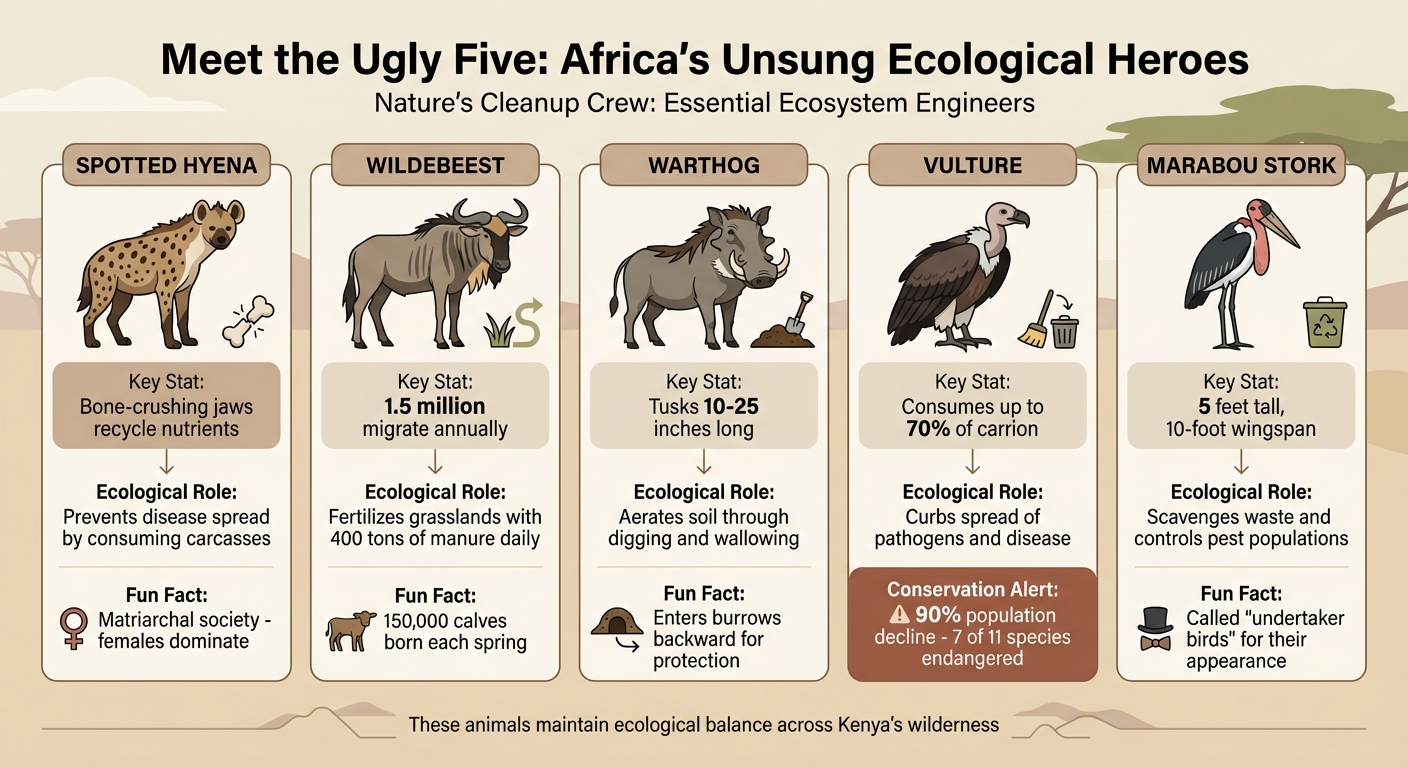
The Ugly Five Animals of Africa and Their Ecological Roles
What are the Ugly 5 animals? | Africa Geographic

sbb-itb-024d109
Spotted Hyena: The Bone-Crushing Recycler
Spotted hyenas (Crocuta crocuta) often get a bad rap in movies, but in reality, they’re incredibly smart, resourceful predators – and nature’s cleanup crew. With jaws strong enough to crush bones and stomachs capable of digesting nearly everything, they leave behind little more than hair, heavy horns, and hooves. This unique skill is crucial for keeping Kenya’s wild landscapes clean and curbing the spread of disease. Let’s dig into some fascinating details about these underappreciated animals.
Spotted Hyena Facts
Spotted hyenas are built for efficiency. Their jaw strength and digestive systems allow them to consume parts of a carcass that other predators leave behind, including bones and tough materials like hooves and horns. Interestingly, hyena cubs are born with their eyes open and a full set of teeth, though they rely entirely on their mother’s milk for the first six months.
One of their standout traits is their matriarchal society. Female hyenas are not only larger but also dominate males in their clans. And while they’re often labeled as scavengers, they’re actually skilled hunters. Spotted hyenas can run their prey to exhaustion over long distances, making them some of Africa’s most successful predators. These unique characteristics highlight why they’re such an important part of Kenya’s wildlife.
Where to See Spotted Hyenas in Kenya
If you’re heading to Kenya, you’ll find spotted hyenas in many of the country’s top wildlife reserves. The Masai Mara National Reserve is an excellent spot, especially during the Great Migration when prey is plentiful, drawing large hyena clans. Other great locations include Amboseli National Park, Tsavo National Park, and Ol Pejeta Conservancy in Laikipia. For a more convenient option, Nairobi National Park offers sightings close to the capital city.
For the best chance to see hyenas in action, consider a night safari. Their iconic "whooping" calls echo across the savanna after dark, creating an unforgettable experience. If you’re lucky, your guide might lead you to a den, where you can spot playful pups and adults lounging nearby in the sun. Watching these animals in their natural habitat is not only thrilling but also a reminder of their critical role in maintaining ecological balance.
How Hyenas Help the Ecosystem
Hyenas are nature’s unsung heroes. By consuming carcasses and rotting meat, they help prevent the spread of diseases that thrive in decaying flesh. Their ability to crush and digest bones also returns essential minerals to the soil, supporting the nutrient cycle within the ecosystem.
"As scavengers, hyenas play a vital ecological role by ensuring nothing in the wilderness goes to waste. They consume bones, scraps, and leftovers, keeping the bush clean and helping to reduce the spread of disease." – Shumbalala Game Lodge
On safari with Wild Springs Adventures, you might even hear the sound of bones being crushed from a distance – a sure sign that hyenas are nearby, hard at work maintaining the delicate balance of their environment.
Wildebeest: The Great Migrators
Blue wildebeests (Connochaetes taurinus) might not win any beauty contests, but their role in shaping East Africa’s grasslands is unmatched. Over 1.5 million of these animals migrate through the Serengeti-Mara ecosystem annually, making them a cornerstone of the region’s ecological balance. Their feeding habits are vital for maintaining vegetation and supporting an intricate food web. Beyond being a key food source for predators, their migration is one of the most awe-inspiring natural events on Earth.
The Great Migration
The Great Migration is nothing short of nature’s ultimate endurance test. Each year, vast herds of wildebeests follow the rains to find fresh grazing grounds. By mid-July, these herds reach Kenya’s Masai Mara National Reserve, facing daunting challenges like crossing the Mara River. Despite the risks, the species thrives, with around 150,000 calves born each spring. This migration is not just a spectacle but a survival mechanism. Wildebeests are built for the journey, with large lung capacity and unique leg proportions – longer front legs paired with shorter hind legs – that allow them to cover immense distances. Their movement breathes life into the savannah, ensuring its renewal.
How Wildebeests Shape the Grasslands
As they journey across the plains, wildebeests do more than just graze – they actively maintain and rejuvenate the ecosystem. Their grazing trims the grasslands, encouraging fresh growth, while their manure enriches the soil. Every day, the herd contributes about 400 tons of manure, promoting plant diversity and supporting the entire ecosystem.
"This means that wildebeest does not only function as lawn mowers, but also as an important fertilizer supplier for the African savannah landscape." – Herbie Schaible, Guest Blogger, Bushtops Camps
Wildebeests also share a unique partnership with zebras. Zebras feed on taller, tougher grasses, clearing the way for wildebeests to graze on the softer, more nutritious grass beneath. This symbiotic relationship not only benefits both species but also keeps the grasslands healthy and balanced.
Where to See Wildebeests in Kenya
Kenya offers some of the best opportunities to witness the Great Migration and understand the wildebeests’ ecological importance. The Masai Mara National Reserve is the prime spot for observing this phenomenon. For the most dramatic moments, like river crossings and predator encounters, visit between July and September when the herds are at their peak in the region. The Loita Plains also provide excellent viewing opportunities with fewer crowds.
For an unforgettable experience, consider a 3-day Masai Mara safari with Wild Springs Adventures. Guides will take you to the best vantage points along the river, where you can witness wildebeests gathering their courage before plunging into the water. It’s a raw, powerful display of nature you won’t soon forget.
Warthog: The Soil Engineer
Warthogs (Phacochoerus africanus) may not win beauty contests, but they play a crucial role in maintaining the health of the savannah. Through their daily activities – grazing, wallowing, and burrowing – they actively shape the landscape by improving soil quality and redistributing nutrients.
Warthog Behaviors and Traits
Warthogs have some fascinating habits that set them apart. For instance, they often kneel on tough, calloused pads to graze on short grass or dig up plant roots. They’re also known for making themselves at home in old aardvark burrows or termite mounds. When using these shelters, warthogs enter backward, positioning their impressive tusks – ranging from 10 to 25 inches (25 to 64 cm) in males – toward the entrance to deter predators.
Another curious behavior? When they run, their tails stand straight up like little antennas. This quirk is so distinctive that locals have nicknamed them “bushveld antennas.”
"These animals are known as the ‘bushveld antenna’ by many because of their tails going straight up when they are running in a single file." – Ruan Mey, Earth Lodge Ranger, Sabi Sabi Private Game Reserve
Interestingly, warthogs often share their burrows with other animals, such as porcupines, in a sort of "time-share" arrangement. This coexistence helps promote biodiversity in their habitats. Together, these behaviors and traits highlight how warthogs contribute to their ecosystems in ways that go beyond just surviving.
How Warthogs Improve the Soil
Warthogs are nature’s little landscapers. Their digging and wallowing aerate the soil, allowing air and water to penetrate more easily. As they roll in the dirt to protect their skin, they also spread organic matter and nutrients, which fosters healthy grass growth and creates microhabitats for insects and other small creatures.
Their grazing habits are equally beneficial. By keeping grass trimmed, they prevent overgrowth and encourage fresh shoots, which are a food source for smaller herbivores. While they primarily eat plants, warthogs are opportunistic feeders and will occasionally eat small animals, further aiding nutrient cycling.
Where to See Warthogs in Kenya
Kenya’s diverse ecosystems are perfect for spotting these industrious animals. Amboseli National Park, with Mount Kilimanjaro as a stunning backdrop, is a prime location to see warthogs. The Masai Mara is another fantastic spot, where they roam alongside the famous wildebeest migration. For those short on time, Nairobi National Park offers a chance to observe warthogs just a short drive from the city center – perfect for a quick morning game drive.
If you’re looking for a more immersive experience, head to Ol Pejeta Conservancy in the Laikipia region or explore the sprawling landscapes of Tsavo National Park (both East and West). These areas provide excellent opportunities to watch warthogs in their natural routines, from grazing on their knees to dashing across the savannah with their tails held high.
Vultures: The Cleanup Crew
Vultures might not win any beauty contests, but they play a crucial role in maintaining Africa’s ecosystems. Think of them as nature’s cleanup crew, devouring carcasses that would otherwise rot and spread harmful pathogens. By consuming up to 70% of carrion in an area, vultures help curb the spread of diseases that could affect both wildlife and human populations.
Vulture Species in Kenya
Kenya is home to a variety of vulture species, each contributing in its own way to the ecosystem. Among the most common are the white-backed vulture, Rüppell’s vulture, hooded vulture, and Egyptian vulture – famous for their ability to soar at incredible altitudes. The lappet-faced vulture, often considered the "star" of the Ugly Five, stands out as the largest. Its strong, hooked beak gives it the unique ability to tear through tough hides that other scavengers struggle with.
If you’re hoping to see these birds in action, Kenya’s top wildlife destinations won’t disappoint. The Masai Mara National Reserve, Amboseli National Park, Tsavo (East and West), Nairobi National Park, and Lake Nakuru are prime spots. During the Great Migration (July to October), vultures gather in large numbers in the Masai Mara, often found near recent predator kills.
Pro tip: Spotting circling "kettles" of vultures in the sky or groups perched in trees is a surefire sign of a nearby carcass.
These unique traits lead us to the fascinating way vultures help keep the environment clean.
How Vultures Clean the Environment
Vultures are perfectly adapted for their scavenger lifestyle. Their bald heads and necks aren’t just for looks – they help prevent blood and bacteria from sticking to their feathers. Add to that their strong, hooked beaks, which allow them to tear through tough animal hides to reach nutrient-packed tissues.
"Vultures might not be the most glamorous birds in the bush, but their role is absolutely vital. These scavengers act as nature’s health department, quickly consuming carcasses and preventing the spread of disease throughout the ecosystem." – Shumbalala Game Lodge
Despite their diet of decaying flesh, vultures are surprisingly fastidious. After a meal, many species head to waterholes to clean off any remaining debris. The Cape vulture, for instance, is known for developing a sweet, talcum-like scent after bathing.
Unfortunately, these incredible birds face mounting threats that jeopardize their survival.
Threats to Vulture Populations
Africa’s vultures are in crisis. Over the past few decades, their numbers have plummeted by 90%, with seven out of 11 species now listed as endangered or critically endangered. The main culprit? Poisoning. Carcasses are often laced with toxins meant to target predators like lions, but vultures become unintended victims. Habitat loss and the destruction of nesting sites only add to their challenges.
Vultures are also highly mobile, traveling hundreds of kilometers in search of food. This constant movement across conservation boundaries makes monitoring and protecting them even harder. Conservation groups like Kenya Wildlife Service, BirdLife International, and the Vulture Conservation Foundation are stepping up to address these issues. Efforts include relocating 160 Cape and African white-backed vultures to safer breeding grounds and launching anti-poisoning campaigns to educate communities about these birds’ critical role.
Preserving vultures isn’t just about saving a species – it’s about maintaining the delicate balance of Kenya’s ecosystems. Their survival is tied to the health of the entire environment.
Marabou Stork: The Efficient Scavenger
The marabou stork is a towering presence in Kenya, playing a key role in keeping the country’s landscapes free of organic waste. As a member of the Ugly Five, this bird is more than just a scavenger – it’s a vital part of the ecosystem. Standing nearly 5 feet tall with an impressive wingspan of almost 10 feet, the marabou stork is a natural cleaner, helping maintain balance across Kenya’s diverse environments.
Marabou Stork Physical Features
The marabou stork’s appearance is striking, to say the least, but every feature serves a purpose. Its bald head and neck are more than just an unusual look – they’re practical adaptations. When feeding on carcasses, bare skin is much easier to keep clean than feathers, which could quickly become messy with blood and fluids. This design also helps the bird stay cool under Kenya’s intense sun.
Despite its size – up to 20 pounds – this bird is built for flight. Its hollow bones make its legs and feet lighter, enabling efficient movement through the air. Add to that its powerful bill, designed to tear into carrion, fish remains, and even human waste, and you’ve got a bird perfectly equipped for its role. Locals often call them "undertaker birds" because of their somber look: broad black wings and thin, white legs give them an almost funeral-like appearance.
"They are actually quite beautiful in the air, with broad wingspans and effortless grace." – Herbie Schaible, Guest Blogger, Bushtops Camps
How Marabou Storks Clean Up Waste
Marabou storks are scavengers with a knack for efficiency. While they’re often seen alongside vultures and hyenas, feeding on carcasses, their diet is incredibly varied. They’ll eat termites, flamingos, small mammals, and insects stirred up by large herds or grass fires. In cities like Nairobi, they’re a common sight near landfills and stockyards, where they help manage waste that might otherwise pile up.
This dietary flexibility makes them indispensable. By sharing carcasses with other scavengers, marabou storks ensure that no organic matter is left to rot and spread disease. They also help control pests, consuming large amounts of termites and other insects. Whether in the wild or on the edges of urban areas, these birds are always finding ways to contribute to the ecosystem.
Where to See Marabou Storks in Kenya
You can find marabou storks thriving in both wild and urban settings across Kenya. In Nairobi, they’re often spotted near landfills or even within the city’s national park. For a more classic safari experience, visit the Masai Mara during the Great Migration (July through October). Here, you’ll find them gathered at kill sites alongside vultures. Other great spots include Lake Nakuru and Lake Naivasha, especially near water sources where they hunt for fish. Along Kenya’s coast, they can often be seen scavenging near fishing villages.
Pro tip: Keep an eye out for marabou storks near large herds or grass fires – they take advantage of these situations to catch insects and small animals on the move.
Conservation Efforts for the Ugly Five
Threats Facing the Ugly Five
The Ugly Five face significant challenges in Kenya, and identifying these threats is crucial for their protection. One of the most destructive issues is poisoning, which particularly affects vultures. Poachers and farmers often poison carcasses to target predators like lions, but vultures and other species become unintended victims. This has led to alarming declines, with all 11 vulture species in Africa now listed as endangered or critically endangered.
Another major concern is habitat loss, especially for species like vultures that travel across vast territories, often venturing into unprotected areas where development and human activities are encroaching on their habitats. Wildebeests face similar issues, competing with livestock for grazing land as human settlements expand. Even warthogs, known for their adaptability, are not immune – they face predation risks from species like leopards. These challenges highlight the urgency for well-coordinated conservation strategies to protect these species across Kenya.
Kenya’s Conservation Programs
Kenya has implemented a network of protected areas to provide safe habitats for the Ugly Five. The Kenya Wildlife Service (KWS) oversees national parks such as Masai Mara, Amboseli, Tsavo East and West, Lake Nakuru, and Nairobi National Park. These areas offer critical refuge where these animals can live with less human disturbance. Conservationists are also tackling the vulture poisoning crisis by educating local farmers and herders on alternative practices to protect their livestock without harming wildlife.
"Protecting vultures is particularly challenging due to their vast home ranges… crossing conservation boundaries and making it difficult to safeguard them." – Shumbalala Game Lodge
Efforts to protect the Great Migration, which involves around 1.5 million wildebeests moving between Kenya and Tanzania, are also a priority. Conservation teams work to ensure safe passage for the migration, which plays a vital role in maintaining grassland ecosystems through grazing and nutrient cycling. These initiatives, combined with support from the tourism sector, are helping to preserve these species.
How Tourism Supports Conservation
Tourism plays an important role in conservation alongside governmental and community efforts. The ecological importance of the Ugly Five has inspired innovative tourism models that align with wildlife protection. Revenue from tourism creates economic incentives to safeguard these animals. For instance, safari income helps fund rangers and anti-poaching units, strengthening conservation efforts. Additionally, photo safaris, which have replaced hunting trips, reflect a growing global focus on sustainable travel.
Safari operators like Wild Springs Adventures contribute by educating visitors about the critical roles these animals play. For example, guides explain how vultures clean up 70% of carcasses in the ecosystem or how wildebeests fertilize the savannah with 400 tons of manure daily. This education shifts perceptions, showing that these species are not just "ugly" but essential to the ecosystem. Such awareness also encourages local communities to see the Ugly Five as valuable resources rather than nuisances.
"Every animal has a vital role and without them the life in the bush would not be able to operate the way it should." – Ruan Mey, Earth Lodge Ranger, Sabi Sabi Private Game Reserve
Conclusion
What We’ve Learned About the Ugly Five
The Ugly Five – spotted hyenas, wildebeests, warthogs, vultures, and marabou storks – show us that nature’s beauty lies in its purpose and function, not just appearances. These animals may not win beauty contests, but they’re essential to Kenya’s ecosystems. Take vultures, for example – they clean up to 70% of carrion in their habitats, reducing the risk of disease outbreaks for both humans and wildlife. Wildebeests fertilize grasslands during their migrations, while hyenas recycle nutrients by crushing bones left behind by other predators. Warthogs help aerate the soil through their digging, and marabou storks, with their massive 11-foot wingspans, dispose of waste that could otherwise spread illness.
"In nature, every role is indispensable, and every life has its value." – Shumbalala Game Lodge
Their unique features, like the bald heads of vultures, are adaptations that help maintain balance in Africa’s ecosystems. Warthogs, for instance, can dash at speeds of up to 30 miles per hour to evade predators. Each of these animals has evolved to fill a specific ecological role, ensuring that Kenya’s savannahs thrive despite challenges like disease and overgrowth.
The phrase "mooi van lelikheid" – beautiful because of its ugliness – perfectly captures their importance. These animals challenge our ideas of beauty, proving that value in nature is about function. So, the next time you see a hyena on a game drive or vultures circling overhead, remember you’re witnessing nature’s essential workers in action. A safari becomes more than just a trip; it’s a front-row seat to nature’s remarkable efficiency.
Plan Your Safari Experience
Want to see these unsung heroes up close? Wild Springs Adventures offers safari packages to Kenya’s top parks, where the Ugly Five roam freely. Whether it’s tracking hyenas in the Masai Mara, watching wildebeests cross the Mara River, or spotting warthogs at waterholes in Amboseli, these experiences will give you a whole new appreciation for wildlife.
By choosing safari operators that educate visitors about all species – not just the Big Five – you’re supporting conservation efforts. Ask your guide about hyena clan dynamics, the role of vultures, or how warthogs improve the soil. Sharing your photos and stories on social media can help shift the narrative, showing these animals as "essential" rather than "ugly". Plus, your visit contributes to anti-poaching patrols, habitat protection, and programs like vulture relocation projects. Seeing these animals in their natural habitat brings the philosophy of "mooi van lelikheid" to life.
Explore our full range of safari packages or contact us to create your custom itinerary. Join thousands of travelers who’ve discovered the ecological superheroes of Africa. Book your safari today and witness the incredible efficiency of nature’s cleanup crew.
Related Blog Posts
- 10 Best Safari Parks in Kenya: A Complete Guide
- Best Birdwatching in Amboseli 2025–2026: Species & Spots
- Masai Mara Big Five Animals 2025–2026: Ultimate Safari Guide to Spot Lions, Elephants, Rhinos, Leopards & Buffaloes
- Ol Pejeta Conservancy Safari Guide (2026): Wildlife, Rhino Conservation, Hotels, Park Fees & Best Safari Experiences