
Ol Pejeta Conservancy in Kenya is a 90,000-acre haven for wildlife and conservation, offering visitors a chance to see the Big Five, over 300 bird species, and rare animals like the last two northern white rhinos, Najin and Fatu. Located just 3.5–4.5 hours from Nairobi, it’s easily accessible and provides a range of activities, from game drives and lion tracking to behind-the-scenes conservation tours.
Here’s what you need to know:
- Wildlife Highlights: Big Five sightings, black rhino sanctuary, Sweetwaters Chimpanzee Sanctuary, and rare species like Grevy’s zebras and African wild dogs.
- Unique Activities: Rhino tracking, night drives, lion tracking, and meeting the northern white rhinos.
- Accommodations: Options range from luxury lodges like Sweetwaters Serena Camp to budget-friendly campsites.
- Entry Fees: $110 for international adults, with additional costs for special activities like night drives or rhino encounters.
- Best Time to Visit: Dry season (June–October, December–February) for easier wildlife spotting; green season (March–May, November) for lush landscapes and birdwatching.
Every visit supports conservation efforts, including anti-poaching initiatives and community programs benefiting 45,000 locals. Whether you’re planning a day trip or a multi-day safari, Ol Pejeta offers a rare blend of wildlife encounters and impactful conservation work.
Wildlife in Ol Pejeta Conservancy
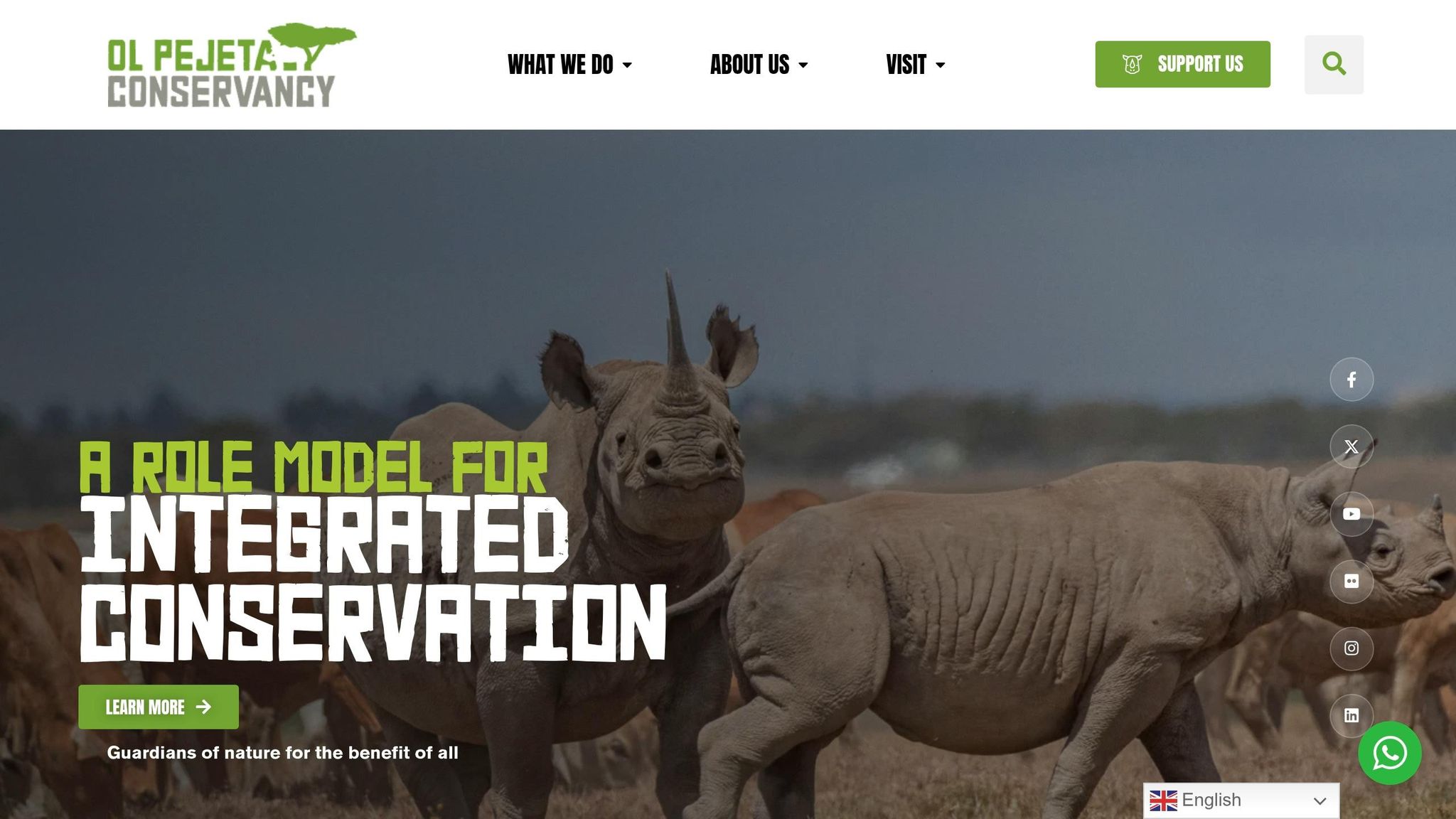
Ol Pejeta Conservancy spans an impressive 90,000 acres, featuring a mix of savannah, acacia woodlands, wetlands, and riverine forests. This diverse landscape supports a wide range of wildlife. It’s one of Kenya’s go-to destinations for spotting the Big Five, along with rare and endangered species.
The Big Five Animals
Ol Pejeta offers the chance to see lions, leopards, elephants, buffaloes, and both black and white rhinos, solidifying its reputation as a top Big Five destination in Kenya. Around 80 lions roam the conservancy, some equipped with radio collars for research purposes. The eastern grasslands are prime lion-spotting territory, especially at dawn when prides are most active. For an unforgettable experience, try the Lion Tracking activity ($70 for adults, $35 for children), which uses telemetry to locate collared lions.
Elephants are often seen in family groups along the Ewaso Nyiro River, while buffaloes graze the open plains. Leopards, on the other hand, are more elusive. Night game drives, running from either 7:00–9:00 PM or 9:00–11:00 PM, can increase your chances of spotting these nocturnal predators, along with other nighttime hunters.
The rhino population at Ol Pejeta is a standout feature. Black rhinos roam freely, particularly near water sources and dense vegetation. The conservancy is also home to Najin and Fatu, the planet’s last two northern white rhinos, housed in a secure Endangered Species Enclosure. Guided tours to this enclosure cost $70 for adults and $35 for children. Visitors can also meet Baraka, a blind black rhino, at the Morani Information Centre. Feeding Baraka from a viewing platform is included in the general park admission fee, making it a memorable stop for many.
But the Big Five are just the beginning. Ol Pejeta is also a haven for rare and endangered species.
Rare and Endangered Animals
As East and Central Africa’s largest black rhino sanctuary, Ol Pejeta is home to over 140 critically endangered black rhinos. The conservancy also supports more than 30 southern white rhinos.
Other notable species include Grevy’s zebras, Jackson’s hartebeest, and reticulated giraffes. African wild dogs, once extinct in the Laikipia area, are making a comeback here, often spotted in the open grasslands. Additionally, the conservancy is home to around 30 cheetahs, offering visitors a rare chance to see these sleek predators.
“A highlight of Ol Pejeta is the unique activities that allow you to experience Kenya’s wild spaces in a completely distinctive way. There aren’t many places where you can run with the wildlife, join a lion tracking team, or meet a rhino named Baraka.” – Mia, Kenya Travel Expert
For those seeking deeper engagement, conservation-focused activities like rhino monitoring, K9 anti-poaching dog tracking, or behind-the-scenes chimpanzee tours are available. These experiences are limited in capacity, so booking in advance is highly recommended.
Beyond the mammals, Ol Pejeta’s birdlife adds another layer of wonder.
Birds and Other Wildlife
With over 300 bird species, Ol Pejeta is a birdwatcher’s paradise. The Ewaso Nyiro River draws a variety of riverine birds, while the Hippo Hide – accessible via a dedicated nature trail – offers a chance to observe water birds alongside hippos and crocodiles. The acacia woodlands and nearby marshes are hotspots for species like grey-crowned cranes and other water-loving birds.
The Nature Trail, open from 9:30 AM to 4:30 PM, allows birding enthusiasts to explore the area on foot. For a more tailored experience, a Guided Bush/Bird Walk ($40 for adults) with an expert guide can help identify bird species and their behaviors. The Green Season, from March to May and again in November, is particularly rewarding for birdwatching, as migratory patterns bring additional species and the lush landscapes create stunning backdrops.
Rhino Conservation and Chimpanzee Sanctuary
This section highlights Ol Pejeta’s dedication to protecting rhinos and caring for chimpanzees, showcasing its broader commitment to wildlife conservation. Ol Pejeta Conservancy is a leader in African wildlife preservation, serving as the home to the last two northern white rhinos and hosting East and Central Africa’s largest black rhino sanctuary. Spanning 90,000 acres, the conservancy employs a conservation model that blends advanced anti-poaching strategies with partnerships across 21 neighboring communities, positively impacting around 45,000 people. Let’s dive into how these efforts come to life.
Black Rhino Sanctuary
Ol Pejeta’s black rhino sanctuary operates with a robust monitoring system. Rangers track individual rhinos daily, identifying them by name and keeping an eye on their health and territories. Advanced tools like radio collars help respond quickly to threats, while the K9 Unit, featuring trained bloodhounds, plays a critical role in detecting intruders and tracking scents.
The conservancy also integrates livestock grazing into its management strategy, which helps maintain grasslands essential for rhino habitats. Visitors can join Rhino Monitoring and Identification sessions ($70 for adults, $35 for children) to learn how rangers use ear notches and unique patterns to identify rhinos. At the Morani Information Centre, you can meet Baraka, a blind black rhino who lost his vision due to a fight and a cataract.
These initiatives underline Ol Pejeta’s dedication to preserving rhino populations and their habitats.
Northern White Rhino Enclosure
The northern white rhinos, Najin and Fatu, live under 24/7 armed protection in a secure enclosure. Their health and behavior are closely monitored by dedicated caretakers. Visitors can take part in the “Meet the Northern White Rhinos” experience ($70 for adults, $35 for children), which offers a rare opportunity to observe these extraordinary animals and learn about the urgent efforts to save their subspecies from extinction.
“Every penny from your booking supports efforts to rescue this species from the brink of extinction.” – Ol Pejeta Conservancy
This experience, which must be booked at least three days in advance due to high demand, also includes insights into cutting-edge reproductive technologies and international collaborations aimed at preserving northern white rhino genetics.
Sweetwaters Chimpanzee Sanctuary
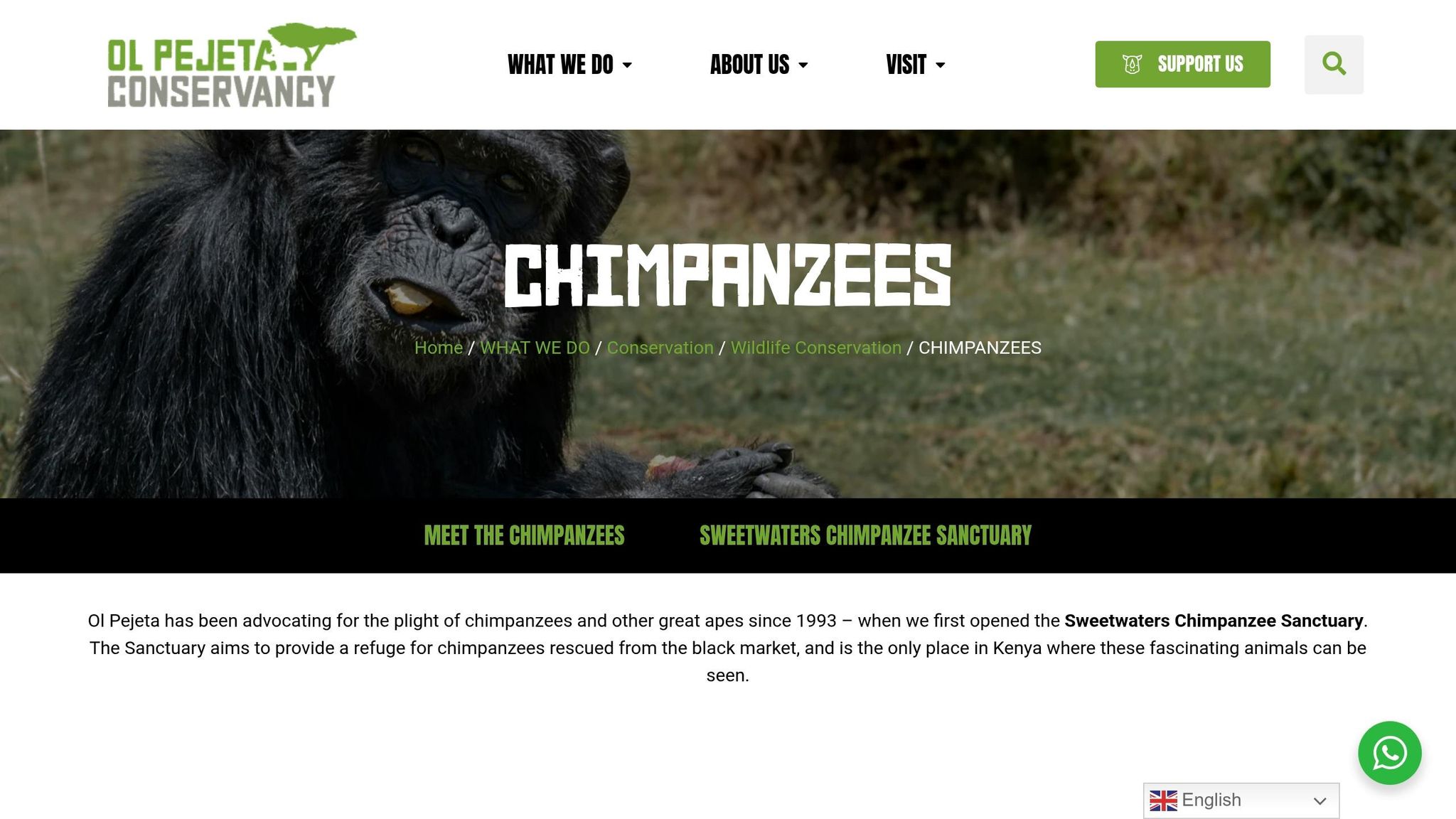
In addition to rhino conservation, Ol Pejeta is deeply committed to rescuing primates. The Sweetwaters Chimpanzee Sanctuary provides a safe haven for orphaned and rescued chimpanzees, many of whom have been victims of the illegal bushmeat trade and habitat destruction. As chimpanzees are not native to Kenya, this sanctuary offers the only opportunity in the country to see them.
Visitors can explore the sanctuary’s 250-acre riverine habitat and observe the chimpanzees in a naturalistic setting. For a more in-depth experience, the “Behind the Scenes” tour ($70 for adults, $35 for children) provides a closer look at the daily care, medical attention, and rescue stories of these primates. This one-hour tour, typically held from 11:45 AM to 12:45 PM, showcases how the sanctuary rehabilitates chimpanzees that cannot be reintroduced into the wild.
Through these efforts, Ol Pejeta continues to play a vital role in protecting endangered species and offering second chances to animals in need.
Safari Activities in Ol Pejeta
Ol Pejeta Conservancy offers an incredible range of safari experiences that combine thrilling wildlife encounters with meaningful insights into conservation efforts. Spanning 90,000 acres of diverse habitats, it’s a haven for those seeking both adventure and education. From game drives to specialized tours, there’s something for everyone.
Game Drives
Game drives are the quintessential way to explore Ol Pejeta. You can choose between guided tours or self-drive options, each offering its own charm. Guided drives use specially modified Land Cruisers with pop-up roofs for unobstructed views and sandbags to steady your camera. These tours run from 7:00 AM to 7:00 PM, with the best wildlife viewing during morning drives (6:30 AM–10:00 AM) for predator activity and late afternoon (3:00 PM–6:30 PM) for elephants and big cats.
If you prefer the freedom of self-driving, grab a physical map at the gate since mobile signals are spotty. While a 4×4 isn’t necessary during the dry season, it’s highly recommended for navigating internal tracks – and absolutely essential during the rains. Vehicle entry costs KES 1,000 for cars seating up to six people. For a more in-depth experience, guided vehicle hires are available at $200 for eight hours or $250 for twelve hours, complete with expert guidance on conservation.
For those looking for an even closer connection to nature, walking safaris and rhino tracking are excellent options.
Rhino Tracking and Walking Safaris
Rhino tracking on foot offers a rare chance to observe these majestic creatures up close. Guided by rangers and researchers, you’ll learn how to track black rhinos using radio collars and visual markers like ear notches. This experience costs KES 9,060 per person, and advance booking is a must due to limited slots.
Other walking options include early-morning lion tracking or guided bush walks, both priced at KES 9,060 per person. If you’re looking for a quieter, more immersive experience, consider a horseback safari. Riding through predator-free zones allows you to approach animals like giraffes, zebras, and elands without disturbing their natural behavior.
When the sun sets, Ol Pejeta’s offerings don’t stop – night drives and photography safaris provide a whole new perspective.
Night Drives and Photography Safaris
Ol Pejeta is one of the few places in Kenya licensed to conduct night game drives, giving visitors the chance to spot nocturnal animals. These drives run in two slots – 7:00 PM to 9:00 PM and 9:00 PM to 11:00 PM – and cost between $90 and $120 per person. With spotlights and expert guides, you might encounter aardvarks, hyenas, genets, servals, and zorillas.
“Ol Pejeta is among the few Kenyan reserves licensed to offer night drives – available only on private safaris.” – OlPejetaKenya.org
For photography enthusiasts, specialized safaris focus on capturing wildlife during the magical “golden hour” at sunrise and sunset. These tours use private vehicles tailored for camera setups, ensuring stability and optimal access for the perfect shot.
Other unique experiences include testing your tracking skills with the K9 Unit or visiting the Morani Information Centre to meet Baraka, the blind black rhino, and learn more about conservation efforts.
Each of these activities not only enhances your safari but also contributes directly to Ol Pejeta’s conservation initiatives.
Where to Stay in Ol Pejeta
Your choice of accommodation at Ol Pejeta can shape your safari experience. Staying inside the conservancy offers unparalleled access to wildlife and exclusive activities like night drives, while accommodations nearby in Nanyuki provide modern comforts at a lower cost. Each option caters to different travel preferences, so it all comes down to your priorities. Below, you’ll find details on both on-site lodges for a more immersive experience and nearby stays that balance affordability with convenience.
Lodges Inside the Conservancy
Staying within Ol Pejeta means you can wake up to the sights and sounds of wildlife right outside your tent. It also gives you immediate access to unique activities and a deeper connection to the conservancy’s conservation efforts.
- Sweetwaters Serena Tented Camp: Luxury tents here overlook a waterhole bustling with elephants, buffaloes, and rhinos – perfect for wildlife enthusiasts.
- Ol Pejeta Bush Camp: Operated by Asilia Africa, this eco-luxury camp offers a conservation-focused stay along the scenic Ewaso Nyiro River.
- Kifaru House: Ideal for families or small groups, this lodge provides exclusive private suites and personalized service.
- Pelican House: A mid-range, self-catering private home that’s great for those who enjoy cooking their own meals.
- The Stables: A budget-friendly option with dorm-style rooms for travelers looking to save.
- Ewaso Campsite and Hippo Hide: Public campsites catering to self-drive adventurers who want a true outdoor experience.
| Property | Category | Highlight |
|---|---|---|
| Sweetwaters Serena Camp | Luxury | Tents with direct waterhole views |
| Ol Pejeta Bush Camp | Eco-Luxury | Conservation-focused, riverfront location |
| Kifaru House | Luxury | Exclusive-use private suites |
| Pelican House | Mid-Range | Self-catering private house for groups |
| The Stables | Budget | Dorm-style rooms |
| Ewaso/Hippo Hide | Budget | Public campsites for self-drive adventurers |
Pro tip: If you’re visiting during the high season (June–October and December), book luxury lodges early to secure your spot.
If staying inside the conservancy isn’t your style, there are excellent options nearby.
Lodges Near Ol Pejeta
For those who prefer modern amenities at a lower cost, Nanyuki – just a 20-minute drive from the conservancy gates – offers a range of accommodations.
- Kongoni Camp: A reliable mid-range choice with comfortable facilities, located just outside the conservancy.
- Budget travelers can find studios starting around $12–$30 per night.
- Mid-range villas in the area are priced at approximately $95 per night.
The main drawback of staying outside is the daily commute and the need to follow park gate hours (7:00 AM–7:00 PM), which could limit your ability to enjoy night drives or early morning game viewing. If you choose this option, a reliable 4×4 vehicle is essential, especially during the rainy seasons (March–May and November), when conservancy roads can be challenging to navigate.
Ol Pejeta Park Fees and Costs
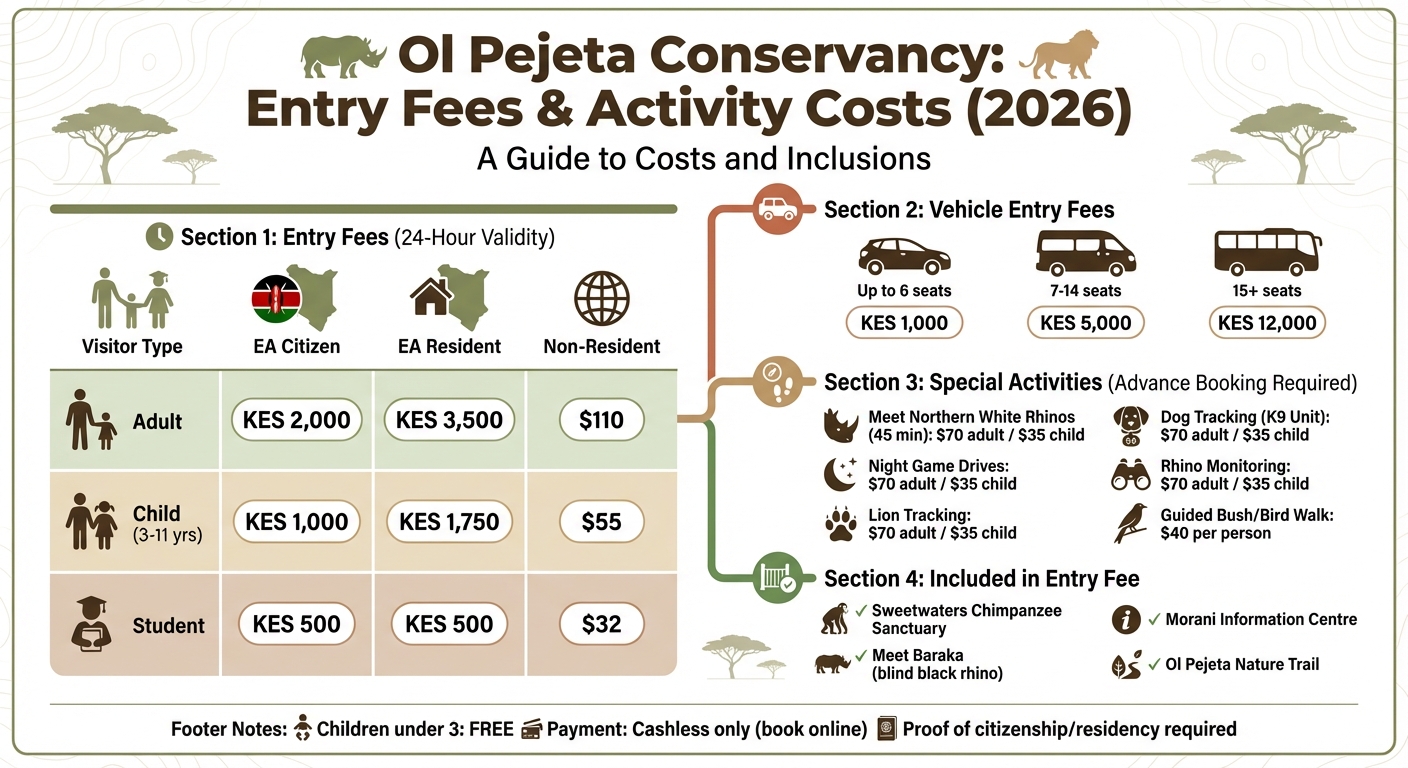
Planning your safari begins with knowing the fees at Ol Pejeta Conservancy. These charges directly contribute to the park’s conservation programs. Ol Pejeta operates a cashless entry system, so you’ll need to book and pay online before your visit. Entry fees are valid for 24 hours for overnight guests, giving you ample time to explore. For day visitors, the park enforces a single-entry policy – if you leave and wish to return later, you’ll need to pay another entry fee. To qualify for the correct rate, bring proof of citizenship or residency, such as a passport, national ID, or work permit.
Entry Fees by Visitor Type
Ol Pejeta’s pricing is divided into categories for East African citizens, East African residents, and international visitors. Children aged 3–11 get a 50% discount, and kids under 3 enter for free. Student groups from recognized institutions can enjoy reduced rates if they meet the minimum requirement of 10 students and provide an official letter from their school.
| Category | EA Citizen | EA Resident | Non-Resident |
|---|---|---|---|
| Adult | KES 2,000 | KES 3,500 | $110 |
| Child (3–11 yrs) | KES 1,000 | KES 1,750 | $55 |
| Student | KES 500 | KES 500 | $32 |
Vehicle entry fees are separate: KES 1,000 for cars (up to 6 seats), KES 5,000 for 7–14 seaters, and KES 12,000 for buses with 15+ seats.
Your entry fee includes access to several attractions: the Sweetwaters Chimpanzee Sanctuary, Baraka the blind black rhino, the Morani Information Centre, and the Ol Pejeta Nature Trail. The chimpanzee sanctuary operates between 8:30 AM and 12:30 PM and 2:00 PM–4:30 PM. Beyond these, additional activities come with separate costs for a more personalized experience.
Activity Costs
For those seeking unique wildlife experiences, Ol Pejeta offers specialized activities that require advance booking and extra fees. These activities not only enhance your visit but also help fund critical conservation efforts.
One of the most extraordinary opportunities is meeting the northern white rhinos, Najin and Fatu – the last two of their kind. This 45-minute experience costs $70 per adult and $35 per child and takes you into their secure enclosure for an unforgettable encounter.
“You’re not looking at a rhino. You’re looking at the end of a lineage. It’s heavy. Most people stop taking photos after a minute and just stare.” – Peter Munene, KPSGA-licensed safari guide
Night game drives ($70 per adult, $35 per child) offer a chance to see nocturnal predators like lions, leopards, and hyenas in action. Similarly, lion tracking and dog tracking, each priced at $70 per adult, provide behind-the-scenes insights. Lion tracking lets you join researchers monitoring collared lions, while dog tracking showcases the K9 unit’s anti-poaching efforts.
For a slower-paced experience, guided bush and bird walks are available for $40 per person. These walks don’t require a vehicle and allow you to immerse yourself in the park’s natural beauty.
Make sure to book these activities at least 24 hours in advance, as availability depends on factors like group size (typically limited to 6–12 guests) and animal welfare. If you’re staying in a lodge within the conservancy, check whether your entry fees are already included in your accommodation package to avoid double payments.
Best Time to Visit Ol Pejeta
Planning your visit to Ol Pejeta at the right time can make a huge difference in your safari experience. Located at an elevation of 1,800–2,000 meters (5,900–6,500 feet), Ol Pejeta enjoys a cooler and more temperate climate compared to many other safari destinations in Kenya. Mornings are typically brisk, with temperatures ranging from 50–59°F (10–15°C), while afternoons warm up to a comfortable 72–81°F (22–27°C). Thanks to its stable Big Five populations and the presence of the last two northern white rhinos, Ol Pejeta remains a must-visit destination throughout the year.
The weather patterns – especially the rainy and dry seasons – play a significant role in shaping the safari experience. The conservancy experiences two distinct rainy periods: the long rains from March to May and the short rains in November. These periods influence wildlife sightings, road conditions, and visitor numbers.
Dry Season: June–October and December–February
The dry months, spanning June to October and December to February, are ideal for wildlife viewing. During these times, animals gather around water sources, making them easier to spot. Game drives are particularly rewarding in the early morning (6:30–10:00 AM) and late afternoon (3:00–6:30 PM), with predators like lions and leopards being more active. For photographers, the clear skies offer breathtaking views of Mount Kenya, and the “golden light” of the short dry season creates perfect conditions for capturing stunning shots.
Road conditions are generally favorable during this season, making it accessible for most vehicles. Night game drives are especially exciting, as the thinner vegetation improves visibility for spotting nocturnal wildlife. However, with the dry season being peak tourist time, expect higher prices and larger crowds. Booking your safari and accommodations well in advance is highly recommended.
Green Season: March–May and November
The green season brings a completely different experience. With the rains, Ol Pejeta transforms into a lush, vibrant paradise, teeming with new life. Birdwatchers will find this period particularly exciting, as migratory species are abundant – March being an especially rewarding month for birding. The lower number of visitors during this time creates a quieter, more intimate safari atmosphere, and accommodation rates tend to be more budget-friendly.
However, the dense vegetation can make spotting larger mammals more challenging. Activities like rhino tracking on foot or horseback are better suited for the dry season, but they’re still enjoyable if planned carefully. Heavy rains can make roads muddy and slippery, so a 4×4 vehicle is essential during this period. For budget-conscious travelers, April and May are especially appealing, as they offer the lowest prices and fewer crowds. Be sure to pack layers to stay comfortable during cool mornings and prepare for occasional afternoon showers.
Whether you visit during the dry or green season, Ol Pejeta offers unforgettable experiences year-round.
Planning Your Ol Pejeta Safari
Planning a safari to Ol Pejeta might take a bit of effort, but it’s a manageable process. Located about 124 miles (200 km) north of Nairobi, this conservancy is one of Kenya’s most accessible destinations for spotting the Big Five. Whether you’re gearing up for a quick day trip or a longer adventure, knowing how to get there, picking the right itinerary, and packing appropriately will set you up for an unforgettable experience.
How to Get to Ol Pejeta
By Road from Nairobi:
The drive to Ol Pejeta is a popular option, taking about 3.5 to 4.5 hours via the A2 highway through Thika, Karatina, and Nanyuki. To make the most of your day, leave early – around 5:00 or 6:00 AM – to avoid traffic and catch wildlife during the morning hours. The conservancy has three main gates: the Main Gate near Nanyuki (most convenient for day trips), Mutara Gate to the north (ideal for visitors from Samburu or Isiolo), and Serat Gate on the east (great for those coming from the Mount Kenya area). Keep in mind, all gates are open from 7:00 AM to 7:00 PM [3,6].
While a standard sedan can handle the trip during the dry season, a 4×4 vehicle is highly recommended, especially during rainy months or when exploring internal game trails. If you’re driving yourself, make sure your fuel tank is full before arriving – there are no gas stations inside the conservancy. Alternatively, Wild Springs Adventures offers private safari vehicles with professional guides, allowing you to focus on spotting wildlife without worrying about navigation.
By Air:
For those short on time or seeking a more luxurious experience, daily flights from Nairobi’s Wilson Airport to Nanyuki Airstrip take just 45 minutes. From Nanyuki, it’s another 45-minute drive to Ol Pejeta. This option works well for multi-day safaris or when combining your visit with other nearby destinations like Samburu or Lewa.
Once your transportation is sorted, you can focus on selecting the perfect itinerary to maximize your safari.
Sample Safari Itineraries
Wild Springs Adventures offers a variety of itineraries that blend wildlife exploration with conservation-focused activities. Here are two popular options:
- 2-Day Ol Pejeta Safari: This itinerary includes early morning lion tracking, visits to the Chimpanzee Sanctuary and the northern white rhino enclosure, and two detailed game drives. It’s perfect for those who want a relaxed pace while still seeing the highlights.
- 3-Day Ultimate Safari: Building on the 2-day itinerary, this option adds night game drives (either 7:00–9:00 PM or 9:00–11:00 PM) for spotting nocturnal species, guided bush walks, and behind-the-scenes conservation tours. A typical day might start with a sunrise game drive at 6:30 AM, followed by sanctuary visits in the late morning, optional activities like rhino or horseback tracking in the afternoon, and an evening drive.
If you’re based in Nairobi and have limited time, a day trip is doable. Leave by 6:00 AM, arrive at the gate by 10:00 AM, enjoy a 4-hour game drive and sanctuary visits, and head back by 4:00 PM to return to Nairobi by around 8:00 PM. Check out the full range of safari options to find one that suits your schedule and interests.
Once you’ve chosen your itinerary, it’s time to prepare for your visit.
What to Prepare Before Your Visit
Booking and Documentation:
- Purchase entry tickets online through Ol Pejeta’s official portal to avoid delays at the gate.
- Bring a valid passport or ID for registration at the gate.
- Activities like lion tracking, rhino tracking, and night drives have limited slots and require advance booking. Wild Springs Adventures can handle these reservations as part of your package.
- Confirm all bookings with Wild Springs Adventures to align your itinerary with the conservancy’s operating hours.
Packing Essentials:
- The conservancy is plastic-free, so bring reusable water bottles.
- Wear neutral-colored clothing in shades like tan, brown, or green to blend into the environment.
- Pack a light jacket or fleece for chilly mornings, when temperatures can drop to 50–59°F (10–15°C) [2,5].
- Don’t forget binoculars and a camera with a zoom lens (200mm or longer is recommended).
- Bring sunscreen, a wide-brimmed hat, sunglasses, and insect repellent.
- A flashlight or headlamp is useful for navigating camps after dark.
- Grab a physical map at the gate, as mobile signals can be spotty in some areas.
Ol Pejeta spans 90,000 acres and features over 100 km of all-weather game-viewing tracks [3,6]. With a bit of preparation, you’ll be ready to explore key areas like the Ol Lerai Swamp and the Western Plains without missing a thing.
Why Book with Wild Springs Adventures
Booking your Ol Pejeta safari with Wild Springs Adventures means choosing expertise and a truly private experience. Their TRA-licensed professional safari guides know every inch of Ol Pejeta’s 90,000 acres. These guides are also trained naturalists, ready to identify bird calls, explain predator behavior, and position your vehicle for those perfect wildlife shots. With private, purpose-built safari vehicles, you’re in control – set your own pace, linger as long as you like with a rhino, or tweak the itinerary to suit your interests.
Wild Springs Adventures isn’t just any operator. They hold TRA Licensed Kenyan Tour Operator status, have earned a TripAdvisor Travelers’ Choice Award, and are members of the Tour Operators Society of Kenya (TOSK). They also have a physical office in Nairobi and provide Flying Doctors emergency coverage for all guests. Whether you’re tracking lions at sunrise or exploring remote parts of the conservancy, this level of professionalism and support ensures peace of mind. Their focus on personalized service and conservation makes every safari experience exceptional.
Support for Conservation
Your safari does more than deliver unforgettable moments – it actively contributes to conservation efforts. Every booking helps fund critical programs at Ol Pejeta. For example, visiting the Northern White Rhino enclosure supports efforts to save this critically endangered species. Activities like lion tracking directly fund predator ecology research, while tours of the chimpanzee sanctuary help care for over 40 rescued chimps. By booking with Wild Springs, you’re not just enjoying a safari – you’re playing a part in protecting wildlife.
In addition to these conservation-focused activities, Wild Springs offers exclusive behind-the-scenes experiences. Think veterinary lab tours, demonstrations by the anti-poaching dog unit, and discussions with the research team. They also adhere to responsible tourism practices, such as following Ol Pejeta’s plastic-free policy and ensuring wildlife viewing protocols that minimize animal disturbance.
Custom Itineraries and Customer Service
Wild Springs Adventures stands out with its 24/7 support and fully tailored itineraries. Whether you’re driving in from Nairobi or opting for a luxurious fly-in safari, they’ve got you covered. They handle all advance bookings for limited-availability activities like rhino tracking and night drives, coordinate with lodges inside the conservancy, and adapt schedules to your preferences – whether you’re after Big Five sightings or want to dive deeper into conservation efforts.
Traveling with family or friends? Costs drop for larger groups, making safaris more affordable. For non-residents, a day trip starts at $180 per person for solo travelers and goes as low as $65 per person in a group of six. Multi-day packages include accommodations, meals, and activities. For instance, the 3-Day Ultimate Ol Pejeta Experience for two adults costs around KES 174,600 ($1,200) and includes walking safaris, night drives, and more. Check out the full range of safari options to design a trip that suits your budget and schedule.
Conclusion
Ol Pejeta Conservancy is one of Africa’s standout wildlife destinations, offering unforgettable safaris paired with impactful conservation efforts. Spanning 90,000 acres, it’s the only place in the world where you can see the last two northern white rhinos, Najin and Fatu, and the only spot in Kenya with a chimpanzee sanctuary. Alongside these rare encounters, you’ll encounter the Big Five, over 300 bird species, and unique animals like Grevy’s zebra – all just a few hours’ drive from Nairobi.
What sets Ol Pejeta apart is its approach to conservation. As a non-profit, the conservancy channels tourism revenue into critical initiatives like anti-poaching efforts, genetic research, and community programs that support around 45,000 people across 21 nearby communities. Every visit contributes directly to these essential projects, making your safari experience more than just a vacation – it’s a chance to make a difference.
Whether you’re planning a day trip or an extended safari, Ol Pejeta promises intimate wildlife encounters without the usual crowds. From night drives that reveal nocturnal predators to walking safaris with armed rangers, the experiences here go beyond traditional game viewing. Its accessibility (just 3.5–4 hours from Nairobi), diverse wildlife, and conservation impact make it a must-visit on any Kenya safari itinerary.
Excited to discover Ol Pejeta for yourself? Wild Springs Adventures takes care of everything – from private vehicles and expert guides to booking exclusive activities like meeting the northern white rhinos. Check out their safari packages and start planning your adventure today.