🪦Nairobi War Graves Tour 2026 — Cwgc Cemeteries, East Africa Memorial And East African Campaign History
Safari at a Glance
Wild Springs Adventures · Nairobi's Trusted Heritage Tour Specialists Since 2013
🏆 TripAdvisor Travelers' Choice 2024 & 2025 · ✅ TRA Licensed No. TRA1/47/C01/25895 · 🏛️ TOSK Member #0082
The Largest War Cemetery in East Africa Is on the Edge of Nairobi
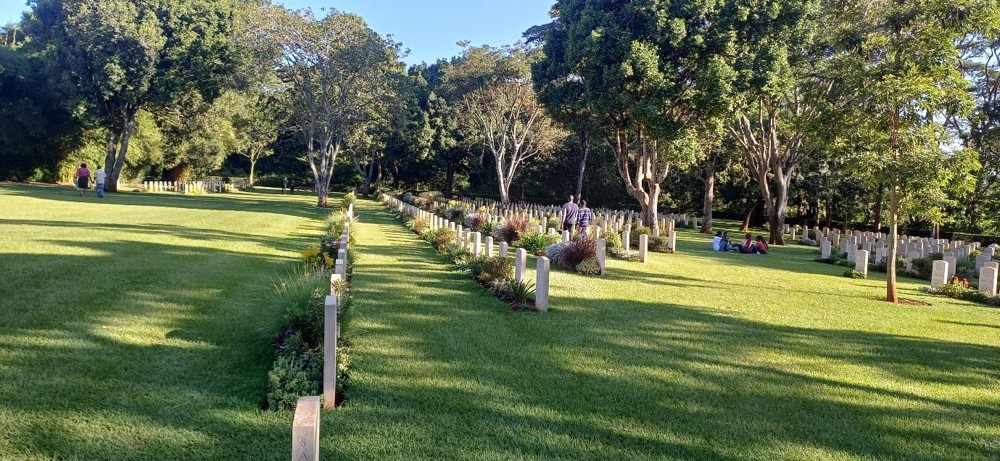
Ten kilometres west of Nairobi city centre, on Ngong Road adjacent to the Nairobi Racecourse and within the Ngong Forest Reserve, lies one of the most significant Commonwealth War Graves sites in Africa. The Nairobi War Cemetery holds 1,952 Commonwealth war graves — including 11 unknown soldiers — and contains two major memorials that together commemorate thousands more whose graves could never be found.
This is the largest war cemetery in East Africa. And most visitors to Nairobi drive past the Ngong Road turnoff without knowing it is there.
During World War II, Nairobi was the headquarters of the East African Force — the base from which British and Commonwealth forces conducted the conquest of Jubaland and Italian Somaliland, the liberation of British Somaliland, and the northward sweep that opened Addis Ababa for the return of Emperor Haile Selassie. Two British General Hospitals operated in Nairobi during the war: No. 87 British General Hospital, which arrived in June 1943 and operated until December 1945, and No. 150 British General Hospital. Soldiers who died in these hospitals — from wounds sustained across East Africa, the Horn of Africa, and the Indian Ocean theatre — were buried in the Ngong Road cemetery, which was opened by military authorities in 1941.
The Nairobi War Graves Tour is the only guided tour in Nairobi that gives these sites the historical depth they deserve. Led by expert local guides trained in East African Campaign history, this full-day experience covers all three major Nairobi CWGC sites, the colonial wartime memorial architecture of the CBD, and the broader strategic story of why Nairobi became a wartime capital — all through the lens of the individual soldiers whose graves you stand beside.
Tour at a Glance
| Feature | Details |
|---|---|
| 📍 Sites Visited | Nairobi War Cemetery (Ngong Road) · Kariokor War Graves · Nairobi South Cemetery · Kenyatta Avenue Memorial Drive |
| ⏱️ Duration | Full day — approximately 5 hours |
| 💰 Price From | KES 15,000 / $150 per person |
| 🚐 Transport | Private air-conditioned vehicle throughout — essential for safe cemetery access |
| 🧭 Guide | Expert local historian trained in East African Campaign, CWGC records, and World War II Kenya |
| 📅 Departures | Daily — 08:00 hotel pickup |
| 👥 Ideal For | Heritage travelers · Genealogy researchers · Historians · Descendants of WW1 and WW2 East Africa veterans · Educational groups |
The Three Nairobi War Cemeteries - What You Visit and Why It Matters
Nairobi War Cemetery — Ngong Road — East Africa's Largest
Location: 10km west of Nairobi city centre on Ngong Road, adjacent to Nairobi Racecourse, within Ngong Forest Reserve. Accessed via a 1km dedicated driveway off Ngong Road (indicated by CWGC direction signs). Private vehicle access is essential — walking the 1km access track is not recommended due to site conditions and security.
What is here: 1,952 Commonwealth war graves, including 11 soldiers whose identities could not be confirmed. The graves represent soldiers who died in Nairobi's military hospitals, in training, on lines of communication, and in garrison duty across Kenya during World War II. Nations represented include Britain, India, South Africa, Australia, New Zealand, East Africa, and the Caribbean.
The East Africa Memorial — within the cemetery stands the East Africa Memorial, which commemorates 2,231 servicemen of the land forces who died in the advance from the south into Italian Somaliland and Ethiopia, during the occupation of those territories, and during the operations in Madagascar in 1942 — all with no known grave. Among those commemorated here are a great part of the
301st Field Regiment, East African Artillery, lost when the troopship SS Khedive Ismail was torpedoed and sunk in the Indian Ocean on 12 February 1944 — one of the most catastrophic single maritime losses of the East African campaign. The regiment was en route to Ceylon when the ship was struck. 1,084 people died in the sinking.
The Nairobi Memorial — a tall pier with four surrounding columns of light pinkish stone, the Nairobi Memorial commemorates 477 men of the UK, South African, and East African Forces who died in non-operational zones of Kenya — in training, on lines of communication, or on garrison duty — whose graves could not be located or cannot be maintained.
Visiting note: The cemetery is open daily from 06:00 to 18:00. Wheelchair access is available. Wild monkeys live in the adjacent Ngong Forest Reserve and sometimes enter the cemetery grounds — do not approach or feed them.
Kariokor War Graves — Nairobi's Oldest Military Graves
Located in one of Nairobi's oldest residential neighbourhoods, Kariokor holds graves connected to World War I — the East African Campaign of 1914 to 1918 — when Nairobi functioned as the primary administrative and logistics hub for British forces fighting against General Paul von Lettow-Vorbeck's German Schutztruppe in what is now Tanzania. These graves represent an earlier chapter of Kenya's wartime history than the Ngong Road cemetery — soldiers who passed through Nairobi during the first global conflict, when the Uganda Railway was the military supply lifeline and the central highlands were the operational rear.
Your guide explains the specific historical context of each section of Kariokor — who is here, where they came from, and what they were doing in East Africa in the years between 1914 and 1918.
Nairobi South Cemetery — Colonial-Era Graves and the Pre-War Settlement
One of Nairobi's most historically layered burial grounds, Nairobi South Cemetery contains graves from both World Wars alongside the broader colonial-era burial record of early Nairobi. The cemetery gives your guide the opportunity to explain the full timeline of Nairobi's development as a settlement — from the 1899 railway camp through the colonial administrative period to the moment when global war arrived at Kenya's borders.
The graves here span a period of extraordinary transformation in Nairobi's history — from a papyrus swamp campsite to a WWII military headquarters in just four decades.
Kenyatta Avenue Memorial Drive — Wartime Architecture in the Living City
Your guide leads a historical drive through Nairobi's colonial-era administrative district, where plaques, monuments, and surviving wartime-era buildings mark the CBD's role as a military logistics and railway hub during both World Wars. This section of the tour contextualises the cemeteries you have visited within Nairobi's broader wartime geography — where the railway terminus was, where troops were marshalled, where the military administration operated, and how the colonial city was transformed by the pressure of a global war.
Full Day Itinerary — Nairobi War Graves Tour
| Time | Site | Historical Focus |
|---|---|---|
| 08:00 | Hotel pickup — private vehicle | Tour introduction and historical briefing en route |
| 08:30 to 09:45 | Nairobi South Cemetery | WWI and WWII graves, colonial burial record, Nairobi's founding timeline |
| 10:00 to 10:45 | Kenyatta Avenue Memorial Drive | Wartime CBD architecture, railway logistics, colonial administrative history |
| 11:00 to 12:00 | Kariokor War Graves | WWI East African Campaign graves, Uganda Railway supply chain context |
| 12:15 to 13:30 | Ngong Road War Cemetery | 1,952 WWII graves, East Africa Memorial (2,231 names), Nairobi Memorial (477 names), troopship Khedive Ismail narrative |
| 13:45 | Return to hotel or CBD | Optional archival photo review and Q&A en route |
Optional: Afternoon archival photo session — the guide brings reproductions of period photographs showing Nairobi's wartime infrastructure, soldiers at the cemeteries during dedication ceremonies, and the campaigns associated with the men buried in each site. Available for Standard and Extended packages.
Why Private Vehicle Access Is Essential for This Tour
This is not a walking tour. The Ngong Road War Cemetery is accessed via a 1km dedicated driveway from the main road. Multiple authoritative sources — including the CWGC itself — strongly advise that visitors do not walk this access track and travel to the cemetery entrance by vehicle only. There are reported security incidents in the immediate vicinity of the road section.
The Wild Springs Nairobi War Graves Tour operates in a private air-conditioned vehicle throughout — you arrive at every cemetery entrance directly, without exposure to the access roads. This is not only more comfortable, it is the correct way to visit these sites. No other mode of access is appropriate.
2026 Pricing — Nairobi War Graves Tour
Non-Residents (USD)
| 👥 Group Size | 🌐 Non-Residents (USD) |
|---|---|
| 1 Person | $150 |
| 2 Persons | $120 pp |
| 3 Persons | $100 pp |
| 4 to 6 Persons | $85 pp |
| 7 Persons | $75 pp |
Kenyan Citizens and East African Residents (KES)
| 👥 Group Size | 🇰🇪 Citizens (KES) | 🌍 Residents (KES) |
|---|---|---|
| 1 Person | 15,000 | 16,000 |
| 2 Persons | 12,000 pp | 13,000 pp |
| 3 Persons | 10,000 pp | 11,000 pp |
| 4 to 6 Persons | 8,500 pp | 9,000 pp |
| 7 Persons | 7,500 pp | 8,000 pp |
📌 Private tours — no fixed departure schedule, daily availability
📌 Genealogy research service — pre-tour CWGC record search for family members — contact us for details
📌 Deposit: 30% confirms booking · Balance due before tour departure
What Is Included
✔ Expert local historical guide trained in East African Campaign and CWGC records
✔ Private air-conditioned vehicle throughout — essential for Ngong Road access
✔ All four Nairobi war cemetery and memorial site visits
✔ Archival photograph collection shown at relevant sites
✔ Bottled water and light refreshments
✔ CWGC record search at each site for named individuals on request
✔ AMREF Flying Doctors emergency cover
What Is Not Included
✗ Full meals — guide recommends local establishments at conclusion
✗ Personal travel insurance — recommended
✗ Gratuities for guide and driver
✗ Extended Murang'a and Nyeri expedition — separate tour
✗ Professional filming permits for commercial content
Genealogy Research — Finding Your Family's East Africa War Grave
The Nairobi War Graves Tour is the starting point for many visitors conducting ancestral research into family members who served and died in East Africa during World War I or World War II. The CWGC maintains complete records for all 1,952 graves at Ngong Road and all names on the East Africa and Nairobi Memorials.
Wild Springs offers a pre-tour CWGC record search service — contact us with the name and service details of any family member you believe may be commemorated in Nairobi. We search the CWGC online database, confirm the specific grave or memorial panel, and plan your tour visit around that site. For families who have carried this research across generations, standing at the correct grave in the correct cemetery is an experience of extraordinary personal significance.
Email [email protected] with your family research details before booking.
What to Wear and Bring
Comfortable, closed-toe walking shoes — some cemetery paths are grass and the access tracks are firm. Respectful attire is required at all cemetery sites — avoid shorts above the knee or sleeveless tops. Light breathable clothing suitable for Nairobi's mild daytime climate. A hat and sunscreen for outdoor sections. A camera. A notebook if you plan to record grave details or inscriptions. Identification — national ID or passport copy.
Do not carry valuables — the Ngong Road area has reported security incidents. Your Wild Springs guide manages all logistics and your vehicle remains with the group throughout.
Why Book With Wild Springs Adventures
✔ TRA Licensed Tour Operator — License No. TRA1/47/C01/25895
✔ TripAdvisor Travelers' Choice 2024 and 2025
✔ TOSK Member #0082 — Tour Operators Society of Kenya
✔ Private Vehicle Throughout
✔ Historical Depth — Our guides are not generic tour drivers who have memorised cemetery facts. They are local historians with specific training in East African Campaign history, CWGC record systems, and the individual stories of the men commemorated at each site.
✔ Genealogy Research Capability
✔ Kenya's Most Complete War Heritage Programme
What Our Guests Say
⭐⭐⭐⭐⭐ "The Most Respectful and Historically Rigorous War Graves Tour I Have Experienced."
I have visited Commonwealth War Graves in France, Belgium, Gallipoli, and Singapore. The Nairobi cemetery was the most unexpected — the size of it, the diversity of nations represented, and the East Africa Memorial with its thousands of names of men with no known grave. Our Wild Springs guide knew the individual stories, the military operations, the specific campaigns. This was not a driving tour past headstones. It was a genuine historical education. I came to trace my grandfather's regiment. I left understanding the entire East African Campaign.- Verified Heritage Traveler, Australia · TripAdvisor ✅
⭐⭐⭐⭐⭐ "The Khedive Ismail Story Changed Everything."
I visited the Ngong Road cemetery expecting a quiet hour among headstones. When our guide explained the East Africa Memorial and told the story of the troopship Khedive Ismail — over a thousand men gone in a single sinking — the scale of what these memorials represent became completely real. A profoundly moving experience, delivered with exceptional historical knowledge and genuine respect for the fallen.- Verified International Traveler, United Kingdom · TripAdvisor ✅
Frequently Asked Questions — Nairobi War Graves Tour
What is the Nairobi War Cemetery on Ngong Road?
The Nairobi War Cemetery on Ngong Road is the largest war cemetery in East Africa, containing 1,952 Commonwealth war graves (11 unknown) from World War II. It is located 10km west of Nairobi city centre, adjacent to Nairobi Racecourse, within the Ngong Forest Reserve. It was opened by military authorities in 1941 when Nairobi was the headquarters of the East African Force. The cemetery also contains two memorials — the East Africa Memorial (2,231 names with no known grave) and the Nairobi Memorial (477 names). It is maintained by the Commonwealth War Graves Commission (CWGC) and is open daily from 06:00 to 18:00.
Is it safe to visit the Nairobi War Cemetery?
Yes — when accessed correctly by vehicle. Both the CWGC and multiple authoritative sources note that there have been reported security incidents in the vicinity of the cemetery and that visitors should not walk the 1km access track from Ngong Road. The Wild Springs Nairobi War Graves Tour operates in a private vehicle throughout — you arrive at every cemetery entrance directly. Our guides know the correct access routes. Do not carry valuables.
What is the East Africa Memorial at Ngong Road War Cemetery?
The East Africa Memorial at Ngong Road War Cemetery commemorates 2,231 servicemen of the Commonwealth land forces who died in the advance into Italian Somaliland and Ethiopia, the operations in Madagascar in 1942, and related campaigns — all with no known grave. Among those commemorated are most of the 301st Field Regiment, East African Artillery, lost when the troopship SS Khedive Ismail was torpedoed and sunk in the Indian Ocean on 12 February 1944, killing 1,084 people.
Can I find a specific family member's grave in the Nairobi war cemeteries?
Yes. The CWGC maintains searchable records for all 1,952 graves at Ngong Road and all names on both the East Africa and Nairobi Memorials. Wild Springs offers a pre-tour genealogy research service — contact us with the name and service details of any family member and we will search the CWGC database, confirm the grave or memorial panel location, and plan your visit specifically around that site. Email [email protected] before booking.
What is the difference between the Nairobi War Graves Tour and the Murang'a-Nyeri expedition?
The Nairobi War Graves Tour is a 1-day Nairobi-based experience covering the three main Nairobi CWGC cemeteries. The Murang'a-Nyeri expedition is a 2 to 3 day journey into the Central Highlands covering the Murang'a lone grave of Corporal Harry Clement Seates RAMC, Nyeri War Cemetery's WWII hospital graves, and Lord Baden-Powell's grave in Nyeri. Many visitors do the Nairobi day tour first, then extend to the Central Highlands. Wild Springs can combine both into a seamless heritage expedition.
Why was Nairobi such a significant WWII location?
During World War II, Nairobi was the headquarters of the East African Force — the operational command centre for British and Commonwealth military operations across the Horn of Africa. It was the base for the conquest of Jubaland and Italian Somaliland, the liberation of British Somaliland, and the northward campaign that opened Addis Ababa for Emperor Haile Selassie's return in 1941. Two British General Hospitals operated in Nairobi, and the city functioned as the principal medical evacuation centre for the entire East African theatre. This is why its cemetery is the largest in East Africa.
Can I combine the Nairobi war graves tour with wildlife safaris?
Yes. The Nairobi War Graves Tour operates in a single day, making it ideal as the first or last day of a wider Kenya itinerary. Many visitors combine it with the Aberdare National Park Safari (where Princess Elizabeth became Queen in 1952 — another Central Kenya wartime-era story), or with the Ol Pejeta Conservancy which is adjacent to the Nyeri area. Contact Wild Springs to design the combined itinerary.
How do I book the Nairobi war graves and monuments tour?
WhatsApp us at +254 729 257 317 or email [email protected] with your preferred date, group size, and whether you require the pre-tour CWGC genealogy research service. We confirm availability and send a full quote within 2 hours. A 30% deposit confirms your booking. Balance due before tour departure.
Continue Your Kenya World War Heritage Journey
🏔️ Kenya World War Heritage Tour — Nairobi, Murang'a, and Nyeri Expedition — 2 to 3 days into the Central Highlands — Lord Baden-Powell's grave, Nyeri War Cemetery WWII hospital graves, and the lone Murang'a Commonwealth grave. The natural extension of this Nairobi day tour.
⚔️ Kenya World War Heritage Trail Tour — Voi, Tsavo, and Mombasa — The East African Campaign battlefields in Taita Taveta County, the Indian Army cemeteries at Maktau and Taveta, and the coastal heritage of Mombasa's wartime port.
🏛️ Nairobi City Heritage Walking Tour — The colonial architecture circuit — Kimathi Street, August 7th Memorial Park (1998 US Embassy bombing), KICC Helipad panoramic view. The ideal morning pairing before the afternoon war cemeteries circuit.
🛍️ Gikomba Market Day Trip Nairobi — Balance the historical weight of the war cemeteries with the living energy of East Africa's largest street market, the following morning.
🌊🦁 Aberdare National Park Safari — The Ark and Treetops lodges in the Aberdares — where Princess Elizabeth became Queen in 1952, adjacent to the Central Highlands heritage sites.
Book Your Nairobi War Graves Tour
📱 WhatsApp / Call: +254 729 257 317 · +254 734 417 496
📧 [email protected] · [email protected]
📱 M-Pesa Paybill: 4065921 · Account: Your name plus "War Graves Tour"
We respond within 2 hours on WhatsApp. Tell us your preferred date, group size, and whether you have a specific family member to trace at any of the cemeteries. 🪖🏛️
Where You Will Visit
This safari explores the following regions in Kenya
- Nairobi