8 Days Tanzania Safari 2026 | Tarangire, Lake Natron, Serengeti & Ngorongoro Circuit
Safari at a Glance
🏆 TripAdvisor Travelers' Choice 2024, 2025 & 2026 · ✅ TRA Licensed TRA1/47/C01/25895 · 🏛️ TOSK Member #0082 · 🚑 Flying Doctors Cover Included · 🔰 KPSGA-Certified Guides
Safari at a Glance
| Feature | Details |
|---|---|
| Destination | Northern Tanzania — 4 UNESCO-listed & Ramsar-protected ecosystems |
| Duration | 8 Days / 7 Nights |
| Departure Point | Nairobi, Kenya (hotel or residence pickup included) |
| End Point | Nairobi, Kenya (drop-off included) |
| Safari Style | Private 4×4 |
| Vehicle | Purpose-built 4×4 Land Cruiser — pop-up roof, charging ports, cooler box |
| Accommodation | Full-board lodges & tented camps — Budget / Mid-Range / Luxury |
| Parks Visited | Tarangire NP · Lake Natron (Ramsar Site) · Serengeti NP · Ngorongoro Conservation Area |
| Group Size | Private: 1–8 |
| Best Months | June–October (dry season) · January–February (calving) |
| Border Transfer | Namanga crossing (Kenya–Tanzania) — both directions included |
| Departures | Private: any date |
Why This 8-Day Tanzania Safari from Nairobi Is the Circuit No One Else Does Properly
Most operators running this circuit make one of two critical mistakes. They either swap Lake Natron for the more accessible Lake Manyara — removing the most extraordinary landscape on the entire route — or they include Natron as a single rushed afternoon stop and move on. Neither approach is acceptable.
The Wild Springs 8-day Tanzania safari from Nairobi does not shortchange a single park. We give Tarangire two full days — because one day cannot do justice to 2,850 km² of elephant-saturated wilderness. We give Lake Natron two full days, including the Engare Sero waterfall hike and the flamingo flats at dawn. We give the Serengeti two full game drive days in the park itself. And we close the circuit with a full crater-floor descent into Ngorongoro.
Moreover, as a Nairobi-based operator, we bring something no Tanzania-based competitor can: seamless Kenyan border logistics, Nairobi pickup and drop-off included, and the option to extend this circuit into Kenya's greatest parks — the Masai Mara, Amboseli, or Samburu — under one booking and one team.
Eight days. Four of East Africa's most extraordinary ecosystems. One team managing the entire journey.
🌿 Why Lake Natron Is the Conservation Story of 2025
Most competitors simply list Lake Natron as a landscape stop. Here is what they are not telling you — and why visiting now matters more than ever.
In August 2025, the Tanzanian government confirmed it would not permit large-scale soda ash extraction at Lake Natron, following four months of international advocacy led by BirdLife International and Nature Tanzania. The lake's designation as a Ramsar Wetland of International Importance — the global treaty protecting the world's most significant wetlands — was the decisive factor.
At stake was the only breeding ground on Earth for the Lesser Flamingo (Phoeniconaias minor), classified as Near Threatened on the IUCN Red List. Lake Natron supports between 1.5 and 2.5 million Lesser Flamingos — representing approximately 75% of the global population. When you stand on its shore, you are watching three-quarters of an entire species go about its ancient life.
By visiting Lake Natron responsibly — following strict shoreline approach guidelines, supporting local Maasai community income through the village contribution, and travelling with an operator that observes Leave No Trace principles — you directly contribute to the economic case for protecting this irreplaceable site.
"Lake Natron is the cradle of Africa's Lesser Flamingos. Every chick that joins those flocks starts life on Natron's mud flats." — Sebastian Ngasoma, ornithologist, Kilombero Valley Ornithological Center
🗺️ The Four Parks - Deep Dives Into Each Ecosystem
🐘 Tarangire National Park - Africa's Elephant Parliament
Tanzania's most underrated park. While Ngorongoro receives over 500,000 visitors annually, Tarangire sees a fraction of that number — yet between June and October it holds more elephants per square kilometre than virtually anywhere else in Africa.
The mechanism is simple and dramatic. The Tarangire River is the only permanent water source for hundreds of kilometres in every direction during the dry season. As the surrounding landscape desiccates, wildlife funnels toward it: elephant herds of 200 or more, lion prides, leopards in baobab canopy, pythons draped across ancient limbs. The Silale Swamp — a hidden permanent wetland deep inside the park — amplifies this concentration beyond what most visitors expect.
The baobab trees are Tarangire's geological signature. Some individuals predate the Roman Empire by over a thousand years. TANAPA classifies Tarangire as a mid-range park; your park entry fees fund the ranger patrols that protect these ancient animals and trees year-round.
The stats: 2,850 km² | Elephant density peaks at 3–6 per km² in dry season | Over 550 bird species recorded — the highest of any Tanzanian park | Highest density of African wild dog in northern Tanzania
Target wildlife: African elephant (herds 50–300), lion, leopard, cheetah, African wild dog, Nile monitor lizard, python, greater kudu, fringe-eared oryx, gerenuk, yellow-collared lovebird, ashy starling, northern pied babbler.
What competitors miss: The southern circuit — the Larmakau and Gursi areas — which most operators never reach on a one-day Tarangire visit. Wild dogs operate here. Enormous elephant aggregations happen here. Our second full day goes there.
🦩 Lake Natron - The Ramsar Site That Almost Disappeared
Nothing prepares you for Lake Natron.
The lake is a soda flat of pH 10.5 - more alkaline than household bleach - coloured blood-red by extremophile cyanobacteria (Arthrospira), turning coral-pink and crimson depending on the light and angle. At its centre, where no tourist boat has ever sailed, the water temperature can reach 60°C. It is, as one peer-reviewed study published in Science Direct concluded, "the world's most caustic body of water."
Rising directly behind it: Ol Doinyo Lengai - the "Mountain of God" in Maa - an active stratovolcano still producing natrocarbonatite lava, the world's only example of this lava type. It erupts black and cold at 510°C (compared to basaltic lava at 1,100°C), oxidising to white on the surface within hours.
The lake's shore preserves hominid footprints estimated at 120,000 years old - some of the oldest human ancestor tracks found in East Africa, preserved in hardened volcanic ash when our anatomically modern ancestors walked this shore during the late Pleistocene.
Since 2001, the lake has held Ramsar Wetland of International Importance designation. The August 2025 government decision confirms this protection holds. Visiting now, in the immediate aftermath of this conservation victory, carries a particular weight.
Target wildlife & birds: Lesser flamingo (1.5–2.5 million), greater flamingo, African fish eagle, yellow-billed stork, African spoonbill, Kittlitz's plover, three-banded plover. The Maasai communities of the Natron Basin manage the surrounding Wildlife Management Area; your visit directly supports their livelihoods.
🦁 Serengeti National Park - The Greatest Wildlife Show on Earth
The word Siringitu in Maa means "the place where the land runs on forever." The name has not aged. Stand on the central plains at dawn, and you feel the accuracy of every syllable.
The Serengeti covers 14,763 km² and sits at the heart of the Serengeti-Mara Ecosystem - a 25,000 km² system extending north into Kenya's Masai Mara. The ecosystem holds the largest terrestrial mammal migration on Earth: approximately 1.7 million wildebeest, 400,000 zebras, and 300,000 Thomson's gazelles tracing a clockwise loop across both countries, driven by rainfall patterns that have not changed since the Pleistocene.
The Mara River crossings (July–September, northern Serengeti) are what most visitors picture when they think of this park: thousands of wildebeest plunging simultaneously into Nile-crocodile-filled water, with 5-metre individuals erupting from the depths. The chaos is both horrifying and magnificent. However, the Serengeti is extraordinary in every month.
- Ndutu area (January–March): Half a million wildebeest calve here. Lion, cheetah, hyena, and jackal converge. Predator action reaches its annual peak.
- Seronera Valley (year-round): Permanent water holds a resident lion population estimated at 3,000 individuals across the ecosystem, with the Seronera Valley supporting the highest density. Leopards use specific sausage trees your guide knows by name.
- Northern Serengeti (April–June, October–November): Between migration phases, the park is at its least crowded. Lions are active. The vegetation is richest. Costs are lower.
According to the African Wildlife Foundation, the wildebeest migration is one of the most ecologically significant annual events on the planet — moving 40,000 tonnes of carbon through the ecosystem via grazing and decomposition.
Park entry fee transparency: $70–$82.60 per adult per day (non-resident) valid July 2025–June 2026 per TANAPA's published tariffs. This fee is fully included in your Wild Springs package. No surprises at the gate.
🦏 Ngorongoro Crater - The UNESCO Caldera That Defies Belief
The Ngorongoro Crater is a UNESCO World Heritage Site (inscribed 1979), an African Seven Natural Wonders designation (2013), a UNESCO Man and Biosphere Reserve (1971), and the world's largest intact volcanic caldera that has not collapsed into a lake. It formed 2–3 million years ago when a giant volcanic peak — estimated to have been as tall as Kilimanjaro — erupted catastrophically and collapsed inward.
The statistics inside the crater floor are extraordinary:
- 25,000+ large animals within 264 km²
- 30 black rhinoceros — up from a catastrophic low of 11–14 individuals in 1995, the result of intensive 24/7 ranger protection. This is the single most reliable black rhino sighting location in East Africa
- 60–68 permanent resident lions on the crater floor — one of the highest pride densities on Earth
- 7,000 wildebeest that never migrate (enough food and water year-round)
- 4,000 zebras in permanent herds
- 600 spotted hyenas — the densest hyena population in Africa
- Hippopotamus in the famous hippo pool near Lake Magadi
- Flamingos on Lake Magadi's shoreline year-round
What makes Ngorongoro unique among all crater ecosystems is that the Maasai are permitted inside. The Ngorongoro Conservation Area Authority (NCAA) manages a multiple-use area where semi-nomadic pastoralists graze livestock alongside lions. You may see Maasai cattle walking beside zebra. This coexistence is several thousand years old.
Olduvai Gorge — a 14-km ravine inside the conservation area — is where Louis and Mary Leakey discovered Homo habilis remains dating back 1.8 million years, alongside stone tools from the same period. It is one of the most significant paleoanthropological sites on Earth. Your route passes near it on transit days.
Park fee transparency: Ngorongoro Crater entry is $70.80 per adult per day (non-resident) managed by the NCAA separately from TANAPA, plus a Crater Service Fee of $295 per vehicle per descent (not per person). Both fees are fully included in your Wild Springs package pricing.
🗓️ Full 8-Day Itinerary
Day 1 - Nairobi to Arusha: Crossing Into the Southern Arc
Distance: ~260 km | Drive time: ~4.5 hours | Border: Namanga, Kenya–Tanzania | Meals: Lunch, Dinner
Pickup from your Nairobi hotel or residence from 6:30 AM. Your KPSGA-certified Wild Springs driver-guide conducts a safari briefing during the drive south through Athi Plains, Kajiado, and the Maasai lowlands. The landscape shifts visibly: redder, drier, more volcanic.
Namanga border crossing: Our team manages all vehicle documentation, Tanzania immigration paperwork, and visa-on-arrival coordination. Crossing time: 30–60 minutes. For guests who applied in advance via Tanzania's e-Visa portal, the process is typically faster. Single-entry tourist visa: $50 USD for most nationalities (not included in package — see Section 4).
After crossing, Mount Kilimanjaro may be visible to the southeast on clear mornings. Mount Meru rises ahead to the west. You arrive in Arusha by early afternoon for lunch and check-in.
Wildlife en route: Maasai cattle in red shuka cloth, Maasai giraffe on the Kenya–Tanzania border corridor, occasional zebra near the Athi-Kapiti plains.
🍽️ Meals: Lunch (Arusha), Dinner | 🏨 Overnight: Arusha (tier options below)
Day 2 - Arusha → Tarangire National Park: First Contact
Distance: ~118 km from Arusha | Drive: ~2 hours | Park entry: ~10:00 AM | Meals: Breakfast, Lunch, Dinner
Early breakfast, then drive southwest on the B142 toward Tarangire. The road passes through traditional Maasai bomas and increasingly arid thornscrub before the park gate appears.
Enter Tarangire National Park by mid-morning — when elephant matriarchs are leading family units toward the river. Your guide navigates first toward the Tarangire River corridor, then to the Silale Swamp area, which most operators never reach on a single-day visit.
Pay attention: your guide reads the landscape continuously. Circling vultures mean a fresh kill. Dust columns mean large elephant herds on the move. Alarm calls from baboons or impala mean a predator is nearby. This interpretive dimension — the reason Wild Springs specifies KPSGA-certified guides — transforms what you see from wildlife viewing into ecological understanding.
Afternoon game drive: Deeper into the baobab forest section. The amber light at 5 PM through ancient baobab canopy is among East Africa's finest photography conditions.
Wildlife to watch for: Elephant herds crossing the road (expect close encounters), lion resting under baobabs (frequent in dry season), python basking on rocky outcrops, yellow-collared lovebirds in feeding flocks.
🍽️ Meals: Breakfast, Lunch (picnic), Dinner | 🏕️ Overnight: Tarangire tented camp or lodge
Day 3 - Full Day Tarangire: The Deep Southern Circuit
Full park day | Meals: Breakfast, Bush Lunch, Dinner
No competitor gives Tarangire two days. We do, because the wildlife intelligence gathered on Day 2 — your guide's radio network of notes from other drivers and rangers — makes Day 3 exponentially more productive.
Dawn game drive from 6:00 AM: This golden hour is non-negotiable. Lions are still active or feeding. Cheetahs begin their hunts. The light is low and warm. In Tarangire, this is also when wild dogs occasionally move through the southern circuit.
Southern Tarangire: The Larmakau and Gursi circuits see dramatically fewer vehicles than the northern river corridor. African wild dog sightings here are among the most reliable in northern Tanzania. Massive elephant aggregations — breeding herds merging with bachelor groups — build toward the river at its most dramatic.
Bush lunch: Your camp prepares a packed lunch eaten in the field. Your guide uses the break to identify the hornbills, francolins, and weavers that investigate your vehicle.
Afternoon drive: Back toward the baobab forest as light drops. The Tarangire python — famous for its tree-climbing behaviour unique to this park — is best located at this hour. Sundowners arranged by your camp.
Wildlife to watch for: Wild dog pack (radio intel from the morning), elephant matriarchs leading family units of 20–30 toward the evening drink, great hornbill nesting cavities in 3,000-year-old baobabs.
🍽️ Meals: Breakfast, Bush Lunch, Dinner | 🏕️ Overnight: Tarangire tented camp or lodge
Day 4 - Tarangire → Lake Natron: Descent Into the Rift
Distance: ~200 km | Drive: ~3.5 hours northeast | Meals: Breakfast, Lunch, Dinner
Depart after breakfast, heading northeast on roads that carry you through the heart of Maasai country. The landscape changes rapidly: greener highlands give way to increasingly volcanic, semi-arid terrain. You are descending into the eastern branch of the East African Rift Valley, one of the most tectonically active regions on the planet.
The first view of Lake Natron from the escarpment above stops most guests mid-sentence. A crimson-pink mirror surrounded by blindingly white soda flats. Behind it, the near-perfect cone of Ol Doinyo Lengai rising 2,962 metres above sea level — still visibly smoking above its summit.
Descend to the lakeshore, check into camp, and walk to the flamingo flats before the afternoon light changes. The walk to the shore is short but overwhelming: the scale of the flamingo numbers, the silence broken only by wings and mineral water, the smell of sulphur and soda — all of it unlike anything in conventional wildlife photography.
Guided shoreline walk (late afternoon): Your guide explains the Ramsar Convention status, the August 2025 mining protection victory, and the alkaline chemistry that makes this one of the most hostile environments on Earth — and the world's most important flamingo nursery.
Sunset over Ol Doinyo Lengai: A stratovolcano silhouette against an orange sky with flamingos in the foreground. This photograph requires no filter, no editing, and no skill — only presence.
Wildlife to watch: Lesser flamingo in their thousands (near-guaranteed year-round), greater flamingo, African fish eagle hunting inlet streams, Maasai herding cattle along the lake's western shore.
🍽️ Meals: Breakfast, Lunch, Dinner | 🏕️ Overnight: Lake Natron tented camp
Day 5 - Lake Natron: Waterfall Hike & Flamingo Morning
Active day | Meals: Breakfast, Packed Lunch, Dinner
6:00 AM flamingo dawn walk: The hour before full sunrise is when the flamingo flats are most active and the light most extraordinary. Your guide navigates the shore, maintaining respectful distance from nesting areas as required by Tanzania Wildlife Management Area regulations.
Engare Sero waterfall hike (8:00 AM): A 3-hour guided round trip — approximately 6–7 km — through one of Africa's most dramatic volcanic landscapes. The trail crosses lava fields, ancient ash formations, and the hominid footprint site: tracks from anatomically modern humans estimated at 120,000 years old, preserved when our ancestors walked wet volcanic ash on this same shore. One of the largest collections of human ancestor footprints outside Laetoli.
The waterfall itself — a powerful cascade falling from the Rift escarpment into a basalt gorge — appears in no major guidebook and on no mainstream tourist itinerary. Swimming is possible in the plunge pools at its base.
Afternoon: Return to camp. The optional Maasai community visit ($15 per person, paid directly to the village) — one of the most genuine cultural encounters on this circuit, in a community that has lived alongside and protected this lake for generations.
For the adventurous: The Ol Doinyo Lengai night ascent — departing camp at 11 PM for a sunrise summit — is available on request, requiring advance booking and additional cost. The erupting caldera at sunrise, 2,962 metres above the flamingo lake, is one of the most extreme and extraordinary experiences in East Africa.
🍽️ Meals: Breakfast, Packed Lunch, Dinner | 🏕️ Overnight: Lake Natron tented camp
Day 6 - Lake Natron → Serengeti National Park: The Plains Open Up
Distance: ~230 km via Ngorongoro | Drive: ~3–3.5 hours | Meals: Breakfast, Lunch, Dinner
Early departure from Lake Natron. The route climbs back up the Rift Valley escarpment — the road rising through stages of vegetation change from alkaline desert to highland forest. You transit through the Ngorongoro Conservation Area, catching your first view of the crater rim — a preview of Day 8's descent.
Enter the Serengeti National Park through the Naabi Hill gate by late morning. The road flattens immediately onto open grassland extending to every horizon. Wildebeest. Zebra. Impala. The scale is disorienting after the volcanic drama of the previous two days.
Afternoon game drive in the Seronera Valley: The park's most wildlife-dense corridor, where the Seronera and Orangi rivers create year-round water and shade. This is the territory of the park's most photographed lion prides. Your guide has radio contact with the wider driver network; fresh sightings intel shapes the route in real time.
Arrive at your Serengeti camp before sunset. The sounds are different from Tarangire and Natron: hyena calls across the plains, distant lion roars, the rustle of nocturnal wildlife within metres of the mess tent.
Wildlife to watch: Cheetah on kopje outcrops (the quintessential Serengeti image), lion prides with cubs in Seronera, giraffe moving in slow procession, olive baboon troops, Thomson's gazelle in enormous mixed herds.
🍽️ Meals: Breakfast, Lunch, Dinner | 🏕️ Overnight: Central Serengeti camp or lodge
Day 7 - Full Day Serengeti: The Greatest Wildlife Day in Africa
Full park day | Meals: Breakfast, Lunch, Dinner
No check-out. No transfers. Nothing between you and whatever the Serengeti offers.
Dawn game drive from 5:30 AM — this is the hour that separates a good safari from a life-changing one. Lions on kills. Cheetahs beginning scans from termite mounds. The light arriving in stages across 40 km of flat savannah. Your guide has received overnight radio intel from rangers and fellow drivers across the park.
SEASONAL VARIATIONS:
July–September (migration season): Your guide may drive north toward the Mara River crossing zone. Timing a wildebeest crossing requires patience and reading animal massing behaviour — sometimes 30 minutes of waiting, sometimes 4 hours. Your guide manages this honestly; the crossing always rewards patience.
January–March (calving season at Ndutu): The southern Serengeti hosts half a million wildebeest calves within a 6-week window. Cheetah, lion, hyena, and jackal operate at their annual peak. This is arguably more spectacular than the river crossing for predator action.
April–June and October–November (shoulder seasons): The Serengeti at its least crowded. Green vegetation, resident predators active, 30–40% fewer vehicles at any sighting. Your guide has more space, more time, more flexibility.
Optional — hot air balloon safari ($549–$649/person): An hour drifting silently over the Serengeti at dawn in a balloon, followed by a bush champagne breakfast. One of the ten experiences most frequently described as "life-changing" by our returning guests. We book this for you in advance — ask at the time of booking.
Afternoon: Return to kopje area. Your guide knows specific trees where resident leopards rest. These are not assumptions — they are specific GPS-pinned observation points from years of driving this area. Sundowners, then dinner as the last light leaves the plains.
Wildlife to watch: Leopard in acacia trees (the grail shot for wildlife photographers), lion kill in progress, African wild dog if a pack is located, martial eagle — Africa's most powerful raptor — on an open perch, Kori bustard displaying on grassland, secretary bird marching.
🍽️ Meals: Breakfast, Lunch, Dinner | 🏕️ Overnight: Central Serengeti camp or lodge
Day 8 - Serengeti → Ngorongoro Crater → Nairobi: The Grand Finale
Drive: Serengeti to crater rim ~2.5 hours | Crater descent, floor drive, ascent ~4 hours | Arusha to Nairobi ~4.5 hours Meals: Breakfast, Crater floor picnic lunch
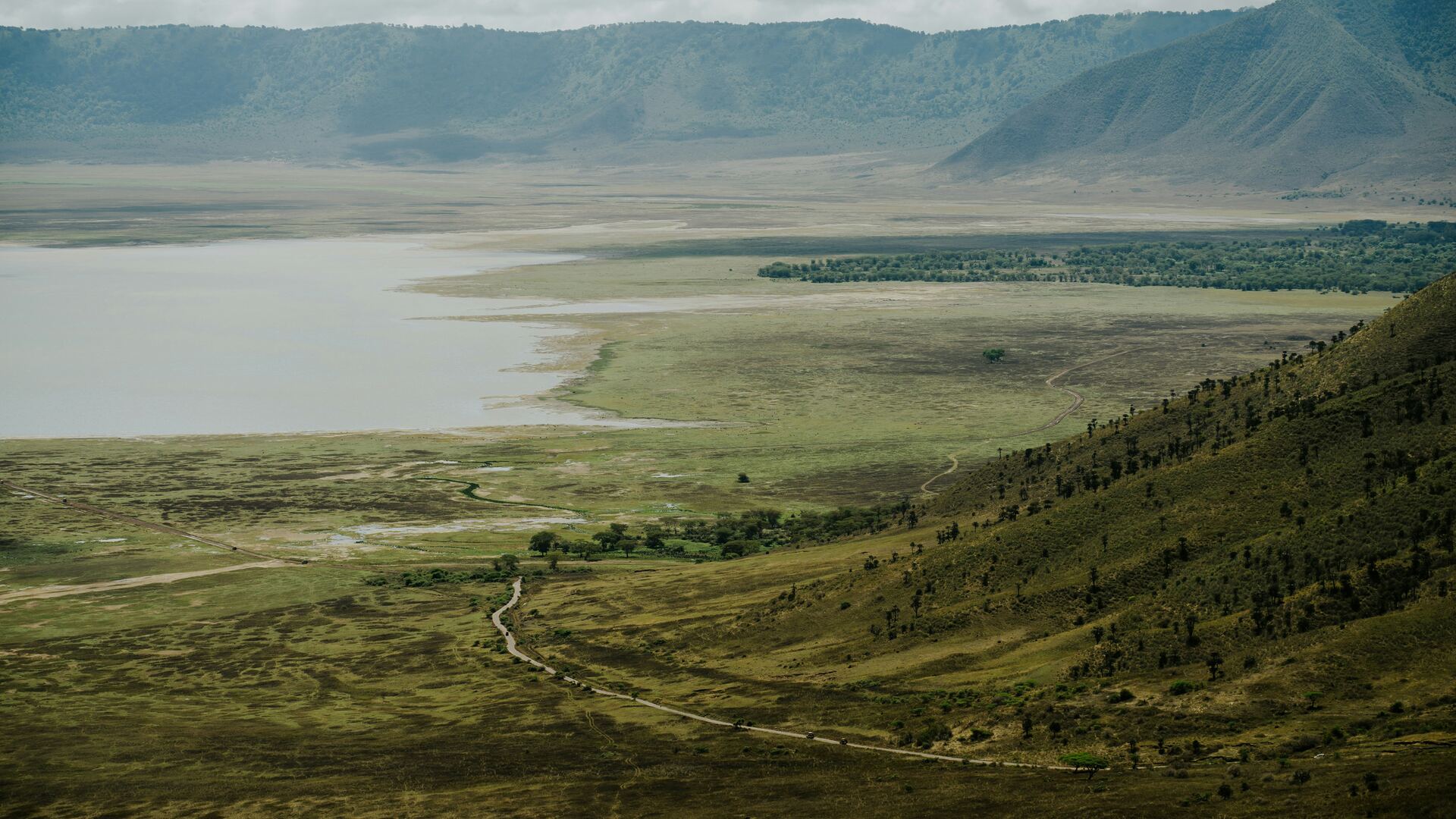
Early departure from your Serengeti camp. The road climbs through the Ngorongoro Conservation Area as the plains give way to highland forest. At the crater rim viewpoint, your first look into this extraordinary caldera arrives without warning. No photograph prepares you for the scale: 264 km² of caldera floor, 600 metres below, containing more than 25,000 animals. It looks like a contained world.
4WD descent into the crater — the road is steep, requiring the low-range 4WD your Wild Springs Land Cruiser is equipped for. The descent through afromontane forest takes 20 minutes. Colobus monkeys may be visible in the canopy. The temperature drops as you enter the mist zone near the crater floor.
On the crater floor, your guide navigates a proven circuit:
Black rhino range: The core area of the crater floor where the 30 resident black rhinos are most reliably located. Park rangers track individual animals daily. The probability of sighting at least one black rhino is the highest of any unfenced location in East Africa. Your guide knows the current ranging patterns from ranger radio contact. The NCAA's wildlife protection programme specifically credits the 24/7 anti-poaching patrols that brought this population back from near-extinction.
Hippo pool: One of East Africa's most densely populated hippo pools. The proximity of the observation point to the pool is extraordinary; you will hear everything.
Lake Magadi shoreline: Year-round flamingos. Golden jackals hunting the shoreline. Kori bustard on the open grassland beyond.
Lion prides: The crater's 60–68 permanent resident lions operate in well-defined territories. Your guide knows the pride compositions and their preferred areas by season.
Crater floor picnic lunch: Prepared by your camp, eaten in the vehicle at a designated picnic site beside the hippo pool. Watching hippos while eating is the standard.
Ascent from the crater by 2:00 PM (mandatory for park fee compliance). Drive to Arusha for the Namanga border crossing — our team manages the return into Kenya. Drive north through Kajiado and back to Nairobi, arriving by early evening.
The final view: The crater rim in your rear window, Ol Doinyo Lengai to the north, Lake Natron somewhere below the horizon. You have just completed one of the finest wildlife circuits on Earth.
🍽️ Meals: Breakfast, Crater Picnic Lunch | 🚗 Return Nairobi: by 7:00–8:00 PM
🐾 Wildlife Checklist — Probability by Park
| Animal | Tarangire | Lake Natron | Serengeti | Ngorongoro |
|---|---|---|---|---|
| 🐘 Elephant | ⭐⭐⭐⭐⭐ Peak dry season | — | ⭐⭐⭐⭐ | ⭐⭐⭐⭐ Crater bulls |
| 🦁 Lion | ⭐⭐⭐⭐ | — | ⭐⭐⭐⭐⭐ Seronera | ⭐⭐⭐⭐⭐ 60+ residents |
| 🐆 Leopard | ⭐⭐⭐ | — | ⭐⭐⭐⭐ Known trees | ⭐⭐⭐ Forest edge |
| 🐆 Cheetah | ⭐⭐⭐⭐ Open plains | — | ⭐⭐⭐⭐⭐ Kopjes | ⭐⭐ Less common |
| 🦏 Black Rhino | — | — | ⭐ Very rare | ⭐⭐⭐⭐⭐ 30 individuals |
| 🦍 Wild Dog | ⭐⭐⭐ Southern circuit | — | ⭐⭐ Transient packs | — |
| 🦛 Hippo | ⭐⭐ Silale | — | ⭐⭐⭐⭐ Mara River | ⭐⭐⭐⭐⭐ Pool |
| 🐊 Nile Croc | ⭐ | — | ⭐⭐⭐⭐⭐ Mara River | — |
| 🦩 Flamingo | — | ⭐⭐⭐⭐⭐ 1.5–2.5M | — | ⭐⭐⭐ Lake Magadi |
| 🦒 Giraffe | ⭐⭐⭐⭐ Masai giraffe | — | ⭐⭐⭐⭐ | ⭐ Absent (no woodland) |
| 🦓 Zebra | ⭐⭐⭐⭐ | — | ⭐⭐⭐⭐⭐ | ⭐⭐⭐⭐⭐ 4,000 resident |
| 🐃 Cape Buffalo | ⭐⭐⭐ | — | ⭐⭐⭐⭐ | ⭐⭐⭐⭐⭐ Dense herds |
| 🦊 Spotted Hyena | ⭐⭐⭐ | — | ⭐⭐⭐⭐⭐ | ⭐⭐⭐⭐⭐ 600 residents |
| 🐍 Python | ⭐⭐⭐ Tree-climbing | — | ⭐ | — |
| 🦅 Martial Eagle | ⭐⭐ | — | ⭐⭐⭐ | ⭐⭐ |
| 🦜 Lilac-breasted Roller | ⭐⭐⭐⭐ | ⭐⭐⭐ | ⭐⭐⭐⭐⭐ | ⭐⭐⭐ |
Note: "Absent" species in Ngorongoro: giraffe (no suitable woodland) and impala (similar reason). Every other major species is present year-round.
📸 Photography Masterclass - Park by Park
Core rule: The best light in East Africa exists between 6:00–9:00 AM and 4:00–6:30 PM. Midday light is flat, harsh, and shadowless. Schedule vehicle rest, lunch, or camp downtime between 11 AM and 2 PM.
Tarangire
- Baobab dawn: Wide-angle (16–35mm). Position an elephant herd as foreground silhouette with a 3,000-year-old baobab behind, backlit by the rising sun. The amber glow through baobab bark at 6:30 AM is unrepeatable.
- River corridor: Telephoto (400–600mm) for elephant herd compression shots across the river. Beanbag on the vehicle window frame; engine off.
- Wild dog: 500–600mm. They move fast. Pre-focus on a likely exit point and let them come to you rather than chasing. Your guide positions the vehicle ahead of the pack's direction.
Lake Natron
- Flamingo flats: 400–600mm. Walk with the guide; he knows the safe approach distance that does not flush the birds. Golden hour at 6:15 AM gives reflection shots in the soda lake surface.
- Ol Doinyo Lengai sunset: No filter. Standard wide angle. The volcano needs no embellishment — the natural colour palette is extraordinary.
- Waterfall gorge: Wide angle in the gorge, standard zoom (24–105mm) for the waterfall face.
Serengeti
- Cheetah on kopje: 300–500mm. The kopje gives a clean background if you position the vehicle so the rock is behind the cheetah. Morning light from the east is ideal.
- Mara River crossing: 500–600mm for tight action. A second camera body with wider lens (70–200mm) for environmental context shots. The crossing lasts 10–45 minutes — shoot in continuous burst mode and accept that you will delete 400 frames to find 4 extraordinary ones.
- Open plains: 24–70mm for landscape work at dawn. The Serengeti landscape itself — wildebeest to the horizon — is undershot compared to wildlife close-ups, and arguably more powerful.
Ngorongoro
- 6:00 AM crater rim mist: This is the single most extraordinary natural photography moment in East Africa. The crater fills with mist at dawn, burns off by 9 AM. The 20-minute window when morning light illuminates mist-wrapped wildlife 600 metres below is why photographers return year after year. Wide angle, tripod, cold.
- Black rhino: 500–600mm. Rhinos are sensitive to vehicle approach. Your guide knows the ethical distance — respect it. The shots from legal approach distance are still compelling.
- Hippo pool: Standard zoom (24–105mm) or even phone camera — the proximity is that close.
Equipment checklist:
- Camera body (2 bodies recommended for serious photographers)
- 100–400mm or 150–600mm zoom (essential)
- 16–35mm wide-angle (baobabs, landscapes, crater rim)
- Polarising filter (Lake Natron, essential)
- Sensor dust blower (volcanic dust in Natron is severe)
- 128GB+ fast memory cards × 4
- Laptop or portable hard drive for evening card offloads on 8-day trip
- Camera rain cover (brief downpours possible in green season)
- Beanbag for vehicle-window mounting
Gear hire: Our Nairobi Outdoor Gear Store stocks Swarovski EL 10×42 binoculars (hire: KES 500/day), camera bags, lens cloths, and sensor cleaning kits. Pre-book at the time of your safari booking.
🏨 Accommodation - Three Tiers, Every Night Covered
🟢 Budget Tier - Authentic Tented Camps
| Night | Accommodation | Location |
|---|---|---|
| Night 1 | Arusha Naura Springs Hotel or Planet Lodge | Arusha town |
| Nights 2–3 | Maramboi Tented Lodge or Tarangire Safari Camp | Tarangire periphery |
| Nights 4–5 | Lake Natron Tented Camp | Natron shoreline |
| Nights 6–7 | Serengeti Kati Kati or Lobo Wildlife Lodge | Central Serengeti |
Full board. En-suite tents. Solar power. Generator evenings. Hot showers. Mess tent with communal meals under the stars.
🟡 Mid-Range Tier - Comfort Lodges
| Night | Lodge | Location | Notable |
|---|---|---|---|
| Night 1 | Arusha Coffee Lodge or Kibo Palace | Arusha | Coffee estate / city |
| Nights 2–3 | Tarangire Sopa Lodge | Inside Tarangire | Pool, wildlife waterhole view |
| Nights 4–5 | Lake Natron Tented Camp (superior rooms) | Natron shore | Private flamingo dawn walks |
| Nights 6–7 | Serengeti Sopa Lodge | Seronera area | Full game drive access |
🔴 Luxury Tier - Premium Safari Camps
| Night | Camp | Location | Notable Feature |
|---|---|---|---|
| Night 1 | Arusha Coffee Lodge (Garden Suite) | Arusha | Coffee estate heritage |
| Nights 2–3 | Oliver's Camp (Asilia Africa) | Inside Tarangire | Walking safaris available |
| Nights 4–5 | Lake Natron Tented Camp (exclusive) | Natron shore | Private naturalist guide |
| Nights 6–7 | Four Seasons Safari Lodge Serengeti | Seronera corridor | Waterhole pool, spa |
Optional upgrade for Night 7: Sleep on the Ngorongoro Crater rim at Ngorongoro Crater Lodge — Africa's most dramatically positioned lodge, cantilevered over the caldera. Guests wake above clouds; on clear mornings, the crater floor is visible 600 metres below through floor-to-ceiling glass. Contact our team to add this.
💰 Transparent 2026 Pricing
All prices are per person, full package. They include all Tanzania national park fees (Tarangire, Lake Natron WMA, Serengeti, Ngorongoro conservation fee + crater service fee), all accommodation, all meals from Day 1 lunch to Day 8 lunch, professional guiding, private Land Cruiser, Kenya–Tanzania–Kenya border transfers, bottled water throughout, Flying Doctors evacuation cover, and 24/7 WhatsApp emergency support.
They do not include: Tanzania e-Visa ($50, see Section 4), tips, international flights, personal travel insurance, or optional activities.
Budget Package (Authentic Tented Camps)
| Group Size | 🇰🇪 Kenyan Citizens | 🌍 EAC Residents | 🌐 Non-Residents (USD) |
|---|---|---|---|
| 1 Person | KES 195,000 | KES 245,000 | $1,890 |
| 2 People | KES 155,000 | KES 195,000 | $1,490 |
| 3 People | KES 135,000 | KES 172,000 | $1,320 |
| 4 People | KES 118,000 | KES 150,000 | $1,150 |
| 5 People | KES 108,000 | KES 138,000 | $1,060 |
| 6 People | KES 99,000 | KES 126,000 | $970 |
Mid-Range Package (Comfort Lodges)
| Group Size | 🇰🇪 Kenyan Citizens | 🌍 EAC Residents | 🌐 Non-Residents (USD) |
|---|---|---|---|
| 1 Person | KES 280,000 | KES 340,000 | $2,650 |
| 2 People | KES 220,000 | KES 270,000 | $2,100 |
| 3 People | KES 195,000 | KES 238,000 | $1,850 |
| 4 People | KES 172,000 | KES 210,000 | $1,620 |
| 5 People | KES 158,000 | KES 193,000 | $1,490 |
| 6 People | KES 145,000 | KES 178,000 | $1,370 |
Luxury Package (Premium Camps)
| Group Size | 🇰🇪 Kenyan Citizens | 🌍 EAC Residents | 🌐 Non-Residents (USD) |
|---|---|---|---|
| 1 Person | KES 480,000 | KES 580,000 | $4,490 |
| 2 People | KES 390,000 | KES 475,000 | $3,680 |
| 3 People | KES 345,000 | KES 420,000 | $3,250 |
| 4 People | KES 310,000 | KES 378,000 | $2,920 |
Single occupancy supplement: $65/night (non-residents) | KES 4,500/night (citizens & residents)
Children's pricing: 0–2 years: complimentary | 3–11 years sharing with parents: 50% adult rate | Own room: 75% adult rate
Park fees included in your package (per adult, non-resident, 2025–2026 TANAPA & NCAA tariff):
- Tarangire NP: ~$47–$59/adult/day
- Serengeti NP: ~$70–$82.60/adult/day
- Ngorongoro Conservation Area: ~$70.80/adult/day + $295/vehicle crater fee
- Lake Natron WMA: Community and ranger escort fees
✅ Inclusions & Exclusions
| ✅ Fully Included | ❌ Not Included |
|---|---|
| Private 4×4 Land Cruiser with pop-up roof, charging ports & cooler box | Tanzania e-Visa - apply at evisa.go.tz ($50 most nationalities) |
| KPSGA-certified professional interpretive driver-guide | Hot air balloon safari (~$549–$649/person - we book on request) |
| All Tanzania national park & conservation area fees | Ol Doinyo Lengai night ascent (optional, priced separately) |
| Ngorongoro Crater Service Fee ($295/vehicle) | Tips: $15–20/day for guide; $5/day for camp staff |
| 7 nights full-board accommodation (tier as selected) | International flights to/from Nairobi |
| All meals — breakfast, lunch & dinner daily | Personal travel insurance (mandatory — we can recommend providers) |
| Crater floor picnic lunch (Day 8) | Alcoholic beverages (unless included in lodge package) |
| Bottled water throughout all game drives | Personal gear & clothing |
| Engare Sero waterfall guided hike (Day 5) | Binoculars (hire from our Nairobi store) |
| Lake Natron community village contribution | |
| Flying Doctors emergency evacuation cover | |
| 24/7 Wild Springs WhatsApp emergency support | |
| Nairobi hotel/residence pickup & drop-off (both directions) | |
| Namanga border crossing — all vehicle documentation |
🌦️ Monthly Safari Intelligence - When to Go and Why
| Month | Tarangire | Lake Natron | Serengeti | Ngorongoro | What's Happening |
|---|---|---|---|---|---|
| January | ⭐⭐⭐ | ⭐⭐⭐⭐ | ⭐⭐⭐⭐ | ⭐⭐⭐⭐⭐ | Ndutu calving begins; predator action extraordinary |
| February | ⭐⭐⭐ | ⭐⭐⭐⭐⭐ | ⭐⭐⭐⭐ | ⭐⭐⭐⭐⭐ | Peak calving + peak flamingo breeding |
| March | ⭐⭐ | ⭐⭐⭐⭐ | ⭐⭐⭐ | ⭐⭐⭐⭐ | Long rains begin; roads become challenging |
| April | ⭐ | ⭐⭐⭐ | ⭐⭐ | ⭐⭐⭐ | Long rains; lush green, very few visitors |
| May | ⭐⭐ | ⭐⭐⭐ | ⭐⭐ | ⭐⭐⭐ | Rains easing; park roads recovering |
| June | ⭐⭐⭐⭐ | ⭐⭐⭐ | ⭐⭐⭐⭐ | ⭐⭐⭐⭐⭐ | Dry season begins; all parks excellent |
| July | ⭐⭐⭐⭐⭐ | ⭐⭐⭐ | ⭐⭐⭐⭐⭐ | ⭐⭐⭐⭐⭐ | Mara River crossings start; Tarangire peaks |
| August | ⭐⭐⭐⭐⭐ | ⭐⭐⭐ | ⭐⭐⭐⭐⭐ | ⭐⭐⭐⭐⭐ | Peak month across entire circuit — book 6 months ahead |
| September | ⭐⭐⭐⭐⭐ | ⭐⭐⭐ | ⭐⭐⭐⭐⭐ | ⭐⭐⭐⭐⭐ | Crossings ending; Tarangire elephant peak continues |
| October | ⭐⭐⭐⭐⭐ | ⭐⭐⭐ | ⭐⭐⭐⭐ | ⭐⭐⭐⭐⭐ | Tarangire ABSOLUTE PEAK; our top recommendation |
| November | ⭐⭐⭐ | ⭐⭐⭐⭐⭐ | ⭐⭐⭐ | ⭐⭐⭐⭐ | Short rains; flamingo breeding peaks at Natron |
| December | ⭐⭐⭐ | ⭐⭐⭐⭐⭐ | ⭐⭐⭐ | ⭐⭐⭐⭐ | Festive season; Natron at its most spectacular |
Our honest recommendation for this specific circuit:
October is the optimal month. Tarangire reaches its elephant-density peak — herds of 200+ are common at the river. Lake Natron flamingos are active and Ol Doinyo Lengai is typically visible in clear skies. Ngorongoro is dry, crater floor roads are fully accessible. Serengeti holds strong resident predator concentrations. And October sees significantly fewer vehicles than July–August peak, meaning more private sightings and better photography.
Second choice: January–February, for the calving season spectacle and flamingo breeding combination. Extraordinary predator action in Ndutu counterbalances the start of the short rains further north.
🦁 Why a Nairobi-Based Operator Beats a Tanzania-Based Operator for This Circuit
This is the argument no Tanzania-based competitor can make, and it matters:
Every operator running this circuit from Arusha charges separately for your Nairobi arrival logistics — airport transfers, hotel coordination, pre-departure gear. Their Namanga border crossing requires your coordination from the Kenya side. And when you want to combine Tanzania with Kenya's parks — the Masai Mara, Amboseli, or Samburu — you need two different operators with two different contracts and two different contacts.
Wild Springs Adventures manages the entire East African circuit under one team. Your Nairobi pickup, your border crossing in both directions, your safari, and any Kenya extension before or after Tanzania — all coordinated by one WhatsApp contact, one team, one contract.
Furthermore, our Nairobi Outdoor Gear Store means any gear gap — hiking shoes for the Natron waterfall, binoculars, a fleece for cold Ngorongoro mornings — is solved in Nairobi before you cross the border, not improvised in Arusha.
🇰🇪🇹🇿 Combine with Kenya — The Ultimate East African Circuit
| Days | Parks | Why |
|---|---|---|
| Days 1–3 | Masai Mara National Reserve | Big cats, migration, Maasai culture |
| Days 4–5 | Amboseli National Park | Kilimanjaro backdrop elephant herds |
| Days 6–13 | This Tanzania circuit | Full Tarangire → Natron → Serengeti → Ngorongoro |
The Kenya + Tanzania circuit is our most requested multi-country package. One team. One vehicle. One seamless journey from Nairobi through Kenya's icons to Tanzania's greatest circuit and back. Contact us to design your custom itinerary →
🌿 Conservation - What Your Safari Supports
Wild Springs Adventures operates to TANAPA and Leave No Trace principles on every game drive:
- No off-road driving
- Minimum ethical approach distances at all sightings
- Engine-off policy where safe at sensitive sightings
- No feeding wildlife
- No disturbing breeding colonies (Lake Natron flamingo areas)
What your safari dollars support directly:
- TANAPA park fees fund the ranger operations protecting Tarangire's elephant herds and Serengeti's predator populations
- NCAA fees fund the 24/7 ranger patrols that brought Ngorongoro's black rhino population back from 11–14 individuals (1995) to 30+ today
- Lake Natron WMA community fees support Maasai livelihoods adjacent to the Ramsar site — making conservation economically viable for the people who live alongside it
- Flying Doctors membership includes a percentage that funds emergency medical evacuations for remote communities in the Rift Valley
We also support the Amboseli Trust for Elephants elephant research programme and BirdLife International's flamingo conservation advocacy at Lake Natron.
🏆 Why Choose Wild Springs Adventures
✔ TRA Licensed - Kenya Tourism Regulatory Authority No. TRA1/47/C01/25895
✔ TOSK Member #0082 - Tour Operators Society of Kenya, the industry's professional standard
✔ TripAdvisor Travelers' Choice Award - 2024, 2025, and 2026 - consecutive award, verified by 1,200+ reviews averaging 4.9/5
✔ KPSGA-Certified Guides - all driver-guides hold Kenya Professional Safari Guides Association certification; not sub-contracted
✔ Own Fleet - our Land Cruisers are maintained in-house in Nairobi; we never subcontract vehicles
✔ Flying Doctors Emergency Evacuation - included in every package
✔ Nairobi + Austria Offices - seamless coordination for East African guests and European visitors
✔ Nairobi Outdoor Gear Store - pre-departure gear hire and purchase; no other Kenya operator has this ✔ Founded 2013 — over a decade of guided expeditions across Kenya and Tanzania
🎒 Packing Guide
Clothing (neutral colours only - khaki, olive, tan, beige): 2–3 base layers, 1 warm fleece (Ngorongoro crater mornings reach 8°C at 6 AM), windproof outer layer, swimwear (Natron waterfall pools), wide-brim sun hat, lightweight long-sleeve shirts for sun and insects.
Footwear: Closed-toe walking shoes or light hiking boots (Engare Sero hike essential), sandals for camp evenings.
Photography: See the photography section above. Add: a charged power bank for vehicle drives.
Health: Yellow fever vaccination certificate (Tanzania entry requirement), antimalarial prophylaxis (consult your doctor — options include Malarone, doxycycline), sunscreen SPF 50+, DEET insect repellent, rehydration sachets (Natron Day 4 heat is intense), personal first aid kit, altitude medication if adding Ol Doinyo Lengai ascent (2,962m).
Documents: Passport valid 6+ months beyond travel date, Tanzania e-Visa approval letter (apply at evisa.go.tz — $50 USD, 48–72 hour processing), travel insurance documentation, Kenya re-entry documentation if applicable for your nationality.
Hire from our Nairobi store: Swarovski binoculars, trekking poles, cold-weather layers, and camera accessories. Reserve at booking — collection from our Parklands office.
❓ Frequently Asked Questions
Why does this circuit include Lake Natron when most competitors skip it?
Most operators replace Lake Natron with Lake Manyara because Manyara is faster to reach from Arusha and more logistically convenient. We include Lake Natron because it is categorically irreplaceable — the world's only breeding ground for 75% of Earth's Lesser Flamingos, a Ramsar Wetland, and one of the most geologically extraordinary landscapes on the continent. The extra logistics are worth it. Every guest who does this circuit confirms it.
What park fees are included in the package price?
All Tanzania national park fees are included: Tarangire entry (~$47–$59/adult/day), Serengeti entry (~$70–$82.60/adult/day), Ngorongoro Conservation Area (~$70.80/adult/day), and the Ngorongoro Crater Service Fee ($295 per vehicle per descent). Lake Natron Wildlife Management Area fees are also included. Per TANAPA's published tariff schedule and the NCAA's fee structure. No gate-side surprises.
Do I need a Tanzania visa? How do I apply?
Most nationalities require a Tanzania single-entry tourist visa ($50 USD). Apply online at evisa.go.tz — allow 48–72 hours for approval. Citizens of EAC member states (Kenya, Uganda, Rwanda, Burundi, South Sudan, DRC) and some other nationalities have special arrangements. We confirm your specific requirements at the time of booking.
Is this safari suitable for families with children?
Yes — from age 5 upward, with no upper age limit. Tanzania parks have no minimum age for vehicles. Tarangire and Ngorongoro are exceptional family destinations: large animals approach vehicles closely, game drive distances are reasonable, and children's fascination with elephants, lions, and flamingos is total. We recommend the mid-range tier for families for added comfort on longer driving days. Our children's pricing (50% for 3–11 sharing with parents) makes family safaris genuinely affordable.
When are the Serengeti river crossings, and can we time our visit for them?
The famous Mara River wildebeest crossings happen in the northern Serengeti between July and September, primarily at the Mara crossing points near Kogatende. Our itinerary includes the central Serengeti (Seronera) as the base; your guide will advise on driving north for crossing opportunities based on daily wildlife intelligence. The crossing cannot be guaranteed — it is a natural event — but July–September visits have a high probability of witnessing at least one. Outside these months, the Serengeti is still extraordinary; calving season (January–March) delivers equally intense wildlife action.
How reliable is the black rhino sighting in Ngorongoro?
It is the highest-probability black rhino sighting of any unfenced location in East Africa. The crater's 30 resident black rhinos are tracked daily by NCAA rangers; your guide accesses this intelligence via radio contact before and during the descent. In practice, most guests who spend a full morning on the crater floor see at least one black rhino. It is not guaranteed — this is wild Africa — but the probability here far exceeds any other destination.
Is the hot air balloon worth the extra cost?
For guests with the budget, yes — consistently described by our guests as one of the ten best experiences of their lives. The Serengeti balloon costs $549–$649 per person and operates at dawn, with a bush champagne breakfast included. The perspective of the plains from 300 metres of altitude, with lion and elephant visible below in the morning light, is genuinely unlike any other experience. We book this for you as part of your package; notify us at booking.
How difficult is the Engare Sero waterfall hike?
Moderate difficulty — approximately 6–7 km round trip over volcanic rock terrain, with occasional scrambling over boulders. No technical climbing involved. The trail requires agility on uneven surfaces and takes 2.5–3 hours. Suitable for anyone with reasonable fitness who can walk comfortably for 3 hours. Closed-toe shoes are essential; open sandals are unsafe. The payoff — a hidden waterfall, 120,000-year-old hominid footprints, and swimming in a volcanic gorge pool — is extraordinary.
Can I add Zanzibar at the end of this Tanzania circuit?
Yes — and it is one of our most popular additions. Zanzibar is 45 minutes by air from Arusha's Kilimanjaro International Airport. Stone Town is a UNESCO World Heritage Site; the northern beaches are among the Indian Ocean's finest. A 3-night Zanzibar extension transforms this circuit into a complete bush-and-beach East African holiday. Contact us for a combined quote.
Can this Tanzania safari be combined with Kenya's parks?
This is our specialty and our greatest competitive advantage. As a Nairobi-based operator, we run seamless multi-country circuits under one team, one contract, and one set of contacts. The most popular combination adds 3 days in the Masai Mara and 2 days in Amboseli before crossing to Tanzania. Contact us to design your circuit →
What is the booking deposit and cancellation policy?
Pay a 30% deposit to confirm your dates and accommodation. Balance due 30 days before departure. Free cancellation up to 45 days before travel. 50% refund between 30–44 days. No refund within 30 days — though we transfer your booking to a future date wherever possible. We strongly recommend travel insurance with cancellation cover; we can suggest providers at booking.
What language is the guiding in? Are German-speaking guides available?
All our guides are English-speaking at a professional interpretive level. For German-speaking guests — particularly those connecting through our Austrian office — we can arrange German-speaking guide support on request, subject to availability. Our Austria office (+43 650 702 1313) coordinates directly with European guests.
🔗 Related Packages - Extend Your East Africa Experience
| Package | Duration | From | Highlights |
|---|---|---|---|
| 3-Day Masai Mara Budget Group Safari | 3 Days | $375/pp | Big cats · Great Migration · Maasai culture |
| 2-Day Amboseli Safari from Nairobi | 2 Days | $450/pp | Elephant herds · Kilimanjaro backdrop |
| 5-Day Mount Kenya Chogoria Trek | 5 Days | $850/pp | Point Lenana summit · Alpine lakes |
| 3-Day Ol Pejeta Safari from Nairobi | 3 Days | $270/pp | Last northern white rhinos · Chimpanzees |
| 4-Day Nairobi to Diani Bush to Beach | 4 Days | $2,450/pp | Amboseli · Tsavo · Indian Ocean |
| ⚔ Kenya World War Heritage Trail | 3–6 Days | $310/pp | East African Campaign battlefields |
📞 Book Your 8-Day Tanzania Safari from Nairobi
📱 WhatsApp (fastest response): +254 729 257 317 | +254 734 417 496
📧 Email: [email protected] | [email protected]
🏢 Nairobi Office: Valley View Office Park, Tower A, First Floor, Parklands 🇦🇹 Austria Office (European guests): +43 650 702 1313 | +43 676 676 8130
Booking: 30% deposit secures your dates. Balance due 30 days before departure. Cancellation: Free up to 45 days before travel.
✔ TRA Licensed TRA1/47/C01/25895 | ✔ TOSK Member #0082 | ✔ TripAdvisor Travelers' Choice 2024, 2025 & 2026
We never request payment through social media, personal phone numbers, or any account or link not confirmed in writing by our office. If in doubt, call us before paying anyone.
Where You Will Visit
This safari explores the following regions in Kenya, Tanzania
- Amboseli
- Lake Natron
- Nairobi
- Ngorongoro
- Serengeti
- Tarangire