🎣Aberdare Trout Fishing Safari | Kenya Fly Fishing | Wild Springs
Safari at a Glance
Wild Springs Adventures · Nairobi-Based Aberdare Trout Fishing Safari Specialists Since 2013
🏆 TripAdvisor Travelers' Choice 2024, 2025 and 2026 ·
✅ TRA Licensed No. TRA1/47/C01/25895 ·
🏛️ TOSK Member #0082
Scotland With Lions — Fly Fishing the Moorland Rivers of the Aberdare Range
The early British settlers who came to Kenya's Central Highlands in the early 20th century looked up at the mist-covered Aberdare Range, at the heather moorland and the cold rushing rivers, and they called it Scotland. Then a lion walked past. The name stuck: Scotland with Lions.
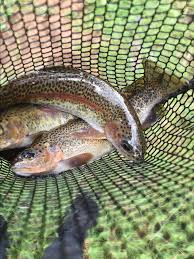
In 1905, Colonel Ewart Grogan arranged the first consignment of trout ova from the Howietown Fisheries in Dumfries, Scotland, and transported them to British East Africa on a 7,000-mile journey. Then came one of the most extraordinary logistics operations in colonial Kenya's history — the ova were carried on the heads of porters over the Kinangop Plateau and up into the Aberdare mountains to the Gura River at 3,350 metres. The first attempt failed. The ova perished on the journey. A second attempt used canvas buckets, four trout to a bucket, swung gently to keep the water aerated. 380 young fish survived and were installed in the Gura. They multiplied. Their descendants moved to the lower reaches. The Aberdare rivers were stocked further in the following decades — Brown Trout in the 1940s, Rainbow Trout thereafter — until these highland rivers became among the finest wild trout fisheries in Africa.
Today, the Chania, Gura, Karuru, and Mathioya rivers still carry both Brown Trout and Rainbow Trout in their cold, clear, peat-coloured highland water. There are now approximately 40 rivers around the Aberdare Range and Mount Kenya stocked with either rainbow or brown trout. The Aberdare Range is Kenya's main water tower — two of Kenya's principal rivers, the Athi and the Tana, originate here. These rivers give life to half of Kenya's agriculture and then, in their upper reaches, give some of the finest fly fishing in East Africa.
Almost no commercial operator in Kenya offers the Aberdare trout fishing safari as a properly packaged product with transparent pricing, expert guides, ranger coordination, and full park logistics. Wild Springs Adventures does , and we have been doing it since 2013.
Aberdare Trout Fishing Safari at a Glance
| Feature | Details |
|---|---|
| 🎣 Rivers | Chania · Gura · Karuru (Amboni) · Mathioya - four moorland trout rivers |
| 🐟 Fish Species | Brown Trout (Salmo trutta) + Rainbow Trout (Oncorhynchus mykiss) |
| 📅 Options | Day trip (Nairobi return) or overnight (waterfall circuit + lodge + fishing) |
| 🎯 Technique | Fly fishing only - spin fishing, bait, and lures not permitted in Kenyan parks |
| 📜 Licence | Non-transferable fishing licence obtained at park gate - included in package |
| 🐟 Bag Limit | 6 Rainbow Trout and 4 Brown Trout per licence per day |
| 🪖 Ranger | Armed KWS ranger mandatory - rivers pass through active elephant and buffalo country |
| 🌿 Season | Year-round - no closed season on the main rivers |
| 📍 Access | 4×4 required - Mutubio Gate (highest gate, closest to moorland trout water) |
| 👥 Group Size | 1 to 7 persons per vehicle |
| 📏 Distance | Approximately 180km from Nairobi - 3 hours |
| 🎣 Skill Level | Any - beginners welcome, experienced fly anglers are particularly well served |
| 💰 Price From | $185 per person (group of 7) |
The Four Aberdare Fly Fishing Rivers
Chania River - The Most Accessible Trout River in Kenya
The Chania rises in the high moorland of the Aberdare Range and descends through open grassland and heather before plunging over the Chania Falls — one of the waterfalls the Wild Springs day itinerary visits — and into the forest below. Above the falls, the river flows through open moorland where casting is unobstructed, and the fish are visible in the clear water. This is the most accessible Aberdare trout fishing river and the best starting point for any fishing day.
The Chania in the morning: Clean, cold air. The sound of running water over volcanic rock. The possibility of an elephant or buffalo appearing across the river while you hold a fly rod. This is what the settlers meant by Scotland with Lions.
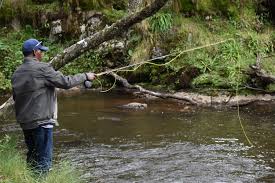
Fishing technique: The Chania runs narrow with overhanging heather and moorland vegetation. The roll cast is the required technique — long casting strokes are neither necessary nor possible in most sections. Trout are drift feeders that lie in fast water at the head of pools during the day and move to the tail-end in the evening, where they surface-feed actively. Position above the pool head in the morning and fish downstream. In the evening, work the tail.
Typical catch: Brown and Rainbow Trout of 500g to 1.5kg. A catch of 3 to 5 fish is an excellent day on the Chania.
Gura River - The Historical First River
The Gura was the first river in Kenya to receive trout — Colonel Grogan's original 380 fingerlings, installed in 1905 after the failed first attempt. The Gura flows parallel to the Karuru before both rivers cascade into the same spectacular gorge visible from the Karuru Falls viewing platform. The moorland section above the falls is the productive fishing zone, reached by a short walk from the vehicle.
Cave fishing at Magura Falls. On a section of the upper Gura, the river passes beneath an overhang — a mossy cave formed by the volcanic rock above the pools below. Fly-casting from within the cave, with the sound of falling water echoing around you and the light filtering through the rock opening, is one of the most atmospherically distinctive fly fishing experiences available anywhere in East Africa. Wild Springs includes this section in the itinerary whenever river conditions allow.
Typical catch: Slightly larger fish than the Chania on average. Brown Trout up to 2kg have been recorded on the Gura.
Karuru/Amboni River - The Wilderness Option
The least-fished of the three main park rivers. The Karuru is found in the northern section of the Aberdare moorland and requires a 4×4 to access the bank. Best fished high in the moorland for the same casting access reasons as the Chania. The same fly patterns apply. Rarely encountered by other visitors, the wilderness character that the more accessible rivers occasionally lose is fully intact here.
Mathioya River - No 4×4 Required
The Mathioya flows out of the Aberdares into the lowlands and is the most accessible Aberdare trout river for visitors without 4×4 access. Into Fly Fishing rates the Mathioya as one of the finest trout rivers in Kenya — brimming with fish, easy to wade, and accessible by normal vehicle. The Kenya Fly Fishers Club maintains traditional hutted camps on the Northern Mathioya and Gichugi Rivers — evidence of the river's long-standing reputation in the fly fishing community.
For guests who want the Aberdare trout fishing experience without the park fees or the 4×4 requirement, the Mathioya is a genuine alternative. Ask Wild Springs to include it in a customised itinerary.
How the Aberdare Trout Feed - What Serious Anglers Need to Know
Understanding Aberdare trout behaviour makes the difference between a good day and an exceptional one. These are not stocked fish responding to feeding pellets. They are wild trout that have adapted over 120 years to the specific insect life, temperature cycles, and current patterns of equatorial highland rivers.
Feeding Behaviour
Kenya Aberdare trout are drift feeders. During the day they lie in fast water at the head of pools, holding position against the current and intercepting drifting insects. In the evening, they move downstream to the tail-end of the pool, where they begin surface-feeding actively. This means the morning approach is to fish the head of each pool, while the evening session rewards a position at the tail.
The Roll Cast - Essential Technique on Aberdare Rivers
The Aberdare rivers are narrow, heavily structured, and surprisingly technical. Fish are concentrated in short pockets of deeper water beneath overhanging vegetation, undercut banks, and beneath the turbulence of small waterfalls. Long casts are rarely necessary or possible. Success depends on careful positioning and controlled drifts through tight holding water.
Waders are not necessary on most Aberdare sections — the fishing is done from the bank, which is firm moorland throughout the open sections above the tree line.
Best Fly Patterns for Aberdare Rivers
| Session | Pattern | Size | Technique |
|---|---|---|---|
| Morning — Chania and Gura | Parachute Adams | 14 to 16 | Dry fly — drifted at the pool head |
| Morning — Chania and Gura | Elk Hair Caddis | 12 to 16 | Dry fly — high-riding emerger |
| Morning — Chania and Gura | Stimulator | 12 to 16 | Dry fly — fast water attractor |
| All day — deeper sections | Tungsten Hare's Ear | 14 to 16 | Nymph — below the surface in pools |
| All day — deeper sections | Pheasant Tail Nymph | 14 to 16 | Nymph — natural drift technique |
| All day — cave sections | Gold-Head Zebra Midge | 14 to 16 | Chironomid — cave pools and slow water |
| Evening — tail-end of pools | Hopper | 14 | Dry fly — large profile for surface feeding |
| Evening — river sections | Small dark wet flies | 12 to 14 | Wet fly — downstream swing at the tail |
| All conditions | Kenya Bug ⭐ | 12 to 14 | Dry or wet — locally developed, essential |
| All conditions | Mrs. Simpson ⭐ | 10 to 14 | Wet — stripped on moving water |
⭐ Kenya Bug and Mrs. Simpson are patterns developed specifically for Kenyan highland trout and available at the Wild Springs Outdoor Store in Parklands, Nairobi.
Aberdare Two Itinerary Options
Option A — Aberdare Trout Fishing Day Trip from Nairobi
06:00 — Nairobi Departure
Drive north approximately 3 hours to Mutubio Gate — the highest gate and closest to the moorland trout water. Park fees and fishing licences are paid at the gate by your Wild Springs guide. Armed KWS ranger collected. 4×4 to the moorland section of the Chania River.
09:30 — Chania River Moorland Fishing Begins
Your Wild Springs guide positions the group along the river above the tree line. The morning session targets the head of each pool with drift presentations. Basic rods provided — own 4 to 5 weight tackle strongly recommended for experienced anglers.
12:00 — Karuru Falls Viewpoint Lunch
Kenya's highest waterfall at 273 metres, with both the Gura and Karuru rivers visible in the gorge below. Picnic lunch at the viewpoint.
13:00 — Gura River / Magura Cave Fishing
The afternoon session moves to the Gura or the cave section near Magura Falls — an atmospherically unique experience of fly-casting inside a mossy volcanic rock cave with falling water echoing around the pool.
15:30 — Exit Park · 18:30 — Nairobi Return
🍽️ Meals: Packed lakeside lunch · 🚐 Transport: Private 4×4 Land Cruiser return
Option B — Fishing and Waterfall Safari (1 Night - The Ark or Treetops)
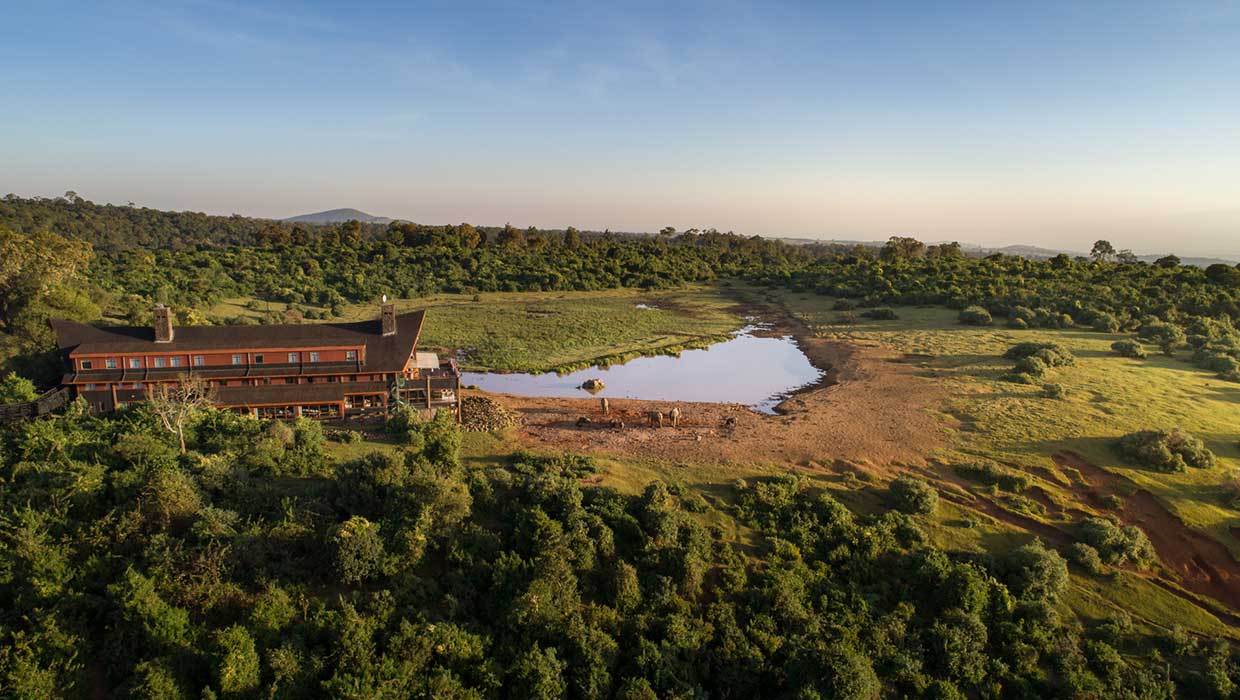
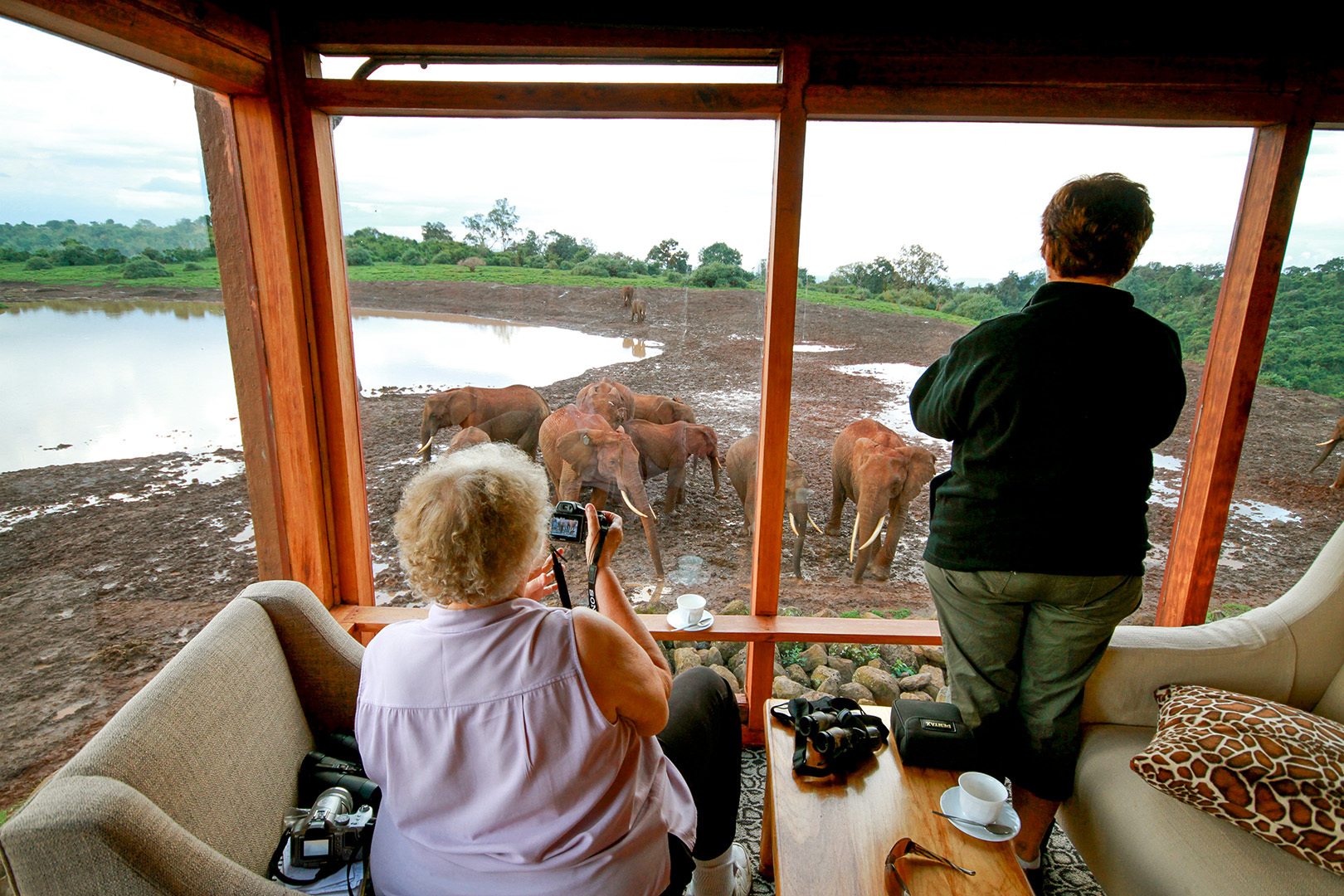
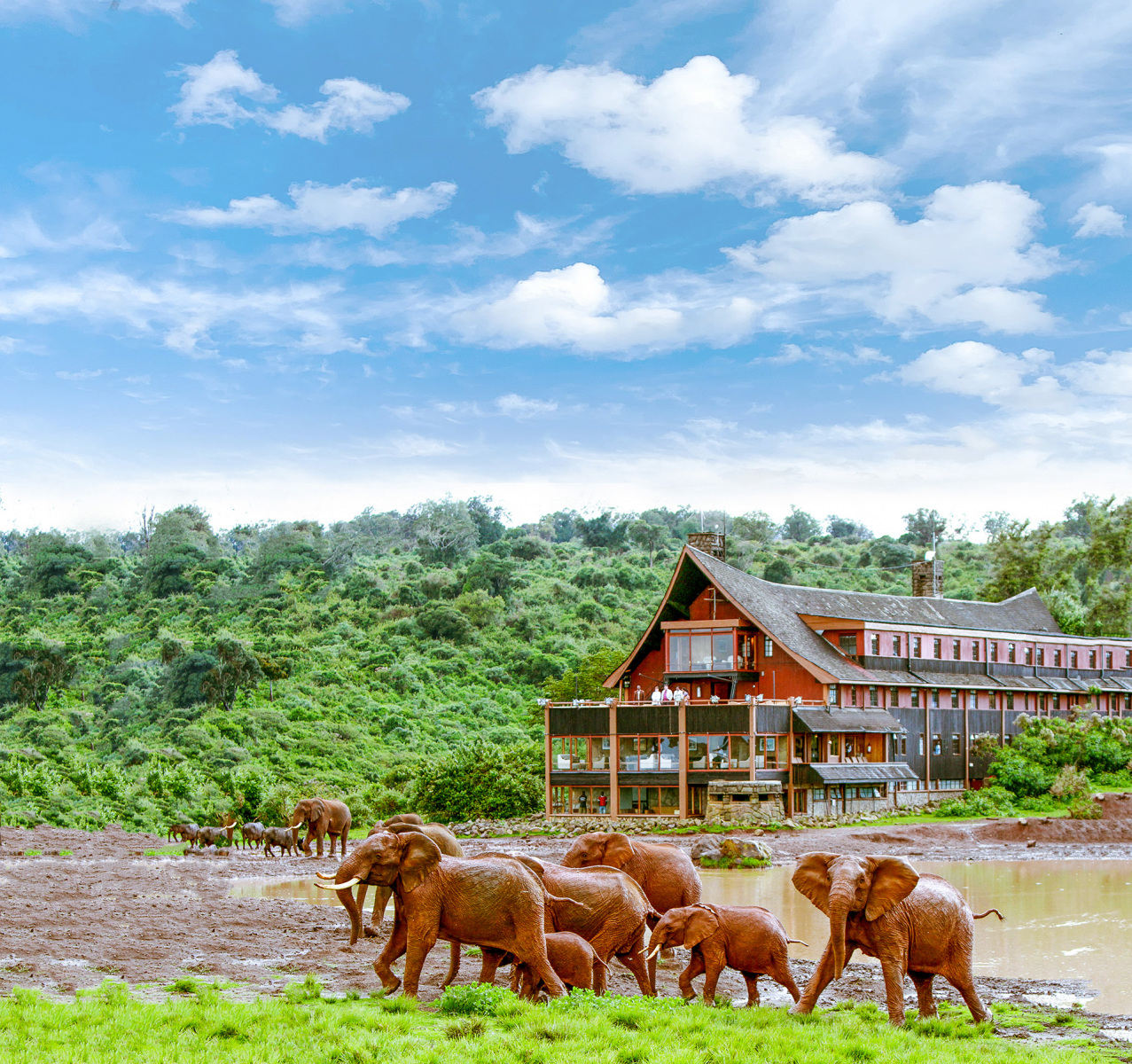
Day 1: Nairobi → Karuru Falls → Chania Falls → Queen's Cave → Afternoon game drive → Lodge check-in at The Ark or Treetops. Night watch at the waterhole — the finest wildlife viewing in the Aberdares.
Day 2: Dawn game drive → Checkout → Full morning fishing session on the Chania and Gura rivers → Picnic lunch at the river → Exit park → Nairobi.
This option combines the full Wild Springs Aberdare Waterfall and Wildlife Safari with the fishing experience — the ideal way to see both the waterfalls and fish the rivers in a single trip, with the lodge night between them.
2026 Pricing — Aberdare Trout Fishing Safari
All prices are per person, all-inclusive of transport, park fees, fishing licence, armed KWS ranger, Wild Springs guide, picnic lunch, and bottled water. No hidden charges at the gate.
Option A — Day Trip to Aberdare (Nairobi Return)
| 👥 Group Size | 🇰🇪 Kenyan Citizens (KES) | 🌍 East African Residents (KES) | 🌐 Non-Residents (USD) |
|---|---|---|---|
| 1 Person | KES 52,000 | KES 53,000 | $490 |
| 2 Persons | KES 32,000 | KES 33,000 | $320 pp |
| 3 Persons | KES 25,000 | KES 26,000 | $265 pp |
| 4 Persons | KES 21,000 | KES 22,000 | $230 pp |
| 5 Persons | KES 18,500 | KES 19,500 | $210 pp |
| 6 Persons | KES 17,000 | KES 18,000 | $195 pp |
| 7 Persons | KES 16,000 | KES 17,000 | $185 pp |
Option B — Fishing Added to Aberdare Waterfall Safari
See the full Aberdare Waterfall Safari pricing. Fishing is added as a half-day activity on Day 2 at +KES 4,000 / +$40 per person when booked with the waterfall safari.
📌 Deposit: 30% confirms booking · Balance due 14 days before departure
📌 Helicopter access to Aberdare moorland is available via Solio Lodge and private operators for guests who prefer an aerial approach — contact Wild Springs for a combined quote.
What Is Included
✔ Return transport Nairobi to Aberdare — private 4×4 Land Cruiser
✔ Aberdare National Park entry fees (persons and vehicle)
✔ Non-transferable KWS fishing licence (arranged at Mutubio Gate)
✔ Armed KWS ranger accompaniment throughout (mandatory park requirement)
✔ Wild Springs KWS-certified safari and fishing guide
✔ Basic fishing rods and flies for guests without their own equipment
✔ Picnic lunch at Karuru Falls viewpoint
✔ Bottled water throughout
✔ Karuru Falls viewpoint (Kenya's highest waterfall at 273m — included in the day)
✔ AMREF Flying Doctors emergency air evacuation cover
✔ Emergency first aid kit — carried throughout
✔ Pre-trip gear consultancy at our Parklands Nairobi outdoor store — free
What Is Not Included
✗ Personal fishing gear — own 4 to 5 weight rod, floating line, flies, polarised glasses strongly recommended. Basic kit provided but personal tackle produces better results on these technical rivers.
✗ Travel insurance — strongly recommended for a wilderness safari
✗ Gratuities — guide KES 1,500 to 2,000, KWS ranger KES 500
✗ Alcoholic beverages
✗ International flights and Nairobi hotel
Wildlife Beside the Aberdare Rivers
The Aberdare rivers run through the most active wildlife zones of the park. Fishing here is never done in isolation from the broader ecosystem — the armed KWS ranger is there for a reason.
| Species | Likelihood at River | Location | Notes |
|---|---|---|---|
| 🐘 Forest Elephant | ★★★☆☆ | River banks and crossings | Use the same water — guide maintains full awareness |
| 🦬 Buffalo | ★★★★☆ | Moorland sections above the tree line | Ranger walks ahead between fishing positions |
| 🦌 Mountain Reedbuck | ★★★★☆ | River margins and open moorland | Frequently seen near the Chania |
| 🦁 Leopard | ★★☆☆☆ | Forest margin near the waterfall approaches | Present in the Aberdares — rarely seen |
| 🐗 Giant Forest Hog | ★★★☆☆ | Forest margin near the rivers | Africa's largest wild pig — spectacular |
| 🦅 African Fish Eagle | ★★★★★ | Every river — every session | The most vocal bird on the water — a constant presence |
| 🐦 Malachite Kingfisher | ★★★★★ | Low over the river — always present | A brilliant blue flash on every fishing river |
| 🌀 Mountain Bongo | ★☆☆☆☆ | Bamboo zone below the moorland | Critically endangered — fewer than 100 wild — possible sighting |
Ranger protocol: The KWS ranger walks ahead of the group when moving between fishing spots. At the river, the ranger watches the opposite bank and the vegetation above while the guide manages the fishing. This arrangement is required by park regulations and is genuinely necessary. The ranger earns every shilling.
The History — Scotland With Lions
The story of trout in the Aberdare rivers is one of the most remarkable wildlife acclimatisation stories in Africa. Colonel Ewart Grogan installed the first surviving fish in the Gura River in 1905 — 380 young rainbow trout that survived a 7,000-mile journey from Scotland in canvas buckets swung rhythmically to keep the water aerated. The first attempt had failed entirely. The second attempt worked by the most improbable means.
The Aberdare rivers were stocked further over the following decades. In the 1940s, Brown Trout from Scotland's Loch Leven strain were added alongside the Rainbow Trout from American stock via Europe. Both species found the highland rivers perfectly suited to their needs — cold, clear, oxygen-rich, with insect life comparable to the Scottish and New Zealand rivers they had evolved in. Their descendants have now been in these rivers for over 120 years.
The Kenya Angling Association, formed in 1919, standardised the stocking programme. The Game Department took over in 1921. The KWS Fishing Lodge, managed inside Aberdare National Park near the Chania area, was established specifically for anglers — evidence that the park administration has always understood the fishing heritage of these rivers.
Today, there are approximately 40 rivers around the Aberdare Range and Mount Kenya stocked with either rainbow or brown trout. The Aberdare rivers remain the most accessible of them — within 3 hours of Nairobi, properly managed, and fished in the same moorland environment that the original settlers called Scotland with Lions.
What to Bring for the Aberdare Fly Fishing Safari
Essential Non-Fishing Gear
Long trousers — protection against moorland vegetation and Chania bank plants. Waterproof boots or wellington boots — river bank access and optional wading. Warm layers — the moorland at 3,000m is significantly colder than Nairobi. Waterproof jacket — mist, moorland spray, and possible rain. Insect repellent — particularly at dusk near the river margins.
Fishing Gear — Own Equipment Strongly Recommended
4 to 5 weight fly rod, 9ft — suited to the narrow moorland rivers. Floating line with 9ft 3 to 4x leader. Selection of dry flies: Adams, Caddis, Stimulator, Hopper (sizes 12 to 16). Nymphs: Tungsten Hare's Ear, Pheasant Tail (sizes 14 to 16). Small landing net. Forceps for hook removal. Polarised sunglasses — essential for sight-fishing the clear Chania water and spotting fish in the head of pools.
Note on waders: Waders are not necessary. The fishing on the Aberdare moorland rivers is done from the bank throughout the open sections above the tree line. Long waterproof trousers are the correct equipment.
Catch and release: Wild Springs encourages catch and release on all rivers. If you wish to keep your catch, the bag limit is 6 Rainbow Trout and 4 Brown Trout per person per day. Guides can assist with bush cooking a fresh trout lunch on the riverbank.
🏪 Fishing equipment and clothing available at the Wild Springs Outdoor Store in Parklands, Nairobi. Kenya Bug and Mrs. Simpson fly stocked in-store. Contact us if you need rod hire arranged in advance.
Best Time for the Aberdare Trout Fishing Safari
Year-round fishing is possible — there is no closed season. Seasonal conditions affect access and water clarity.
| Month | River Conditions | Fishing | Notes |
|---|---|---|---|
| January to February | Dry, clear water, firm bank access | Excellent | Best overall window — book early |
| March | Some rain — water rising | Good | Tail end of dry season |
| April to May | Long rains — river levels high, track muddy | Variable to difficult | Some sections are unfishable — others are productive |
| June | Dry season begins — water clearing | Very good | Strong start to the peak season |
| July to August | Peak dry season — clearest water | Excellent | Best sight fishing on the Chania |
| September | Drying out, excellent clarity | Very good | Reliable |
| October to November | Short rains — variable | Variable | Contact us for real-time conditions |
| December | Generally dry — festive season | Very good | Good value, quieter |
The moorland rivers above the tree line fish year-round. The forest sections below and the access tracks to the Mutubio Gate are most affected by heavy rain. Wild Springs provides real-time conditions updates for November and March bookings.
Why Book Your Aberdare Trout Fishing Safari With Wild Springs Adventures
✔ TRA Licensed Tour Operator — License No. TRA1/47/C01/25895. Regulated by Kenya's Tourism Regulatory Authority.
✔ TripAdvisor Travelers' Choice 2024, 2025 and 2026 — Top 10% globally. Two consecutive years.
✔ KWS-Certified Safari and Fishing Guides — Kenya Wildlife Service certified. Your Wild Springs guide holds a verified professional qualification in wildlife guiding and has specific Aberdare River expertise.
✔ TOSK Member #0082 — Tour Operators Society of Kenya.
✔ AMREF Flying Doctors Cover Included — Emergency air evacuation. Not an add-on.
✔ Armed KWS Ranger Included — Mandatory park requirement, fully coordinated and included in the price. No day-of surprises at the gate.
✔ Full Circuit Option Available — The only Nairobi operator combining the Aberdare trout fishing with the full waterfall circuit (Karuru 273m, Chania, Gura) and The Ark or Treetops overnight in a single seamless package.
✔ Kenya Highland Fishing Circuit — Wild Springs also operates the Lake Rutundu and Lake Alice fishing safari on Mount Kenya and the Lake Michaelson fly fishing mountain safari. We are the only Nairobi-based operator that can deliver all three Highland fishing destinations.
✔ Own Outdoor Gear Store — Parklands, Nairobi, Kenya, Bug, Mrs. Simpson, fly rods, trekking boots, and polarised glasses. Free pre-safari gear consultancy.
✔ Operating Since 2013 — Over 11 years of Aberdare National Park operations.
What Our Guests Say
⭐⭐⭐⭐⭐ "Elephants Across the River While I Was Playing a Trout — Nothing Else Comes Close."
I have fished chalk streams in Hampshire, limestone rivers in Slovenia, and limestone spring creeks in Pennsylvania. The Chania River in the Aberdares is technically the simplest of all of them — the trout are not selective feeders in a difficult chalkstream sense. But fishing there with an armed ranger watching the opposite bank for elephant and buffalo while I played a brown trout is an experience that has no equivalent anywhere in the world. Wild Springs ran the day without a problem. The guide knew exactly which pools to approach at which hour.- Verified International Fly Fisher, United Kingdom · TripAdvisor ✅
⭐⭐⭐⭐⭐ "The Cave Section on the Gura Was Extraordinary."
The morning Chania session was excellent. But when the guide took us to the Magura Cave section on the Gura in the afternoon — casting inside a mossy volcanic rock cave with the sound of falls echoing around the pool - that was the highlight of the trip. Nothing in the brochure prepares you for it. An exceptional day.- Verified Repeat Guest, Nairobi · TripAdvisor ✅
Frequently Asked Questions
Do I need a fishing licence for Aberdare National Park?
Yes. A non-transferable fishing licence is required and is obtained at the park gate. Wild Springs handles this as part of the package — the fee is included in the price. No advance action is required from your side.
What type of fishing is allowed in Aberdare National Park?
Fly fishing only. Spin fishing, bait fishing, and lure fishing are not permitted in Kenyan national parks. Only fly fishing with artificial flies is allowed on the Chania, Gura, Karuru, and Mathioya rivers.
What is the trout bag limit?
6 Rainbow Trout and 4 Brown Trout per fishing licence per day. No closed season applies to the main Aberdare rivers. Wild Springs encourages catch and release to preserve the wild populations — but keeping fish within the bag limit is permitted.
Do I need to bring my own fishing equipment?
No. Basic rods and flies are provided. However, experienced fly anglers are strongly encouraged to bring their own 4 to 5 weight rod, floating line, and a selection of Kenyan-pattern flies. The Aberdare rivers are technically demanding enough that personal tackle produces meaningfully better results than basic provided equipment.
How do Aberdare trout feed and when is the best time to fish each pool?
Aberdare trout are drift feeders. During the day they hold in fast water at the head of pools, intercepting drifting insects. In the evening they move to the tail-end of pools and begin surface-feeding actively. The morning technique is to position above the pool head and fish a drifted dry fly or nymph downstream. The evening session rewards a position at the tail of the pool with a dry fly or small wet fly presentation. The roll cast is the essential technique throughout — long casting strokes are neither possible nor necessary on most Aberdare sections due to overhanging vegetation.
Is the cave fishing section on the Gura River accessible on a day trip?
Yes — the Magura Cave section on the upper Gura is included in the Wild Springs day itinerary when river conditions allow. It is one of the most atmospherically distinctive fly fishing experiences available in East Africa and is a specific feature of the Wild Springs Aberdare itinerary.
Is it safe to fish in Aberdare National Park?
Yes, with an armed KWS ranger escort — which is mandatory and included in all Wild Springs packages. The rivers pass through active elephant and buffalo country. The ranger walks ahead between fishing positions and monitors the opposite bank while you fish. The safety record of properly guided Aberdare fishing is excellent.
When is the best time for the Aberdare trout fishing safari?
Year-round — no closed season. January to February and July to August offer the clearest water and the best moorland access conditions. April and May can be challenging due to high river levels and muddy tracks. November is variable. Wild Springs provides real-time conditions updates for all bookings.
How do I book the Aberdare trout fishing safari?
WhatsApp us at +254 729 257 317 or email [email protected] with your preferred option (day trip or overnight), dates, and group size. We confirm availability and send a full quote within 2 hours. A 30% deposit confirms your booking. Balance due 14 days before departure.
Related Tours - Kenya Highland Fishing Circuit and Aberdare Adventures
🎣 Mount Kenya Fly Fishing Safari — Lake Rutundu and Lake Alice — Day trip or 1-night cabin stay at Lake Rutundu (3,078m) on Mount Kenya's northeastern slopes. Rainbow trout within 5km of the equator. The most accessible Mount Kenya fly fishing destination.
🎣 Lake Michaelson Fly Fishing Mountain Safari — 2-day 1-night dedicated fly fishing safari to Lake Michaelson (3,950m) in the Gorges Valley — East Africa's most dramatic fly fishing destination.
🌊 2-Day Aberdare Waterfall Safari — The Ark or Treetops — Add the fishing day to the full waterfall circuit including Karuru Falls (Kenya's highest at 273m), Chania Falls, Gura Falls, and Queen's Cave. Overnight at The Ark or Treetops wildlife lodge.
🦩 Aberdare and Lake Nakuru Safari Combo — Combine the Aberdare fishing and waterfall experience with the Lake Nakuru flamingo and rhino safari in one 2-day itinerary.
🏔️ Rurimeria Hill Moorland Trek — Aberdare Range — 3,860m altitude training in the Aberdares — the finest single-day altitude preparation from Nairobi.
🏪 Wild Springs Outdoor Store — Parklands Nairobi — Kenya Bug, Mrs. Simpson, fly rods, waterproof jackets, and polarised glasses for the Aberdare rivers.
The Chania River Is Waiting-Book now
The Brown Trout in the Chania River are descended from fish that made a 7,000-mile journey from Scotland to the Kenyan Central Highlands in 1905. They have been in this water for over 120 years. The river runs over the same volcanic rock it has always run over — and somewhere below you, the same water becomes Kenya's tallest waterfall at 273 metres.
A fly rod. A cold, clear highland river. An armed KWS ranger on the opposite bank in case a buffalo appears. Scotland with Lions. There is nowhere else in the world quite like it.
📱 WhatsApp / Call: +254 729 257 317 · +254 734 417 496 · +254 721 957 652
📧 [email protected] · [email protected]
Payment details are sent with your written invoice.
We respond within 2 hours on WhatsApp. Tell us your preferred option (day trip or overnight), dates, and group size. 🎣
We never request payment through social media, personal phone numbers, or any account or link not confirmed in writing by our office. If in doubt, call us before paying anyone.
Where You Will Visit
This safari explores the following regions in Kenya
- Aberdares
Where You Will Stay
We have handpicked the following accommodation for you in Kenya
- Aberdare Country Club
The Ark Lodge
Treetops Lodge