Inflatable Compact Camping Pad Kenya — Buyer’s Guide 2026
Inflatable Compact Camping Pad Kenya — Buyer’s Guide 2026
Quick answer: an inflatable compact camping pad is the lightest, smallest-packing way to sleep comfortably off the ground on Kenyan camping trips. Wild Springs Adventures stocks the Temkin inflatable sleeping pad at our Nairobi gear store for KES 4,500 (reduced from KES 4,999), with same-day delivery in Nairobi and shipping across East Africa. It is a strong choice for warm-weather trips such as Mount Longonot crater camping; for the freezing high camps of Mount Kenya, pair it with proper insulation, as we explain below.
Quick Facts: Temkin Inflatable Camping Pad
| Fact | Detail |
|---|---|
| Price | KES 4,500 (10% off the regular KES 4,999) |
| Condition | Brand new, quality-inspected |
| Availability | In stock at our Nairobi gear store; same-day Nairobi delivery |
| Design | Air-chamber pad with integrated pillow and foot-pump inflation |
| Best for | Warm-weather camping, backpacking and hiking trips in Kenya |
| Packed size, weight, R-value | Not yet published by the manufacturer — message us on WhatsApp (+254 721 957 652) for current measurements before you buy |
Key Takeaways
- An inflatable pad does two jobs: cushioning your body and insulating you from the cold ground. The second job matters more than most first-time campers expect.
- Ground insulation is measured as R-value under the ASTM F3340-18 standard; higher numbers mean warmer sleep.
- For Rift Valley campsites this pad on its own is fine. For camps above 4,000 m on Mount Kenya, add insulation — pad R-values stack when you layer them.
- At KES 4,500 it is an affordable entry into comfortable camping, and it packs small enough for any backpack on our Kenyan hiking trails.
What an Inflatable Compact Camping Pad Actually Does
Sleep is where most camping trips are won or lost. After guiding overnight trips across Kenya since 2013, our team sees the same pattern: campers budget for tents and jackets, then sleep directly on a thin groundsheet and spend the night cold and stiff. The ground steals body heat by conduction all night — even in the tropics.
An inflatable pad solves both problems at once. The air chambers cushion hips and shoulders on hard volcanic soil, and the trapped air slows heat loss into the earth. The Temkin pad sold in our shop adds an integrated pillow section and inflates quickly with a built-in foot press, so there is no separate pump to carry or lose in the dark.
Feature summary
- Compact and light: rolls down small enough to strap under or slide inside a daypack — a real advantage on point-to-point treks where porters carry group gear.
- Integrated pillow: one less item to pack, and your head stays off the cold tent floor.
- Foot-press inflation: set up in a couple of minutes without getting light-headed at altitude.
- Durable shell: designed for repeated field use; still, use a groundsheet on thorny Rift Valley sites (more on this below).
- Exact dimensions, packed size and weight: not yet listed on the product page — message us on WhatsApp (+254 721 957 652) and we will confirm before you order.
Will It Keep You Warm? Understanding R-Value in Kenya
R-value is the standardised measure of how well a sleeping pad resists heat flowing from your body into the ground, tested under ASTM F3340-18, the Standard Test Method for Thermal Resistance of Camping Mattresses. The higher the R-value, the warmer the pad. As general guidance, low R-values (under about 2) suit warm nights, mid-range values (roughly 2–4) suit three-season use, and cold high-altitude camps call for R-values of 4 and above.
Kenya compresses every one of those conditions into one small country:
| Typical Wild Springs camp | Night conditions | Is this pad enough? |
|---|---|---|
| Rift Valley lakeside and bush camps (Naivasha, Elementaita area) | Mild nights, cool towards dawn | Yes, on its own |
| Mount Longonot crater rim | Cold, windy nights at altitude | Yes, with a proper sleeping bag |
| Mount Kenya high camps (above 4,000 m, en route to Point Lenana at 4,985 m) | Sub-zero nights year-round | Only when layered with additional insulation |
The good news: R-values are additive. Laying an inflatable pad over a cheap closed-cell foam mat combines their insulation, which is exactly how our crews rig sleeping systems for cold camps inside Mount Kenya National Park (Kenya Wildlife Service). The Temkin pad’s own R-value is not published by the manufacturer, so for high-altitude trips treat it as your comfort layer and add a foam mat plus a warm bag — see our guide to down sleeping bags for mountaineering and how conditions change in Mount Kenya weather by altitude.
Where This Pad Earns Its Place
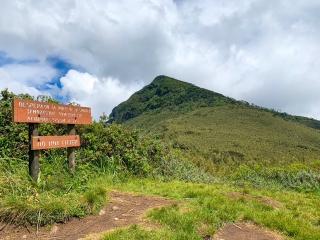
- Overnight volcano camps: sleeping inside the caldera on our Mount Longonot Crater Camping Tour (from KES 22,000 per person, self-drive groups of 4–6) means carrying everything down the rim — small, light gear wins.
- Weekend hill treks: day hikes like the Sleeping Warrior and Ugali Hills hike (KES 3,250 per person) often become camping weekends — this pad turns a day bag into an overnight kit.
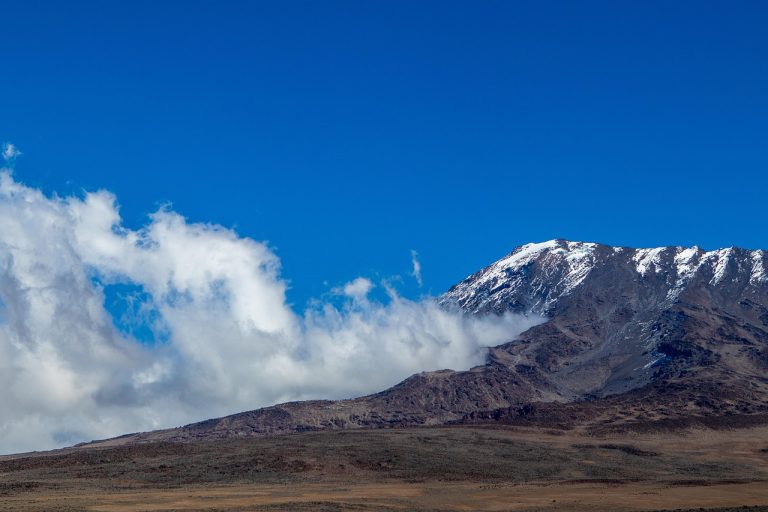
- Mount Kenya expeditions: on Mount Kenya group treks (2026 weekly departures, 3-day from $650 per person) and the Lake Michaelson trek in the Gorges Valley (from $495 per person), an inflatable pad layered over foam is the difference between recovering overnight and summiting exhausted.
- Road-trip safaris: campsite-based safari itineraries — see our Kenya safari packing list — where packed size in the vehicle still matters.
How to Choose a Sleeping Pad: 5 Checks Before You Buy
- Insulation (R-value): match the pad to your coldest planned night, not your average one. Ask us — we sleep on these mountains every week.
- Packed size and weight: if you carry your own pack, every gram counts; if porters carry group gear on Mount Kenya, comfort can take priority.
- Length and width: your hips and shoulders must stay on the pad when you turn. Side sleepers should inflate slightly softer.
- Durability and repairability: carry a small puncture patch kit; acacia thorns around Rift Valley campsites are the number one pad killer we see.
- Total sleep system: pad, sleeping bag, base layer and ground sheet work together — audit yours against our Mount Kenya gear checklist.
Common Mistakes (Our Guides See These Every Season)
- Sleeping on the pad alone in cold camps. Without a sleeping bag over you and, at altitude, foam under you, you will be cold no matter how thick the air chamber is.
- Inflating rock-hard in the afternoon sun. Warm air expands; a drum-tight pad stresses seams. Top up at night instead — cooling air softens the pad anyway.
- Skipping the groundsheet. Thorns and volcanic grit puncture pads. Always lay a tent footprint or groundsheet first.
- Storing it inflated or damp. Dry the pad fully, store it loosely rolled, and valves stay healthy for years.
- Forgetting the rest of the kit. Cold sleepers usually blame the pad when the real gaps are socks, base layers or fuel for a hot evening meal — see our guides to butane and propane canisters in Kenya and waterproof gaiters.
Frequently Asked Questions
How much does the inflatable camping pad cost in Kenya?
KES 4,500 at the Wild Springs Adventures gear shop in Nairobi, reduced from KES 4,999. It is brand new, quality-inspected, and available with same-day delivery in Nairobi and shipping across East Africa.
Is an inflatable pad better than a foam mat?
They do different jobs. Inflatable pads are far more comfortable and pack smaller; closed-cell foam mats are cheaper, puncture-proof and add insulation. For cold camps, use both together — their R-values add up.
Is this pad warm enough for Mount Kenya?
On its own, no — high camps above 4,000 m drop below freezing at night. Layer it over a foam mat and use a proper cold-rated sleeping bag. For Rift Valley and forest campsites it is sufficient with a standard sleeping bag.
How do I stop it from puncturing?
Always use a groundsheet, clear thorns and sharp grit before pitching, keep it away from campfires, and carry a patch kit. Punctures are field-repairable in minutes.
Can I buy it if I live outside Nairobi?
Yes. The shop ships across East Africa. Order from the product page or message us on WhatsApp (+254 721 957 652) to arrange delivery.
Related Tours That Put This Pad to Work
- Mount Longonot Crater Camping Tour — from KES 22,000 per person (self-drive groups of 4–6)
- Sleeping Warrior & Ugali Hills Hike — KES 3,250 per person
- Mount Kenya Group Treks 2026 — guaranteed weekly departures, 3-day from $650 per person
- Lake Michaelson Trek, Mount Kenya — from $495 per person (groups of 5+)
Keep Reading
- Mount Longonot Climbing & Camping Guide
- Down Sleeping Bags for Mountaineering
- Our Mountain Wear & Equipment Shop in Nairobi
Sleep Well Out There
A good night on the mountain is not luck — it is a system, and the pad is its foundation. Wild Springs Adventures has been putting Kenyans and visitors on trails since 2013 (about us), and we only stock gear we would carry ourselves. Browse all sleeping pads in the shop, or order the Temkin inflatable compact camping pad for KES 4,500 today — then come test it under the stars with us on Longonot.
TRA licence TRA1/47/C01/25895 · TOSK member No. 0082 · TripAdvisor Travelers’ Choice Award winner in 2024, 2025 and 2026. Our guides have led hundreds of riders, hikers and safari-goers across Kenya’s highlands.