Climbing Kilimanjaro: Complete Guide to Africa’s Roof 2026
Climbing Kilimanjaro: Complete Guide to Africa’s Roof 2026
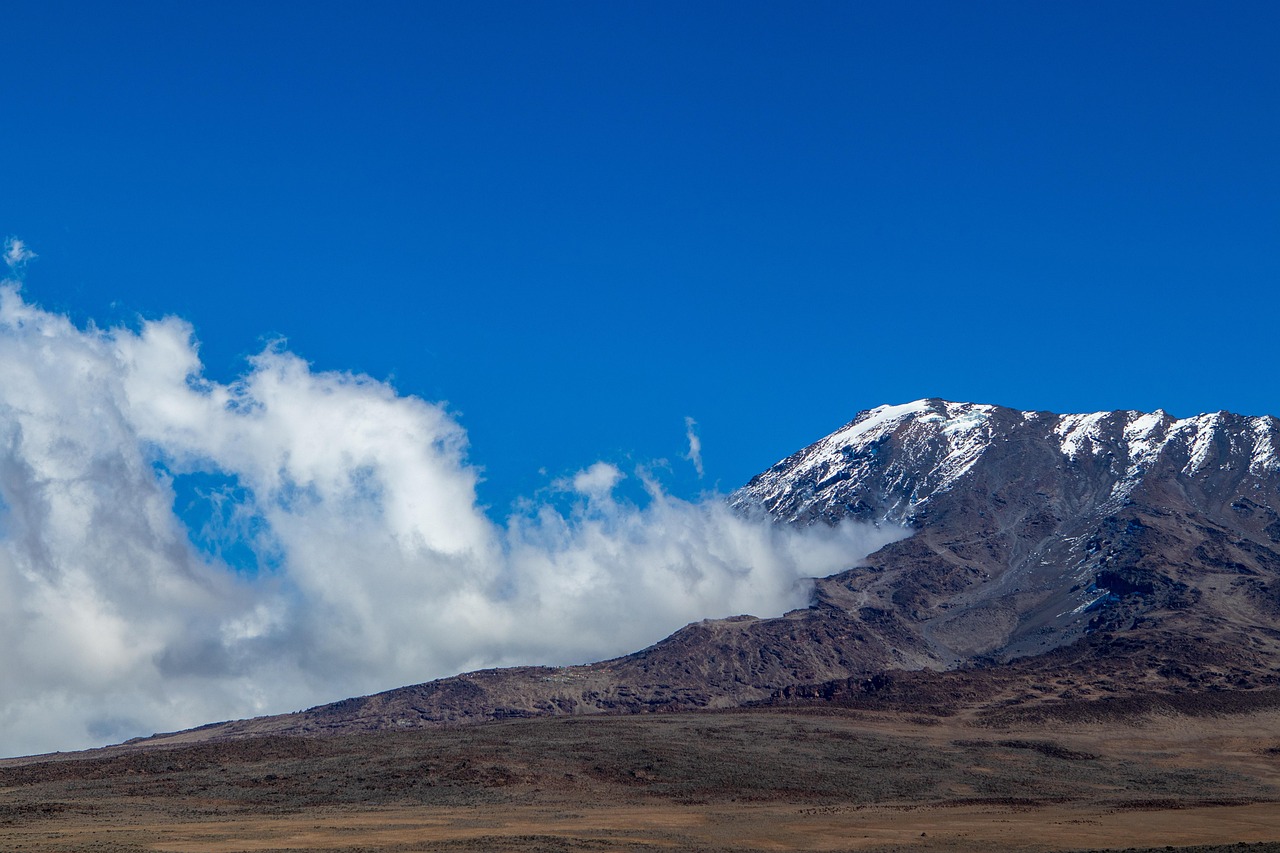
Mount Kilimanjaro (5,895 m / 19,341 ft) is the highest mountain in Africa and the largest free-standing volcanic mass in the world — and you do not need any technical climbing skill to stand on its summit. It is a high-altitude trek: 5–9 days on foot through five climate zones, with success decided mainly by acclimatization, pacing and preparation. This guide from the Wild Springs Adventures expedition team covers who can climb, how long it takes, what it really costs, the best months, a complete fitness plan, a full packing list and how to get there from Nairobi.
Quick Facts: Mount Kilimanjaro
| Fact | Detail |
|---|---|
| Summit | Uhuru Peak, Kibo — 5,895 m (19,341 ft) |
| Location | Kilimanjaro National Park, northern Tanzania (near Moshi) |
| Status | Highest mountain in Africa; one of the Seven Summits; UNESCO World Heritage Site since 1987 |
| Type | Dormant stratovolcano with three cones: Kibo, Mawenzi, Shira |
| Rise above plains | About 4,877 m — the world’s largest free-standing volcanic mass |
| Climb style | Non-technical trek (no ropes or ice axes on standard routes) |
| Duration | 5–9 days round trip; 7+ days recommended |
| Best months | January–early March and June–October |
| Guiding | Licensed guides are mandatory — independent climbs are not permitted |
Table of Contents
- Who Can Climb Kilimanjaro?
- How Long Does the Climb Take?
- Kilimanjaro Routes at a Glance
- Best Time to Climb
- What a Kilimanjaro Climb Really Costs
- Fitness Preparation: Your 12-Week Plan
- Complete Kilimanjaro Packing List
- Altitude and Acclimatization
- Getting There from Nairobi: Visas and Travel
- Common Mistakes to Avoid
- Frequently Asked Questions
Key Takeaways
- Kilimanjaro is a trek, not a technical climb — determined beginners summit it every week with proper preparation.
- Choose 7 days or more on the mountain; extra acclimatization days are the single biggest factor in summit success.
- Budget roughly US $1,650–$2,200 per person for a properly supported 7-day climb, depending on route and group size.
- Train for 8–12 weeks, ideally with real Kenyan altitude hikes such as Mount Satima (4,001 m).
- Dress in layers for everything from rainforest heat to −15 °C summit-night wind chill.
Who Can Climb Kilimanjaro?
Almost anyone in good health can climb Mount Kilimanjaro. On our expeditions we have guided everyone from teenagers to trekkers in their 60s and 70s. Tanzania National Parks (TANAPA) applies a minimum age for climbers heading above 3,000 m — confirm the current age rule with your operator at booking if you are travelling with a child. There is no upper age limit — older climbers simply need a doctor’s clearance and honest fitness preparation.
What the mountain demands is not mountaineering skill but endurance, patience and willpower. The standard routes are walking trails. The two real challenges are altitude — the air at the summit holds roughly half the oxygen of sea level — and the long summit night, typically 10–14 hours of walking. Both are managed by pacing (“pole pole” — slowly, slowly), hydration and choosing an itinerary with enough acclimatization time.
If you can comfortably hike 5–6 hours a day on consecutive days, you are a genuine candidate. If you are not there yet, the 12-week plan below will get you there.
How Long Does the Climb Take?
A Kilimanjaro climb takes five to nine days from gate to gate. The minimum itineraries (5 days on Marangu, 6 on Machame) exist, but we advise against them: they compress the ascent so much that many climbers arrive at the summit push under-acclimatized.
Our standard recommendation is 7 days — for example the 7-day Lemosho itinerary, which builds in a “climb high, sleep low” profile. The 8–9 day Northern Circuit gives the gentlest acclimatization of all. In our experience as an operator, every extra night on the mountain measurably improves both your summit chances and how much you actually enjoy the trek.
Kilimanjaro Routes at a Glance
Seven established trekking routes lead up Kilimanjaro: Marangu, Machame, Lemosho, Shira, Rongai, Northern Circuit and Umbwe. They approach from different sides of the mountain and differ in scenery, traffic, difficulty and acclimatization profile.
| Route | Typical days | Character |
|---|---|---|
| Marangu (“Coca-Cola route”) | 5–6 | Hut accommodation; gentlest gradients but short acclimatization |
| Machame (“Whiskey route”) | 6–7 | Scenic, popular, good climb-high-sleep-low profile |
| Lemosho | 7–8 | Beautiful, quieter start, excellent acclimatization — our favourite |
| Rongai | 6–7 | Only northern approach; drier, quieter |
| Northern Circuit | 8–9 | Longest, quietest, best acclimatization |
| Shira / Umbwe | 6–7 | High-start (Shira) and steep-direct (Umbwe) options for experienced trekkers |
This is deliberately a summary. For a full route-by-route breakdown — scenery, crowds, difficulty and which one fits you — read our dedicated guide to the best Kilimanjaro trekking routes.
Best Time to Climb Kilimanjaro
Kilimanjaro can be climbed year-round, but two dry windows offer the best conditions:
- January to early March — warm, clear mornings, quieter trails, a chance of snow up high that makes the summit especially photogenic.
- June to October — the long dry season and peak period, coinciding with the northern-hemisphere summer holidays. Coldest nights, busiest trails.
The long rains (mid-March to May) and short rains (November) bring mud, cloud and slippery trails; we only recommend them to experienced trekkers who want solitude, ideally on the drier Rongai side. Full moon dates are popular for summit night — book those departures early.
What a Kilimanjaro Climb Really Costs
A properly supported Kilimanjaro climb is a significant investment, and most of the money is not profit — it is park fees, crew wages, food and logistics. Kilimanjaro National Park charges every climber daily conservation fees plus camping/hut and rescue fees, set by Tanzania National Parks (TANAPA) and revised from time to time — ask your operator for the current tariff schedule before booking. Park fees alone typically account for a large share of any legitimate operator’s price — which is why suspiciously cheap climbs usually mean underpaid crews or cut corners on safety.
Current Wild Springs Adventures Kilimanjaro packages:
| Package | Duration | Price guide |
|---|---|---|
| 7-Day Kilimanjaro Climb — Lemosho Route | 7 days | US $1,650–$2,200 per person by group size (from KES 194,000) |
| 7-Day Kilimanjaro Climb — Machame Route | 7 days | From US $1,950 per person (2 trekkers sharing) |
| Amazing Kilimanjaro Climb | Multi-day | From KES 194,000 (~US $1,940); small group (2–4) US $1,950 pp |
Prices include the full mountain crew — licensed guides, cooks and porters — plus park fees, mountain meals and camping equipment; see each tour page for exact inclusions and group-size tiers. Budget separately for tips for your crew, travel insurance that covers trekking to 6,000 m, personal gear and your travel to Tanzania.
Fitness Preparation: Your 12-Week Kilimanjaro Training Plan
You do not need to be an athlete, but you do need to arrive with hiking-specific endurance. Start 8–12 weeks out:
Weeks 1–4: Build the base
- 3–4 cardio sessions weekly (brisk hiking, jogging, cycling or stair climbing), 45–60 minutes.
- 2 strength sessions focused on legs and core: squats, lunges, step-ups, planks.
- One longer weekend walk of 2–3 hours at a conversational pace.
Weeks 5–8: Get specific
- Weekend hikes of 4–6 hours wearing the boots and daypack you will take up Kilimanjaro.
- Add back-to-back hiking days at least twice in this block — consecutive-day fatigue is what summit week feels like.
Weeks 9–12: Train at altitude
This is where being in Kenya is a genuine advantage. Nothing prepares you for thin air like actually hiking in it, and the high moorlands of the Aberdare Range and Mount Kenya are the best training grounds in East Africa:
- Mount Satima day hike (4,001 m) — Kenya’s third-highest peak and our signature Kilimanjaro/Mount Kenya preparation hike, from KES 4,999 (~US $100).
- Table Mountain, Aberdares (3,791 m) — a quieter high-altitude leg-stretcher, from KES 4,999 (US $99 international).
- Aberdares North–South Traverse (72 km, 5 days) — the ultimate multi-day dress rehearsal, from KES 65,000 (~US $750).
Many of our climbers also summit Mount Kenya’s Point Lenana (4,985 m) a few weeks before Kilimanjaro — an outstanding acclimatization strategy. The techniques in our acclimatization strategies guide and hydration and nutrition guide apply directly to Kilimanjaro.
Complete Kilimanjaro Packing List
You will walk from humid rainforest to an arctic summit zone in under a week, so layering is everything. Porters carry your main duffel (weigh limit applies — pack light); you carry a daypack.
Clothing (layer system)
- Moisture-wicking base layers (2 sets, tops and bottoms)
- Trekking shirts and convertible trousers (2–3 each)
- Insulating mid-layers: fleece plus a warm down jacket for summit night
- Waterproof-breathable shell jacket and trousers
- Warm hat, sun hat, buff/balaclava, liner gloves plus insulated summit gloves
- 4–5 pairs of hiking socks plus thermal summit socks
Footwear
- Broken-in, waterproof mid- or high-cut hiking boots — never new boots
- Camp shoes or trainers for evenings
- Gaiters for the scree and dust of the summit zone
Gear
- 4-season sleeping bag (rated to about −10 °C or warmer)
- 30–35 L daypack with rain cover; 70–90 L duffel for porters
- Trekking poles — your knees will thank you on the descent
- Headlamp with spare batteries (essential for summit night)
- 3 L water capacity (bottles and/or bladder — bladder hoses can freeze on summit night, so carry at least one bottle)
- Sunglasses (high UV protection), SPF 50+ sunscreen, lip balm
- Personal first-aid kit, blister care, water purification, wet wipes
- Snacks you actually like — appetite fades at altitude
You do not need to buy everything. Our Nairobi mountain gear store stocks new and gently used boots, down jackets, sleeping bags and packs with delivery across East Africa, and our team offers free gear consultation before your climb — see also our guides to mountain gear checklists and choosing hiking footwear.
Altitude and Acclimatization
Altitude sickness (acute mountain sickness, AMS) — headache, nausea, poor sleep, loss of appetite — is the number-one reason climbers turn back. It can affect anyone regardless of fitness. On every Wild Springs climb our guides run daily health checks and monitor each climber, and our itineraries follow proven practice:
- Go slowly. “Pole pole” is not a cliché; it is the strategy. Walk slower than feels natural, from day one.
- Climb high, sleep low wherever the route allows.
- Drink 3–4 litres daily and keep eating even when appetite drops.
- Report symptoms early. Mild AMS is managed with rest and hydration; worsening symptoms mean descent — no summit is worth your life.
- Ask your travel doctor about acetazolamide (Diamox) well before the trip; it helps many climbers acclimatize but is a personal medical decision.
Getting There from Nairobi: Visas and Travel
Kilimanjaro sits just across the Kenya–Tanzania border, which makes Nairobi an excellent staging point:
- By road: Nairobi to Arusha/Moshi via the Namanga border crossing — roughly a full day’s shuttle journey. We arrange transfers for our climbing groups.
- By air: Fly into Kilimanjaro International Airport (JRO), under an hour’s drive from Moshi.
Visas: Kenyan and other East African Community citizens do not require a visa for Tanzania. Most other nationalities can apply online through the official Tanzania eVisa portal — apply well before travel and use only the official government site.
Health: A yellow fever vaccination certificate may be required depending on your travel history and transit route — check the current WHO yellow fever guidance and confirm the latest entry requirement with your travel clinic before departure. Comprehensive travel insurance covering trekking to 6,000 m is mandatory on our expeditions.
Kilimanjaro National Park has been a UNESCO World Heritage Site since 1987, protecting the forest belt and alpine desert you will walk through — pack out everything you pack in, stay on trails and respect your crew’s load limits. Porter welfare matters to us as a Kenyan operator that also works on Mount Kenya, where the same principles apply.
Common Mistakes to Avoid
- Booking the shortest itinerary to save money. Failing to summit costs more than two extra days ever would.
- Walking too fast on days one and two. Early speed is the classic cause of summit-night failure.
- New boots. Blisters at 4,000 m end climbs. Break boots in for at least a month.
- Skipping altitude training when you live in East Africa. A weekend on Mount Satima or the Aberdares is the cheapest summit insurance there is.
- Under-budgeting for tips and insurance. Both are real, expected costs of a responsible climb.
- Ignoring symptoms. Tell your guide about a headache early — small problems are manageable, hidden ones are not.
Frequently Asked Questions
How high is Mount Kilimanjaro?
Uhuru Peak, the summit of Kilimanjaro, is 5,895 m (19,341 ft) above sea level — the highest point in Africa.
Do I need technical climbing experience?
No. All seven standard routes are non-technical treks. You need endurance and acclimatization, not ropes or climbing skills.
How much does it cost to climb Kilimanjaro?
With Wild Springs Adventures, supported 7-day climbs run from about US $1,650–$2,200 per person depending on route and group size, including park fees, guides, porters, meals and camping equipment.
What is the best month to climb?
January to early March and June to October are the dry seasons with the most reliable conditions. January–February is our pick for clear skies with fewer crowds.
Is Kilimanjaro harder than Mount Kenya?
Kilimanjaro is higher (5,895 m vs 4,985 m for Mount Kenya’s trekking summit, Point Lenana) and its summit night is longer, but Mount Kenya’s trails are steeper and more rugged day-to-day. Many climbers do Mount Kenya first as preparation — see our full Mount Kenya vs Kilimanjaro comparison.
Can I combine a Kilimanjaro climb with a Kenyan safari?
Yes — most of our climbers add a safari before or after. Popular options are the 6-Day Big Five & Kilimanjaro Explorer (from KES 45,000 / US $450) and the 2-Day Amboseli safari (from KES 35,000 / US $450), where elephants graze beneath Kilimanjaro’s snows.
Related Adventures and Reading
- The Best Kilimanjaro Trekking Routes Compared
- Mount Kenya vs Kilimanjaro: Which Should You Climb?
- Where to Buy Mountain Gear in Nairobi
- All Wild Springs tours and expeditions
Ready to Stand on the Roof of Africa?
Wild Springs Adventures is a licensed Kenyan adventure operator (TRA1/47/C01/25895, TOSK No. 0082) running guided expeditions on Kilimanjaro, Mount Kenya and across East Africa’s high places. We handle everything — gear consultation, training hikes, park permits, crew and logistics — so all you bring is the will to climb. Learn more about our team, or contact us (WhatsApp +254 729 257 317) to start planning your climb.
TRA licence TRA1/47/C01/25895 · TOSK member No. 0082 · TripAdvisor Travelers’ Choice Award winner in 2024, 2025 and 2026. Our guides have led hundreds of riders, hikers and safari-goers across Kenya’s highlands.