Group Coordination on Mount Kenya: The Complete Guide
Group Coordination on Mount Kenya: The Complete Guide
Good group coordination on Mount Kenya comes down to four things: plan the route and dates together before you book, give every member a clear role, walk at the pace of your slowest trekker to manage altitude, and agree simple communication and safety rules before you leave the trailhead. Teams that do these four things summit together far more often than groups that simply show up fit. At Wild Springs Adventures we run guided group treks on Mount Kenya every week, and the difference between a smooth climb and a stressful one is almost never fitness — it is coordination.
This guide explains exactly how to organise a group climb of Africa’s second-highest mountain, whether you are a hiking club, a corporate team, a family, or a solo traveller joining one of our scheduled departures.
Quick Facts: Mount Kenya Group Treks
| Fact | Detail |
|---|---|
| Highest point | Batian, 5,199 m (17,057 ft); Nelion 5,188 m (technical climbs only) |
| Trekking summit | Point Lenana, 4,985 m — the goal for most groups |
| Status | Mount Kenya National Park/Natural Forest, a UNESCO World Heritage Site managed by the Kenya Wildlife Service (KWS) |
| Typical group trek length | 3–6 days via the Sirimon, Chogoria, Naro Moru or Burguret routes |
| Ideal group size | 4–8 trekkers (best balance of cost, pace and safety) |
| Best coordination window | Book 4–8 weeks ahead; hold your first group briefing at least 3 weeks before departure |
| Group trek prices (2026) | From $650 per person (3-day) on our guaranteed weekly departures |
Key Takeaways
- Assign roles early: a group leader, a pace-keeper, a first-aid point person, a gear coordinator and a communications lead cover the essentials.
- The group moves at the pace of its slowest member — this is an altitude-safety rule, not a courtesy.
- Run a short briefing every morning and a debrief every evening; most on-mountain problems are caught in these ten-minute meetings.
- Larger groups pay less per person, but above 10–12 trekkers coordination gets harder — split into sub-teams with a guide each.
- Agree your altitude-sickness protocol before day one: anyone with worsening symptoms descends with a guide, and the group decides in advance how that affects everyone else.
Table of Contents
- Why coordination matters on Mount Kenya
- Planning decisions to make before you book
- Assigning roles within your group
- Pacing and altitude management as a team
- Communication on the mountain
- Group gear and logistics
- Safety rules every group should agree on
- Building team spirit
- Common mistakes
- FAQ, related tours and further reading
Why Group Coordination Matters on Mount Kenya
Mount Kenya is a high-altitude wilderness, not a walking trail. Between the park gates and Point Lenana your group will gain roughly 2,000–3,000 metres of altitude, cross moorland where afternoon fog rolls in fast, and sleep at camps above 4,000 m where night temperatures drop below freezing. Mobile coverage is patchy above the treeline, and any evacuation happens on foot or by stretcher before vehicles or helicopters can assist. In that environment, a group that has agreed on roles, pace and decision-making rules is dramatically safer than a collection of individuals.
Coordination also protects the experience itself. The most common reason a trekker fails to summit is not fitness but ascending too fast — usually because a group let its strongest members set the pace. A coordinated group summits together, and that shared moment at Point Lenana at sunrise is what people remember for the rest of their lives.
Planning Decisions to Make Before You Book
Choose the route as a group
Route choice shapes everything else — scenery, acclimatization profile, and cost. Most groups choose between Sirimon (gentlest acclimatization profile, great for first-timers), Chogoria (the most scenic, passing Lake Michaelson and the Gorges Valley), Naro Moru (fastest, steepest) and Burguret (wild and quiet). Compare them in our guide to Mount Kenya trekking routes, and put the decision to a group vote early — route changes after booking complicate park logistics.
Pick dates in a dry window
The most reliable trekking conditions fall in the two dry seasons, roughly January–February and late June–September. Weather at altitude can still change fast in any month — the Kenya Meteorological Department publishes seasonal outlooks worth checking. Our guide to the best months for Mount Kenya climbs breaks this down month by month. Groups with fixed annual leave should book 4–8 weeks ahead to secure huts and permits in peak season.
Decide: private group or scheduled departure?
If you already have 4+ people, a private trek gives you full control of route and dates. If you are solo or a pair, joining a scheduled group is cheaper and more sociable. Our Mount Kenya Group Treks 2026 guaranteed weekly departures run at $650 per person for the 3-day trek, $800 for 4 days, $950 for 5 days and $1,150 for the 6-day Burguret option — full fixed dates are listed in our group treks 2026/2027 dates and prices guide.
Budget together, transparently
Money friction is one of the quietest killers of group morale. Circulate a single budget sheet covering the trek package, park fees, tips, transport and gear rental before anyone commits. Non-resident park fees run to roughly $60 per person per day (Kenyan citizens and East African residents pay much less in KES) — always confirm current rates with the Kenya Wildlife Service before you travel. Our full breakdown of the cost of climbing Mount Kenya covers fees, tipping norms and how group size lowers the per-person price: a solo climber can pay $250–$350 per day, while a member of a group of four or more may pay around $120 per day.
Schedule a preparation hike
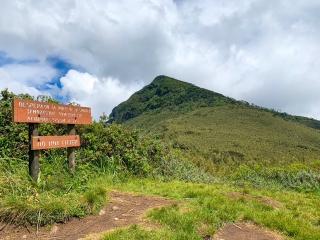
Nothing reveals a group’s real pace, gear gaps and personalities like a long day-hike together. We designed the Mount Satima preparation hike (4,001 m, the Aberdares’ highest peak, from KES 4,999 per person) precisely as a Mount Kenya rehearsal: similar moorland terrain, meaningful altitude, one day. Treat it as a dress rehearsal — everyone carries the pack and wears the boots they will use on the mountain.
Assigning Roles Within Your Group
On any Wild Springs trek you already have a certified lead guide, a cook and porters — the professional layer is covered. Group roles are about the trekkers themselves: they distribute responsibility, keep everyone engaged, and give the guide a clear counterpart for each type of decision.
| Role | Responsibility | Choose someone who… |
|---|---|---|
| Group leader | Single point of contact with the lead guide; final voice in group decisions | Communicates calmly and is trusted by everyone |
| Pace-keeper | Walks near the back, keeps the group together, calls rest stops | Is patient and observant, not necessarily the fittest |
| First-aid point person | Carries the group first-aid kit, tracks everyone’s daily condition alongside the guide | Has first-aid training or medical background if possible |
| Gear coordinator | Runs the pre-trip gear checklist, manages shared kit and rentals | Is organised and detail-oriented |
| Communications lead | Holds emergency contacts, next-of-kin list and insurance details; manages check-ins with home | Keeps documents tidy and phone charged |
| Treasurer | Collects payments, handles the tip pool and shared expenses | Everyone trusts with money |
In groups of four or five, people simply double up roles. In corporate groups, deliberately give roles to junior staff — mountains flatten hierarchies, and that is half the team-building value.
Pacing and Altitude Management as a Team
Altitude is a group problem, because one person’s altitude sickness changes everyone’s day. The rules that work:
- Walk “pole pole” (slowly) from the first hour. Kenyan guides repeat this phrase for a reason. Starting slow on day one is the single highest-impact acclimatization decision a group makes.
- The slowest member sets the pace. Splitting into fast and slow packs on ascent days undermines acclimatization and morale. Faster trekkers can carry a little more shared kit instead.
- Use a buddy system. Pair trekkers up. Buddies watch each other for headaches, nausea, dizziness, unusual fatigue, loss of appetite and poor sleep — the classic early signs of acute mountain sickness — and report honestly at the evening debrief.
- Agree the descent protocol in advance. If symptoms worsen rather than settle, that trekker descends with an assistant guide. Decide before the trek whether the rest of the group continues — deciding at 4,700 m at 3 a.m. is the wrong time.
- Hydrate on a schedule, not on thirst. Three to four litres per person per day at altitude. Our hydration and nutrition guide covers what actually works on summit night.
For the fuller picture — itinerary shapes, rest days and the “climb high, sleep low” principle — read our dedicated guide to Mount Kenya acclimatization strategies, and have every member complete the basic pre-trek health checks.
Communication on the Mountain
The daily rhythm: brief and debrief
Two short meetings a day keep a group coordinated with almost no effort:
- Morning briefing (5–10 minutes, led by the guide and group leader): today’s route, distance, altitude gain, weather expectation, rest-stop plan, and who is walking where in the line.
- Evening debrief (10 minutes at dinner): honest health round from every buddy pair, gear issues, and the plan for tomorrow — including summit-night logistics on the final evening.
On the trail
Keep the group within voice or sight contact, with a guide at the front and the pace-keeper at the back. Agree simple whistle signals for fog or darkness (one blast: stop; three: emergency). Mobile signal on Mount Kenya is intermittent and unreliable above the forest zone, so do not build your safety plan around phones — our guide to emergency devices for Mount Kenya compares radios, satellite messengers and personal locator beacons for group use. The communications lead should leave a written itinerary and expected return date with a contact at home.
Group Gear and Logistics
The gear coordinator’s job is to eliminate two failure modes: someone arriving without an essential item, and five people carrying five identical seldom-used items.
- Personal kit: every member works through the essential Mount Kenya gear checklist — broken-in boots, layered clothing, a warm sleeping bag and headlamp are non-negotiable.
- Shared kit: one group first-aid kit, one repair kit (duct tape, cord, spare buckles), water purification, and the group’s emergency device. Distribute the weight deliberately.
- Rent instead of buying: for one-off trekkers, renting quality sleeping bags, down jackets and poles is far cheaper than buying. Our Nairobi mountain and hiking gear store stocks new and gently used kit suited to Mount Kenya conditions, and the gear coordinator can arrange group fittings before departure.
- Porters: porters carry group equipment and food on our treks, which is what makes a comfortable ascent possible for mixed-ability groups. Understand how the system works — and what fair treatment looks like — in our article on porter pay on Mount Kenya.
Safety Rules Every Group Should Agree On
- No one walks alone. Not to a viewpoint, not “just ahead to the camp”. Ever.
- The guide’s safety calls are final. Turnaround decisions on summit morning are made by the certified guide, informed by the group leader — not by vote at 4,900 m.
- Honest symptom reporting is a group duty. Hiding a headache to avoid “ruining the trip” is how small problems become evacuations.
- Every member carries insurance that covers trekking to 5,000 m, and the communications lead holds all policy details in one place.
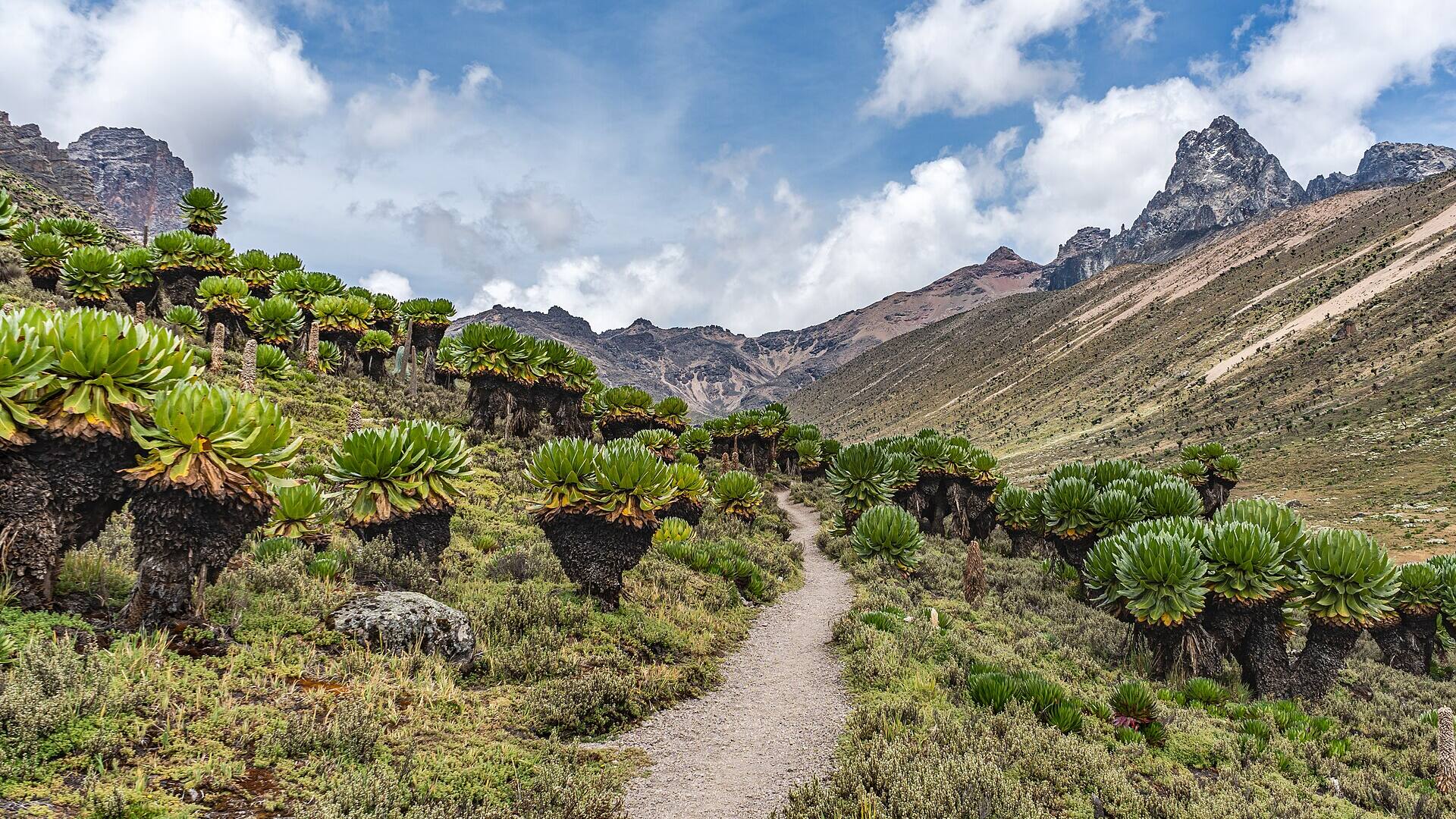
- Respect park rules: stay on trails, carry out all litter, no open fires outside designated areas. Mount Kenya’s ecosystems — from bamboo forest to the giant groundsels of the Afro-alpine zone — are protected under KWS management and the mountain’s UNESCO World Heritage listing.
- Weather calls are made early. If afternoon storms threaten, camp early rather than pushing. The mountain will still be there.
Building Team Spirit
Safety systems get a group up the mountain; team spirit is why they enjoy it. The evenings are where this happens. Mount Kenya — Kirinyaga — is a sacred mountain in Kikuyu tradition, and our guides grew up in its shadow; ask them about it over dinner and the camp conversation takes care of itself (the background is in our article on why Mount Kenya is sacred). A few habits that consistently work:
- Rotate who walks with whom each day so cliques never form.
- Celebrate milestones — first camp, 4,000 m, the final ridge — not just the summit.
- Pair experienced trekkers with first-timers on summit night.
- Mark personal victories: for someone afraid of heights, crossing a scree slope is a summit of its own.
Corporate teams that want the bonding without the multi-day commitment can start with our one-day programmes: Chaka Ranch corporate team building in Nyeri (from KES 3,500 per person, on Mount Kenya’s doorstep) or the Burudani Adventure Park bronze package in Limuru (KSh 3,950 per person, excluding VAT). Both make excellent “stage one” events before committing a team to the mountain itself.
Common Group Coordination Mistakes
- Letting the fittest person plan the itinerary. Plan around your least experienced member instead.
- Booking the shortest possible trek to save money. Three-day itineraries leave minimal acclimatization margin; for mixed groups, four to five days summit more people for a modest extra cost.
- Skipping the preparation hike. Discovering pace mismatches and boot problems on day one of the real trek is expensive.
- No agreed descent protocol. Improvising when a member falls ill splits groups and sours trips.
- Treating the tip pool as an afterthought. Agree amounts before departure so the treasurer can collect once, calmly. (Norms are in our Mount Kenya tipping policy guide.)
- Group size over twelve with no sub-team structure. Beyond this, split into sub-teams of 4–6, each with its own guide and pace-keeper.
Frequently Asked Questions
What is the ideal group size for a Mount Kenya trek?
Four to eight trekkers. It is large enough to bring the per-person price down and small enough for one guide-led briefing to keep everyone aligned. Larger parties should split into sub-teams of four to six.
Do bigger groups pay less per person?
Yes. Fixed costs such as guides, cooks and transport are shared, so a member of a group of four or more can pay around $120 per day versus $250–$350 per day for a solo climber. See our full cost breakdown.
Can a solo traveller join a group?
Yes. Our 2026 guaranteed weekly departures exist exactly for this — you join a scheduled small group with certified guides, from $650 per person for the 3-day trek.
What happens if one group member gets altitude sickness?
Mild symptoms are managed with rest, fluids and a slower pace. If symptoms worsen, that trekker descends with an assistant guide while the rest of the group continues under the lead guide — which is why groups agree this protocol before departure.
Do groups need walkie-talkies on Mount Kenya?
For a guided group that stays together, whistles and agreed signals usually suffice; radios or a satellite messenger add real value for large parties or remote routes, since mobile coverage above the forest is unreliable. See our emergency devices guide.
Which route is best for a first-time group?
Sirimon is the usual recommendation for first-time groups thanks to its gradual acclimatization profile; Chogoria rewards groups with an extra day to spare. Compare all options in our routes guide.
Related Tours
- Mount Kenya Group Treks 2026 — Guaranteed Weekly Departures (3-day $650 pp to 6-day Burguret $1,150 pp)
- Mount Satima — Mount Kenya Preparation Hike (from KES 4,999 pp)
- Chaka Ranch Corporate Team Building, Nyeri (from KES 3,500 pp)
- Burudani Adventure Park Team Building, Limuru (KSh 3,950 pp excl. VAT)
- Browse all mountain climbing tours
Related Destinations and Reading
- Kenya destination guide
- Best Months for Mount Kenya Climbs
- Mount Kenya Acclimatization Strategies
- Essential Gear Checklist for Mount Kenya Trekking
- Best Outdoor Groups in Kenya — find a hiking community to trek with
Conclusion: Coordinated Groups Summit Together
Mount Kenya rewards teams that prepare like teams. Choose the route and dates together, give everyone a role, protect the group pace, hold your daily briefings, and agree the hard decisions before you need to make them. Do that, and the mountain gives back one of East Africa’s great shared experiences — sunrise at Point Lenana with the people you climbed with.
Wild Springs Adventures is a TRA-licensed Kenyan operator running Mount Kenya treks with certified local guides year-round. Contact our Nairobi team to plan a private group climb, or learn more about Wild Springs Adventures — and if your dates are flexible, simply join the next guaranteed group departure.
TRA licence TRA1/47/C01/25895 · TOSK member No. 0082 · TripAdvisor Travelers’ Choice Award winner in 2024, 2025 and 2026. Our guides have led hundreds of riders, hikers and safari-goers across Kenya’s highlands.